What separates "a roach" from "an infestation"
Roach severity is not measured by how grossed-out you feel. Professionals read four variables, and none of them is the size of the roach you saw:
- Timing — normal hours (after lights-out) or daylight activity, which is abnormal and meaningful.
- Density — a single insect now and then, versus a scattering crowd every time.
- Spread — one hotspot (usually the kitchen or a bathroom) versus multiple rooms.
- Evidence — the supporting cast: droppings, egg cases, or small wingless young that prove an active breeding cycle.
The four-question quiz above scores those variables against the thresholds pest professionals use in the field. The article below explains what each signal means and why — with the extension-service sources behind every claim.
Why daytime sightings change the conversation
German cockroaches are built for the dark: during the day they hide in cracks and crevices and other dark sites that stay warm and humid, and they forage at night for food, water, and mates. That is not just habit — it is the baseline the whole treatment playbook assumes (Penn State Extension, UC IPM Pest Note 7467).
So when you start seeing them during the day, something has pushed them past their default behavior. Penn State's fact sheet states it plainly: German cockroaches "may be seen during the daytime, particularly if a heavy population is present or if there is some other stress, such as a lack of food or water or an application of pesticides." In other words, daytime sightings mean the hiding spots are crowded — or you (or someone before you) already disturbed the colony with sprays.
| Tier | What you are seeing | What it means | First move |
|---|---|---|---|
| Early | Occasional late-night sightings, one area, no other evidence | Recent arrival or a tiny satellite population | Bait + sticky-trap monitoring; sanitation pass |
| Established | Nightly sightings across 2–3 rooms, droppings, egg cases, or nymphs | An active breeding cycle producing young continuously | Structured gel-bait program with follow-up visits every 2–4 weeks |
| Heavy | Daytime activity, crowds of mixed sizes, house-wide, musty odor | Population exceeds the available harborages; allergen load is climbing | Professional assessment — multi-visit treatment is the realistic path |
The evidence that upgrades a hunch to a diagnosis
Live sightings are the noisiest signal, but the supporting evidence is what proves a breeding population — and it is what a good technician will look for during an inspection:
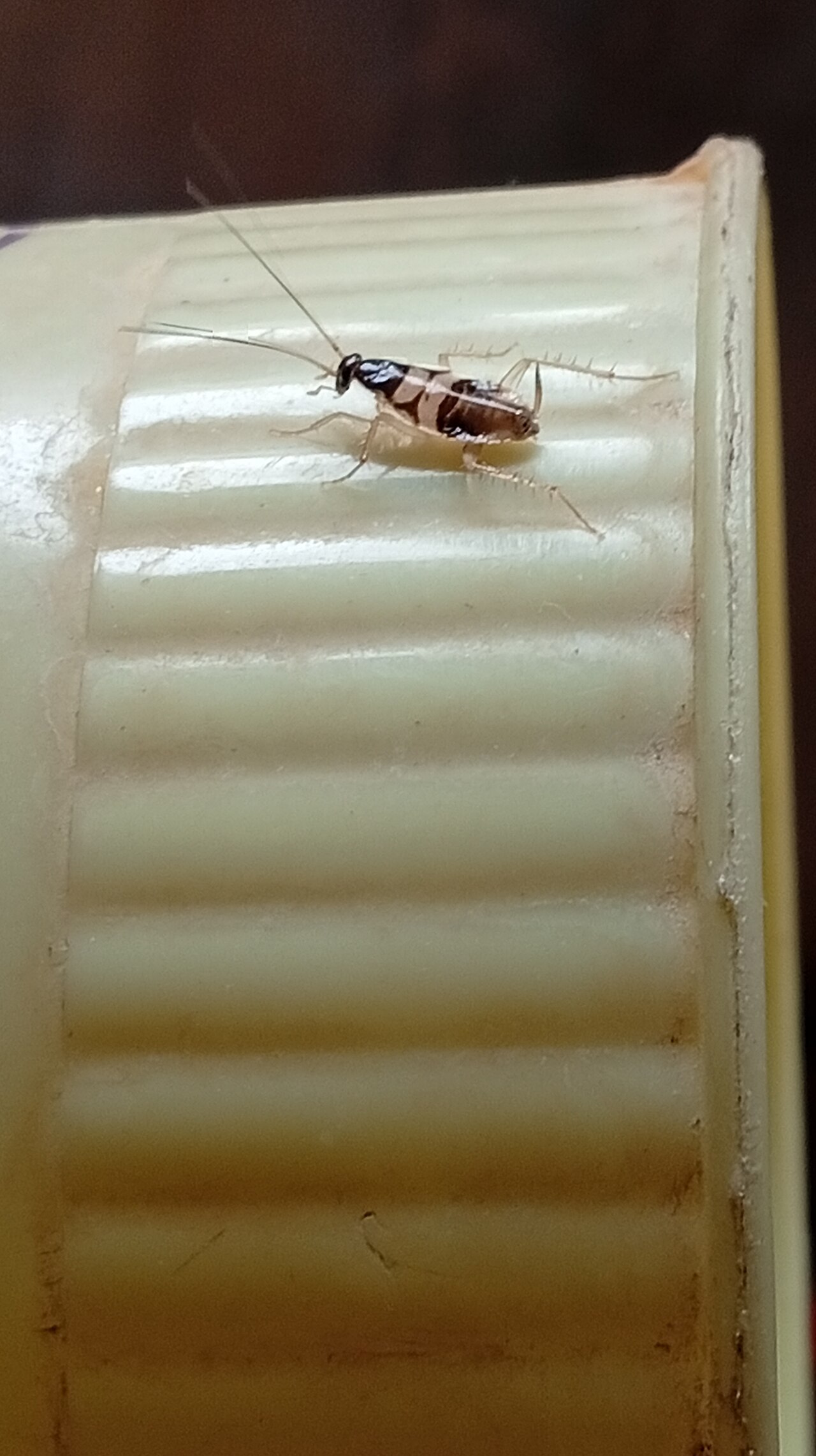
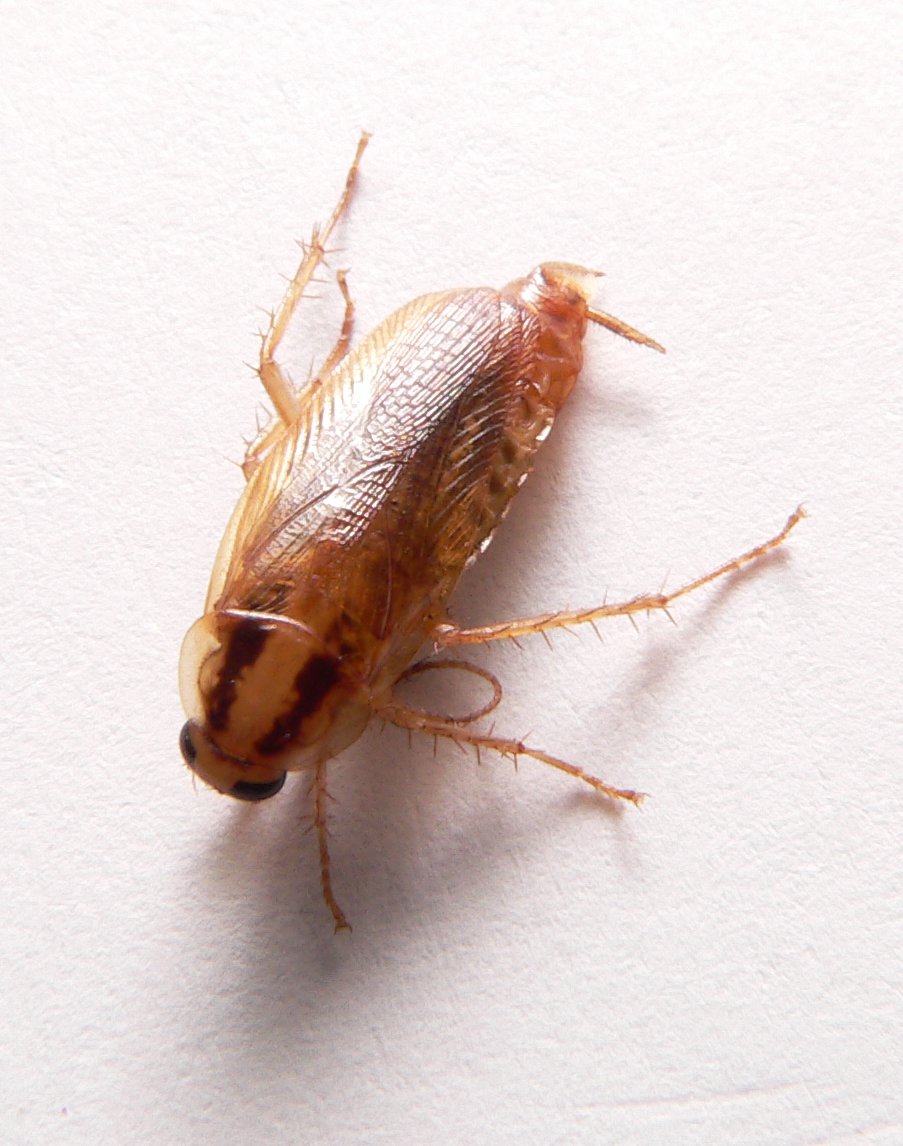
- Nymphs (small wingless young). Rutgers Cooperative Extension notes that in an actively growing population, about 80% of the roaches present are nymphs — so young roaches in your cabinets are not a minor detail, they are the population itself. A German cockroach nymph is wingless and ranges from roughly 1/8 to 9/16 inch.
- Egg cases (oothecae). One German cockroach egg case holds about 40 eggs (Purdue counts 30–48 depending on the source), carried by the female until hatching and dropped in a dark crevice. Finding discarded cases means a female was completing cycles in your space.
- Droppings and shed skins. More than gross: Rutgers points out that feces, shed skins, and dead roach bodies contain allergens that trigger asthma, which is the main reason extension services treat roach elimination as a health matter, not just a comfort one. This is also why "a few roaches" is never a reason to wait months.
- Odor. At larger numbers, roaches produce a persistent musty smell — Purdue's guide lists this among the signs that accompany well-established, large populations.
How fast "a few" becomes "a lot"
The math is the argument for acting at the early tier. A German cockroach female carries 5–8 egg cases in her life, totaling 200–250 eggs, and females can live 140–280 days. The full cycle — egg to adult — takes roughly 100 days under household conditions (Rutgers FS1322). A handful of females in July is a house-wide problem by fall if nothing interrupts the cycle — which is why the timing of your first response matters far more than the size of the first roach you saw. The roach reproduction calculator projects that curve for your own observation count.
What the tiers mean for your next step
- Early tier: you can usually handle this yourself. Rutgers' recommended approach is exactly what the quiz's action list says — sticky traps to find and monitor the hotspot, gel bait placed as small dots near harborages (not sprays along baseboards), and sanitation that removes food and water. Follow up every 2–4 weeks until the traps come up empty, then keep monitoring for a month.
- Established tier: still doable DIY, but discipline matters more than effort. Bait placement beats spraying — extension guidance is explicit that most retail sprays are repellent and less effective than bait, and spraying can scatter the colony into new rooms. If two baiting cycles (4–8 weeks) do not measurably reduce trap counts, escalate to a professional.
- Heavy tier: treat it as a professional job, and skip the foggers entirely. Rutgers is direct: total-release foggers are not recommended — they are ineffective against infestations and can be a fire hazard — and "one common mistake by do-it-yourselfers is relying on insecticide sprays as the primary method." A multi-visit professional program (baiting plus insect growth regulators to break the breeding cycle) is the realistic path. Price it with the DIY vs. pro calculator and run any contract through the contract checklist.
Whichever tier you land in, confirm the species before you buy anything — German, American, and Oriental roaches respond to the same principles but different placement and bait preferences, and the full step-by-step sequence lives in the roach elimination guide.
Sources: Rutgers Cooperative Extension FS1322 (German cockroach biology and control), Penn State Extension (German cockroaches — activity patterns), Purdue Extension E-241 (A Practical Guide to Cockroach Control), and UC IPM Pest Note 7467 (cockroaches — monitoring and management).