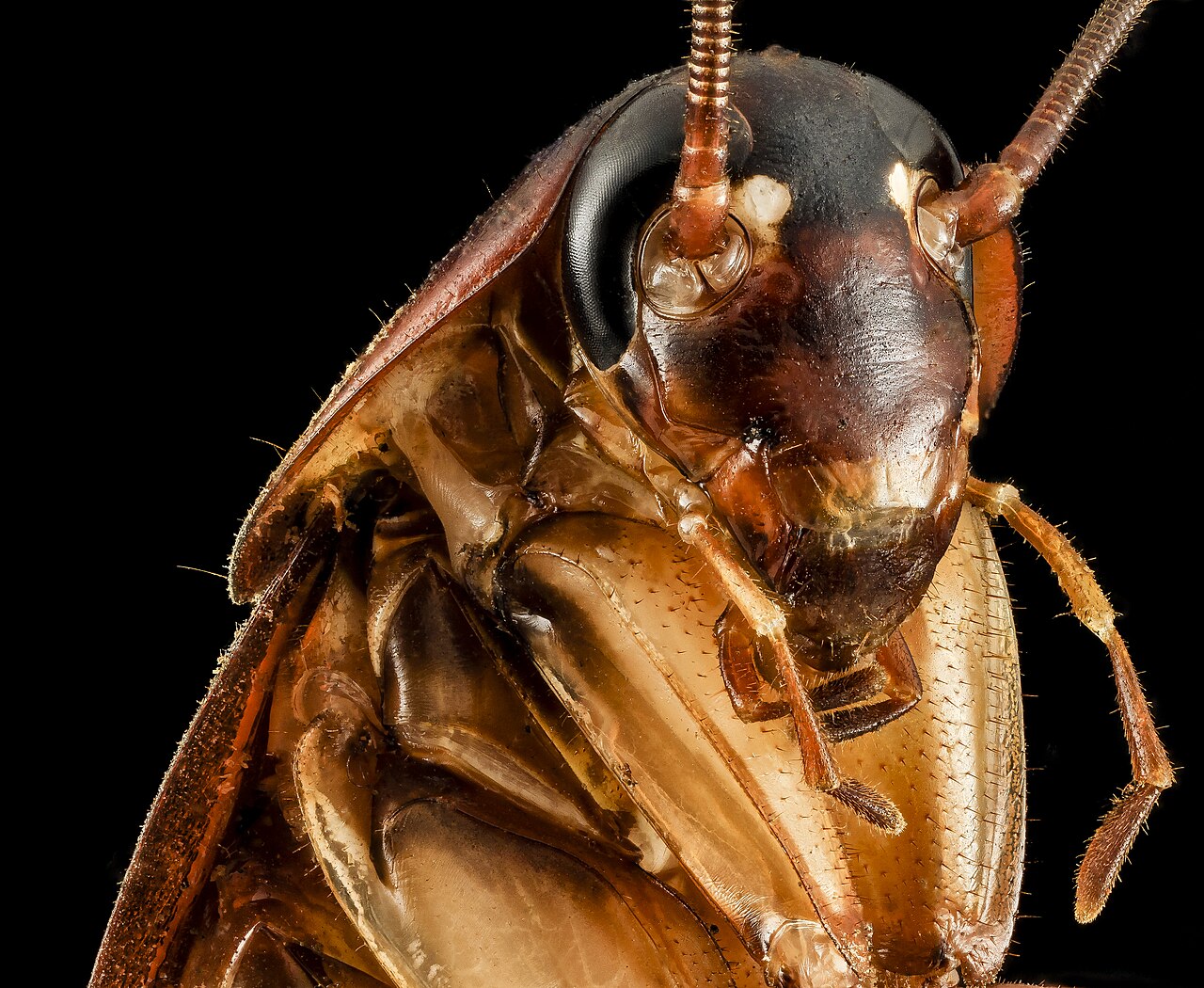
The three roaches you will actually meet
Of the roughly 4,000 cockroach species worldwide, only a handful regularly enter US homes — and three of them account for nearly every infestation. The table below is the fastest way to narrow it down before you treat anything.
| Species | Adult size | Color & markings | Where it lives | Reproduction |
|---|---|---|---|---|
| German (Blattella germanica) | ½ inch | Tan, two dark stripes behind the head | Indoors only: kitchens, bathrooms, appliances | Fastest of all — 30,000+ descendants per female per year |
| American (Periplaneta americana) | 1½–2 inches | Reddish-brown, pale yellow margin behind the head | Sewers, drains, steam tunnels; enters homes at night | Slow; egg case dropped, not carried |
| Oriental (Blatta orientalis) | 1 inch | Shiny dark brown to black | Cool, damp spots: basements, crawlspaces, floor drains | Slow; egg case dropped in protected crevices |
A fourth species, the brownbanded cockroach, accounts for only about 1% of indoor infestations but is worth knowing: it prefers warmer spots (around 80°F), hides in furniture legs, behind wall art, and inside electronics, and feeds on starchy materials like book glue. If you are finding roaches in living rooms and bedrooms rather than kitchens, suspect brownbanded.
Not sure which one you have? The Pest ID Wizard walks through size, color, and location in under a minute. The University of California's cockroach pest note has close-up photos of every species for a second opinion.
German cockroach: the indoor specialist
The German cockroach is the most common indoor species in the US — and the most persistent. It lives and breeds entirely inside buildings, prefers warm (70–75°F), humid areas near food and water, and can hide in a crack just 1/16 of an inch wide. That is why it survives in spotless kitchens: it does not need visible crumbs, just the residue behind a refrigerator or under a dishwasher.
Its biology is the reason German roach infestations explode so fast. The female carries her egg case (ootheca) until it is about to hatch, then drops it — each case holds roughly 30 young, and a new case is produced every few weeks. UC IPM estimates a single female and her offspring can produce over 30,000 individuals in a year. If you see small roaches with two dark stripes behind the head, you are almost certainly dealing with this species, and the complete roach elimination guide is the playbook to follow: sanitation, gel bait, an IGR, and monitoring.
American cockroach: the sewer visitor
The American cockroach is the giant of the group — adults reach 1½ to 2 inches — and it is an outdoor species that invades. It thrives in sewers, steam tunnels, water meter boxes, and drains, and typically enters homes at night through gaps around pipes, doors, and foundation cracks. Seeing one in a basement or ground-floor bathroom is often the first sign of a moisture or entry-point problem, not a breeding colony inside the house.
Because it does not breed indoors the way German roaches do, the treatment is different: exclusion and source control first. Seal pipe penetrations, install door sweeps, fix leaky drains, and treat outdoor harborages like water meter boxes with bait. The DIY vs Pro calculator can help you decide whether the entry-point work is worth doing yourself.
Oriental cockroach: the damp basement dweller
The Oriental cockroach is shiny, nearly black, and slow-moving — often called the "water bug" or "black beetle roach." It prefers cool, damp environments: basements, crawlspaces, floor drains, and the area under refrigerators with condensation pans. Unlike the German roach, it is not tied to food prep areas, and unlike the American roach, it does not fly.
An Oriental roach problem is almost always a moisture problem. Fixing the humidity — repairing leaks, ventilating crawlspaces, sealing floor drains — matters more than any insecticide. Boric acid dust in wall voids and under appliances works well because the species stays low and close to damp surfaces.
Why species ID changes your treatment
Treating the wrong species is the most common reason roach treatments fail:
- German roach: bait + IGR + sanitation, repeated over 4–8 weeks. Sprays alone scatter them deeper into walls.
- American roach: exclusion and drain/source treatment first; indoor bait as backup. Fogging is pointless — they are not breeding inside.
- Oriental roach: moisture correction plus dusts in voids. Bait gels work less well in cool, damp areas.
- Brownbanded: treat furniture, electronics, and wall art — the spots other roaches ignore.
The University of California's IPM program is explicit on the general rule: baits outperform sprays for cockroaches, and pesticides alone will not solve a cockroach problem — sanitation and exclusion are the foundation.
How to confirm which one you have
Sticky traps are the honest way to find out. Place them along walls, under appliances, and in cabinet corners — roaches travel along edges, so traps against baseboards catch the most. Check them daily for a week. Then match what you caught against the table above or run the Pest ID Wizard.
If you are seeing roaches in daylight, that is a population signal worth taking seriously: German roach populations that outgrow their hiding spots start moving during the day, and the allergen load they produce is a documented asthma risk factor, especially for children in multi-unit housing. The roach severity quiz turns those sightings into a tier and a next step.
Next steps
Once you know the species, follow the step-by-step roach elimination guide, model how fast the population is growing with the roach reproduction calculator, and compare the cost of DIY versus a professional with the DIY vs Pro calculator. If you are also seeing wood damage, rule out termites with the wood decay vs termite checker before assuming roaches are the whole story.