Why mice move in during fall
A mouse outdoors in July has everything it needs: cover, seed, insects, water. By October that changes. Field vegetation dies back and stops hiding them from hawks and owls; overnight temperatures drop low enough to make an unheated nest expensive to maintain; and the food they were living on is either harvested, rotted, or buried. A house solves all three problems at once — it is warm, it is predator-free, and American homes are, from a mouse's point of view, an inexhaustible food source.
This is why mouse complaints cluster so tightly in the first cold snaps of the year and why the animals you are seeing now were almost certainly outdoors a month ago. It also explains the single most useful strategic point in this whole guide: you are not trying to kill your way out of an autumn invasion, you are trying to remove the invitation. Traps deal with the mice already inside. Exclusion is what stops the next generation of them from arriving.
Identify what you have before you buy anything
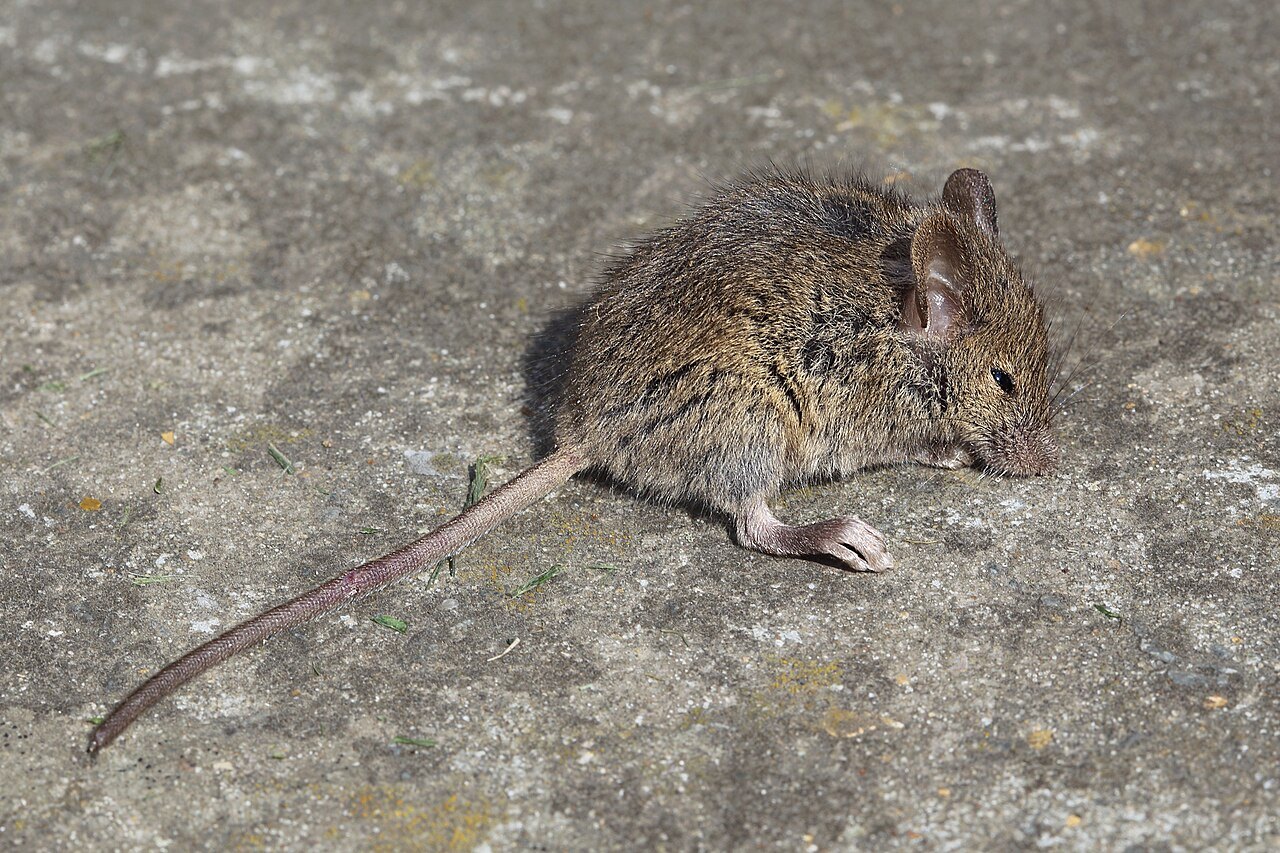
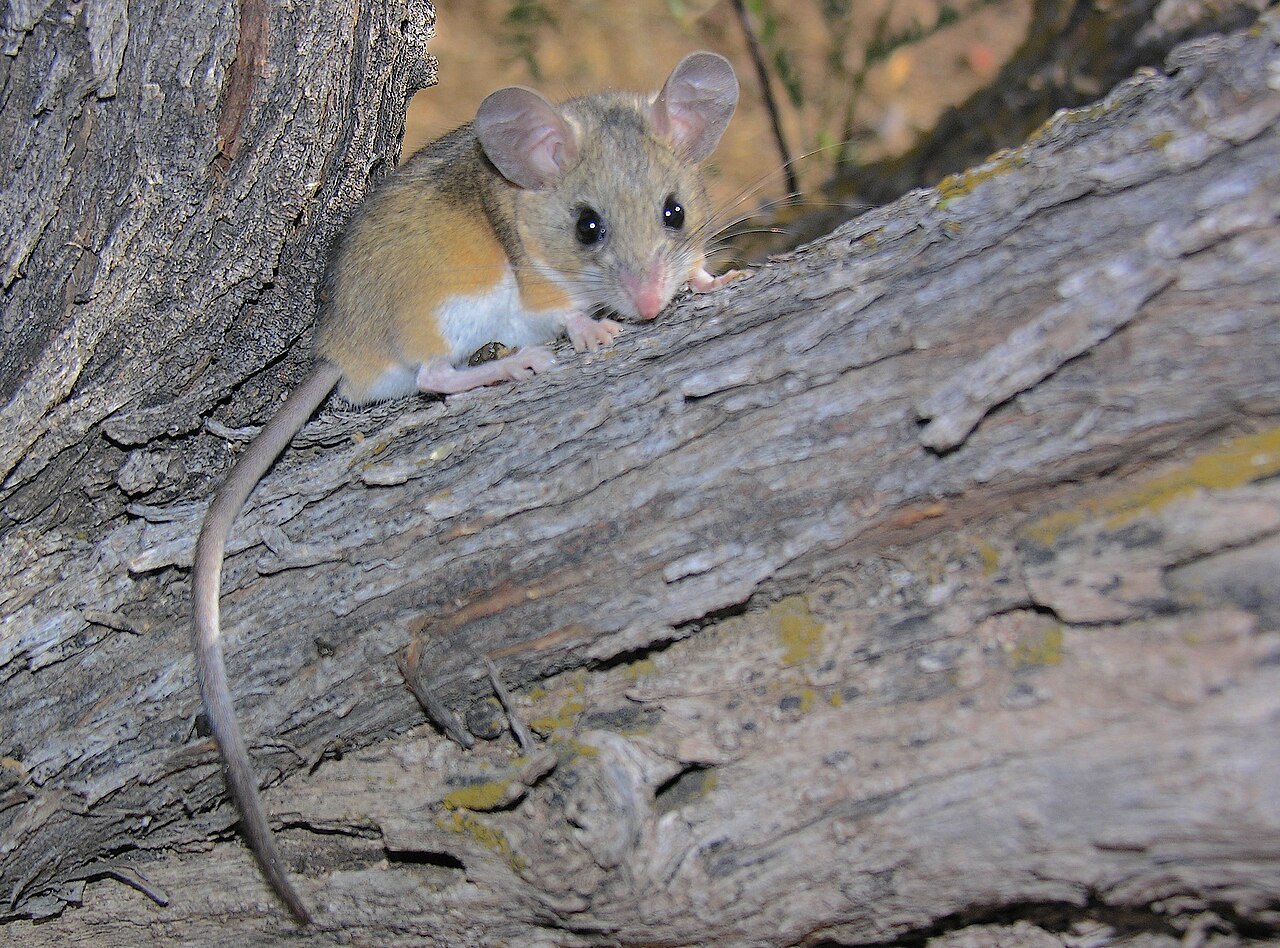
"Mouse" is not one animal, and the two most common homeowner encounters have different habits that change where you set traps. Snapshot the animal's coat before it disappears under the dishwasher: the house mouse is a uniform dusty grey-brown, while a deer mouse is sharply two-toned — a brown or tan back with a clean white belly and white feet.
| What you see | House mouse (Mus musculus) | Deer mouse (Peromyscus) |
|---|---|---|
| Coat pattern | Uniform dusty grey-brown; belly only slightly paler than the back | Strongly two-toned — brown/tan back divided from a white belly and white feet |
| Eyes and ears | Small, neat ears and small eyes | Noticeably larger eyes and ears relative to the head |
| Where it wants to live | Almost always indoors once it gets in — wall voids, kitchen cabinets, appliance cavities | More often a field/woodlot animal that comes in for the season; frequently found in garages, outbuildings and basements first |
| Droppings | Pointed at one end, roughly the size of a grain of rice | Similar shape and size — dropping shape tells you rodent, not species |
Penn State Extension's IPM guidance gives you the fastest confirmation that you have rodents rather than, say, a stray cockroach problem: dark droppings and holes in the wall ringed with dirty, oily rubbings where bodies squeeze through repeatedly. Mice droppings are pointed and grain-of-rice sized; rat droppings are blunt and closer to a small raisin. If the "droppings" you are looking at are actually tiny dark insects crawling, that is a different problem entirely — the tiny black bugs in the house guide separates springtails, booklice and carpet beetles from rodents.
One more diagnostic worth doing properly: clean the droppings up, wearing gloves and a mask, and check the same spot in a few days. Fresh droppings mean the population is still active; nothing appearing suggests you have found a sealed void the mice abandoned.
The one number that decides whether exclusion works
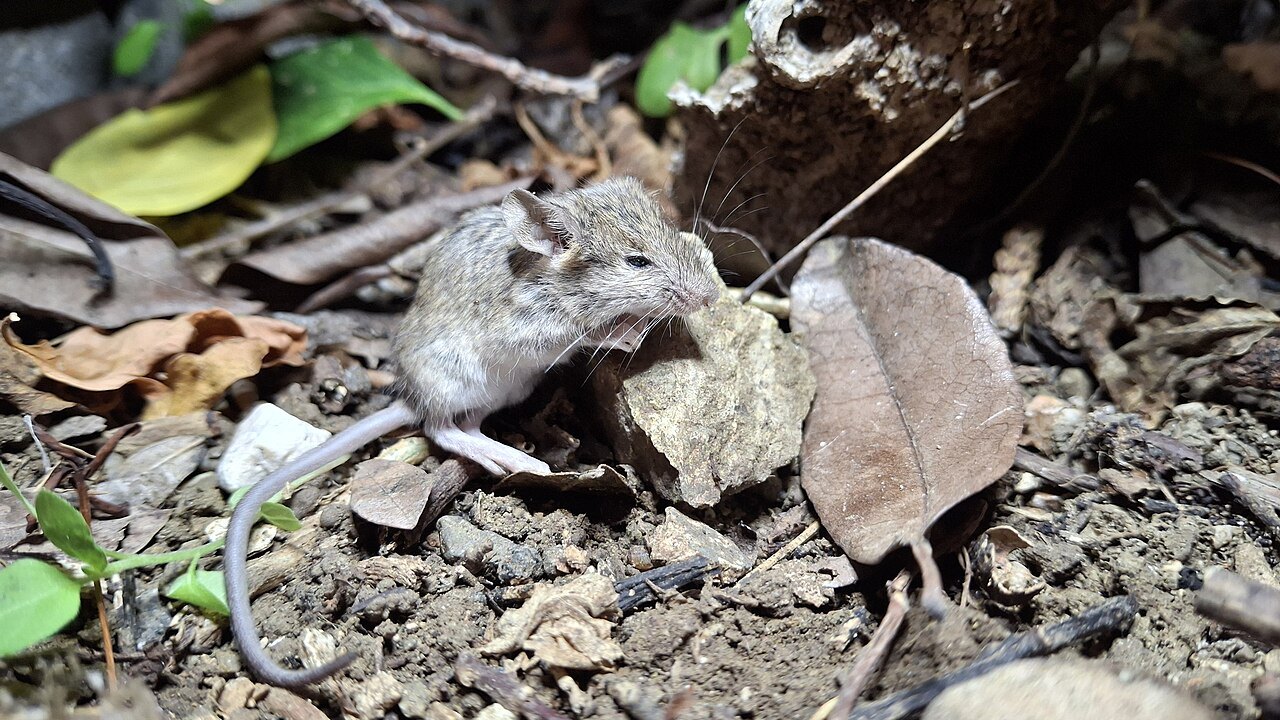
The CDC states it plainly: a mouse can fit through a hole the width of a pencil — about 1/4 inch, or 6 millimetres, in diameter. Everything else in this guide is downstream of that fact. Homeowners consistently over-estimate how big a gap has to be before it is a problem. A quarter-inch is smaller than the gap under most exterior doors, larger than the penetration a gas line makes through a sill plate, and roughly the width of the drain line running out of your air handler.
It also means that "sealing" a house is not a weekend project you finish and forget — it is a checklist you work until every pencil-width opening is accounted for. The practical test is to walk the building with a flashlight and a pencil. Anywhere the pencil slides in, a young mouse can.
The exterior sweep: where the actual openings are
Work from the outside in, because an exterior gap is the cause and an interior sighting is only the symptom. The CDC's seal-up guidance names the specific failure points to check, and they are consistent enough that you can turn them into a route around the house.
| Zone | What to look for | What to do about it |
|---|---|---|
| Foundation to ground | The gap between the foundation wall and soil, and any crack or penetration below the sill | Seal with caulk rated for masonry; fix trailer skirting and add flashing around the base of the house |
| Doors and windows | Missing or worn weather stripping, gaps under exterior doors, torn screens | Replace weather stripping; fit door sweeps; repair screens rather than replacing them later |
| Utility penetrations | Holes where electrical, plumbing, cable, gas, sewer and dryer-vent lines pass through walls | Fill small openings with steel wool held in place by caulk or spray foam; cut hardware cloth or metal sheeting to fit larger ones |
| Roof and eaves | Rafters, gables, eaves, soffits and attic vents — mice climb and will use a roof line | Screen vent openings with hardware cloth and close gaps at the roof/wall junction |
| Outbuildings | Garages, sheds and crawl-space doors are usually sealed last and sealed worst | Treat them as part of the house — the CDC is explicit that outbuildings and garages get sealed too |
Material choice matters more than people expect. Steel wool packs a gap but rusts and compresses over time; the durable pattern is steel wool jammed into the void and then held there with caulk or spray foam so it cannot be pulled out. For anything larger than a fist, use a rigid barrier — lath screen, metal sheeting, cement or hardware cloth — because foam alone is not a barrier a determined rodent will respect.
The interior sweep
Inside, the CDC's inspection list is essentially a tour of the places builders leave penetrations: under and behind kitchen cabinets, floor corners inside closets, around the fireplace, behind appliances, around the pipes under sinks and washing machines, around the lines feeding the water heater and furnace, around floor air vents and dryer vents, in the attic, in the basement or crawl space, and along the floor-to-wall juncture. Nothing about that list is random — every line is a place where a service enters the building.
Where a gap is hidden behind a cabinet or inside a wall cavity, you can still work on it: foam and steel wool can be injected from an adjacent void, and a suspended-ceiling or crawl-space hatch is usually the cheapest access point. What you should not do is assume a gap is harmless because you cannot see daylight through it. Air movement is a better test than light in a dim basement.
Take away food, water and shelter
Exclusion is the durable fix, but it works far better if the house is not also advertising itself as a good place to live. The CDC's seal-up guidance reduces to three habits:
- Food. Keep pantry items in thick plastic, metal or glass containers with tight lids. Clean spills immediately. Put pet food away after feeding and do not leave food or water bowls out overnight. Use lidded plastic or metal bins for indoor garbage and wash them out regularly.
- Water. Fix dripping taps and condensate lines. A mouse needs far less water than most people assume, but a chronically wet utility area is a genuine attractant.
- Shelter outside. Keep exterior garbage in a lidded can with no holes, clean up around grills and outdoor cooking areas, and — the two items homeowners most often get wrong — keep compost bins at least 100 feet from the house, and keep bird feeders well away from the building, using squirrel guards to limit spill.
Traps and baits: what actually works
For the mice already inside, snap traps remain the workhorse. They are cheap, they let you confirm what you caught, and they are easy to place correctly: along walls, in the runs where you have seen rub marks or droppings, with the trigger plate against the wall, not out in the middle of a room. Mice are cautious about new objects, so expect the first night to be quiet and the second to be productive.
Bait products are where the rules get tighter than most people realise. Consumer rodenticide products sold at retail in the US are ready-to-use bait stations, and the EPA restricts the active ingredients they may use to bromethalin, chlorophacinone, cholecalciferol, diphacinone, warfarin or zinc phosphide. Second-generation anticoagulants that you may find named in older guidance — brodifacoum, bromadiolone, difenacoum, difethialone — are not permitted in consumer bait products. The bait must stay secured inside the station that came with it.
Two safety rules come with that and are not optional. Place traps and baits only where children and pets cannot reach them, and store pesticides away from food — including pet food. And because a poisoned rodent becomes a poisoned meal for whatever eats it, the EPA's advice is to promptly remove and dispose of dead rodents rather than letting a carcass disappear into a wall or yard where a hawk, owl, cat or dog can find it.
What not to do
| Common move | Why it fails |
|---|---|
| Foggers and "bug bombs" in a rodent situation | They treat exposed air, not the voids mice actually live in, and they leave residues on kitchen surfaces |
| Ultrasonic plug-in repellents | Mice habituate to sound quickly; meanwhile the entry gap is still open, so the problem returns |
| Poison set loose in the open | Consumer baits must be in stations, and loose bait is both an exposure risk and a wildlife secondary-poisoning risk |
| Spraying the perimeter and calling it done | This is a rodent, not an insect; the entry point is a physical hole that a spray does not close |
| Bird feeder on the wall, compost bin at the back step | You have built a rodent cafeteria against the very wall you are trying to seal |
When to call a professional
Exclusion and trapping handle the common case. Hand it over when the animals have reached places you cannot safely work — inside wall voids, behind sealed cabinetry, in a crawl space you cannot enter, or in a commercial kitchen where the inspection has to be documented. The CDC and EPA both point the same direction here, and the EPA publishes tips for hiring a rodent control professional that are worth reading before you take quotes: ask what monitoring and exclusion work is included, not just what bait will be placed. If the quote is for poison alone, you are buying a temporary suppression, not a fix.
A professional visit also pairs naturally with the DIY work. The DIY vs pro cost calculator puts the two routes side by side, and the pest control contract review covers the exclusion and re-treatment clauses worth insisting on before signing anything annual.
Your fall exclusion checklist
- Walk the exterior with a flashlight and a pencil; mark every gap the pencil enters.
- Seal small penetrations with steel wool plus caulk or spray foam; use hardware cloth, metal sheeting or cement for larger openings.
- Replace worn weather stripping and fit door sweeps on every exterior door, including the garage.
- Screen attic, crawl-space and dryer vents with hardware cloth.
- Move compost at least 100 feet from the building and pull bird feeders away from the wall.
- Switch pantry and pet food to sealed containers; stop leaving bowls out overnight.
- Set snap traps along the runs you identified, and check them daily.
- After any baiting, remove carcasses promptly and keep stations out of reach of children and pets.
- Log every sighting and every seal, so next October you know whether it worked.
The same perimeter work is what keeps the other winter yard rodents out — if you are also finding runways in the turf or fresh soil mounds, the mole vs vole guide separates those two before you spend anything, because neither one is fixed by the rodenticide you would use indoors.
Next steps
Two mice do not stay two mice. If you have caught more than one in a fortnight, the rodent breeding calculator models how quickly a surviving pair turns into a colony — which is the honest argument for dealing with the entry points now rather than in January. If you are not yet sure whether the scratching in the wall is a mouse, a squirrel or a rat, the emergency pest triage tool sorts the sound-and-location evidence, and the pest ID wizard narrows it down by size and shape. To put the whole season in order — perimeter work, garden protection and the autumn invasion calendar — use the seasonal garden defence planner, and record what you find in the IPM pest log so the next fall starts with data instead of guesswork.
Sources: U.S. Centers for Disease Control and Prevention, Controlling Wild Rodent Infestations (droppings and gnaw marks as presence signs, the clean-and-recheck test, and the food/water/shelter priorities) and How to Seal Up to Prevent Rodents (the 1/4-inch / pencil-width gap, the exterior and interior inspection lists, sealing materials and the 100-foot compost distance); U.S. Environmental Protection Agency, Safely Use Rodent Bait Products (consumer products are ready-to-use bait stations; permitted actives; the ban on second-generation anticoagulants in consumer products; prompt carcass removal) and Tips for Hiring a Rodent Control Professional; Penn State Extension, Got Pest Problems? Eliminate Household Pests with IPM (IPM prevention-first sequence, caulking and copper mesh for entry points, and the mouse-vs-rat dropping comparison).