Mole or vole? The 30-second read
Penn State Extension states the test in one sentence, and it is the sentence to remember: signs of moles are raised tunnels in the lawn, and if you have pathways where grass is clipped, you most likely have voles instead of moles. In practice that means:
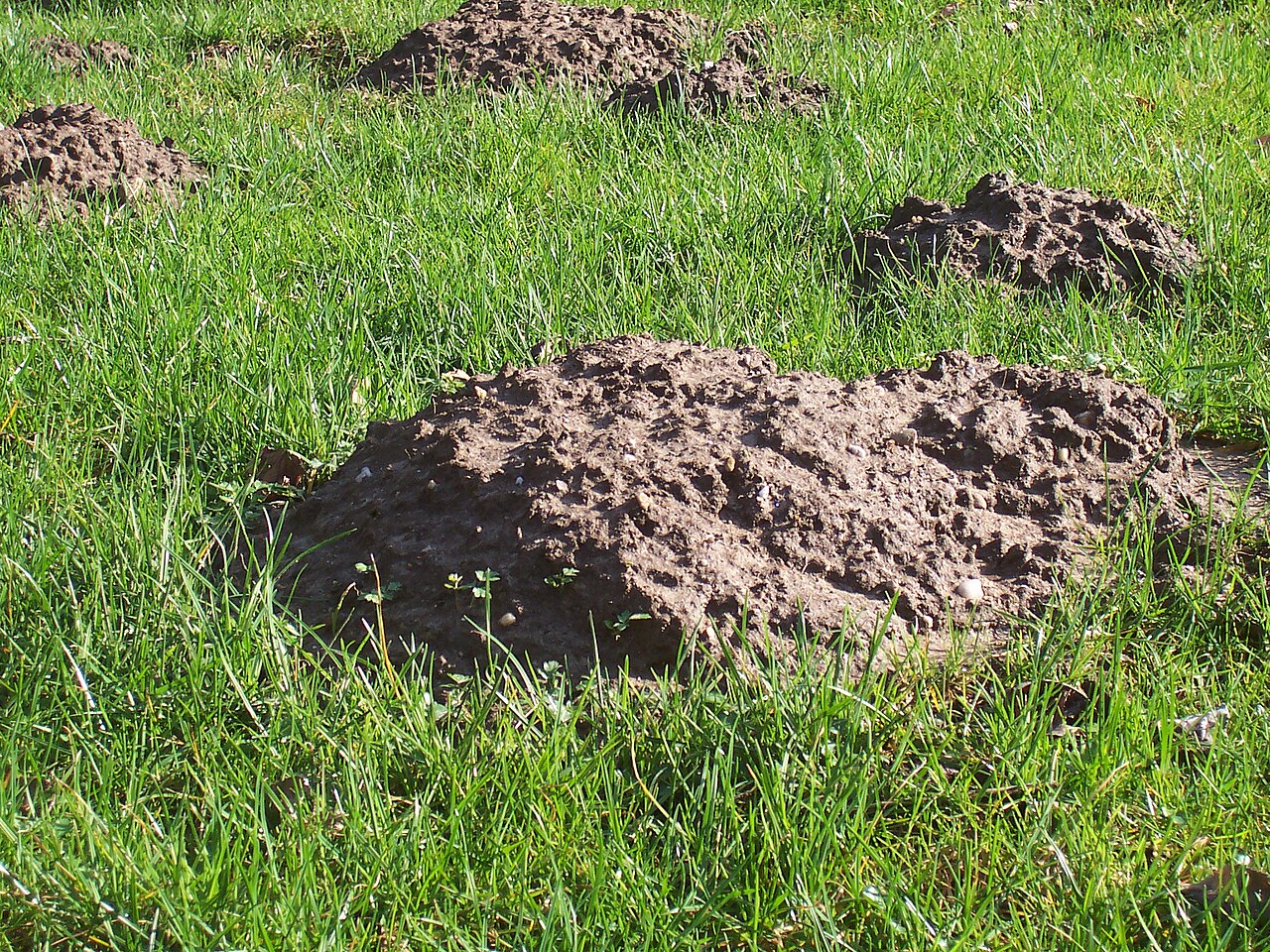
- Conical mounds of loose soil, no flattened path anywhere. Mole. The mounds are the excavated soil from tunnelling, pushed up from below. UC IPM notes the mound margin is usually circular, and a run of mounds often sits in a line along the tunnel that connects them.
- Shallow ridges you can roll flat underfoot. Mole again. These are surface runs the animal pushes up as it travels just under the turf, hunting worms and insects.
- Narrow lanes of clipped grass with no soil pushed up at all. Vole. You are looking at a runway, not a tunnel — a path mown through the grass by a rodent that is walking on the surface, not digging under it.
- A green-stained, well-trodden path with small holes at each end. Vole, and an active one. UC IPM describes runways connecting burrow openings that are each about 1½ to 2 inches across, with fresh green clippings and greenish droppings about 3/16 inch long in the lanes as the giveaway.
If the damage is a chewed plant rather than disturbed soil, the next section matters: extension sources are unusually unanimous that moles are not plant eaters, and that chewing damage gets blamed on them constantly.
The two damage signatures, side by side
Everything below comes from university extension fact sheets — Penn State, UC IPM and the University of New Hampshire — rather than from pest-control marketing.
| What you see | Most likely animal | What it is doing |
|---|---|---|
| Conical mounds of crumbly soil, circular margin, often in a line | Mole | Pushing spoil out of a feeding tunnel. The soil comes up in chunks and dries on the surface |
| Raised ridges or tunnels under the turf that flatten when stepped on | Mole | Hunting earthworms and insects in a shallow run just below the surface. Some of these runs are temporary |
| Clean-cut lanes through grass, no soil mounds | Vole | Travelling and grazing along a runway it keeps open. The grass is clipped, not excavated |
| Bark chewed off near the base of a shrub, fruit tree or young ornamental — irregular patches at odd angles | Vole | Feeding on bark when live grass is scarce. UC IPM gives the marks as about 1/8 inch wide and 3/8 inch long |
| Roots, bulbs or tubers eaten; plants heaving out of the soil | Vole (not mole) | UC IPM is blunt that moles only "infrequently" take roots or bulbs, and that rodents — voles among them — are almost always the cause of chewing damage |
What each animal is actually doing in your yard
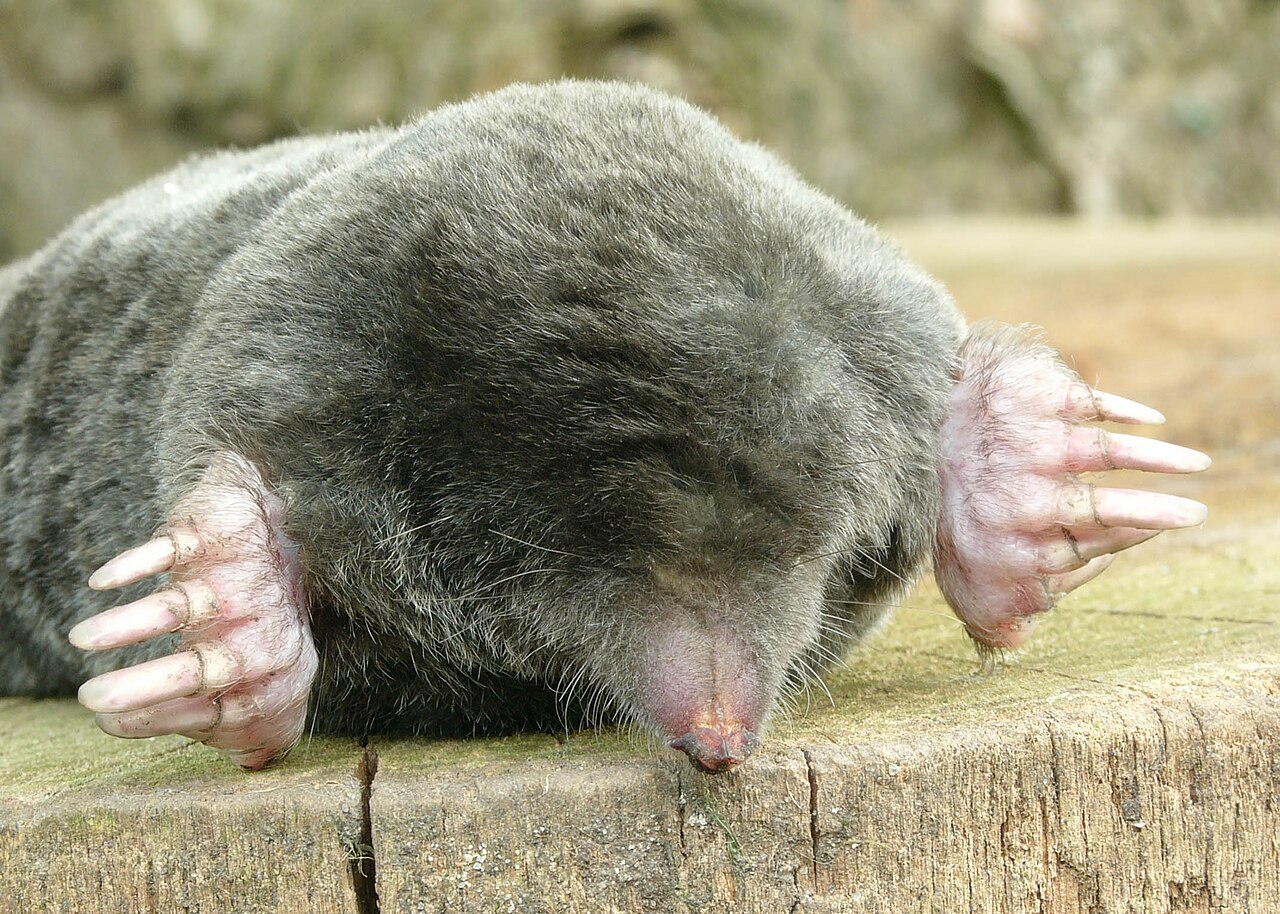
Moles are insectivores. They are not rodents at all, and Penn State describes them as feeding on grubs, earthworms and other insects. UC IPM adds the anatomy that explains the damage: cylindrical bodies, slender pointed snouts, short sparsely haired tails, spadelike limbs, ears that are not visible, and short dense velvety fur. They live almost entirely underground in a network of interconnecting tunnels, and the greatest damage they do is not eating anything — it is the burrowing itself, which dislodges plants and dries out their roots.
Two details from UC IPM are worth knowing before you decide what to do. First, moles are territorial: you will usually find only one mole per tunnel system, except during the breeding season in late winter and early spring. A lawn that looks wrecked is very often the work of a single animal. Second, the deep tunnels are permanent and the surface runs are not — which is why tamping a ridge down and watching whether it comes back is the standard way to find out where the mole is actually working.
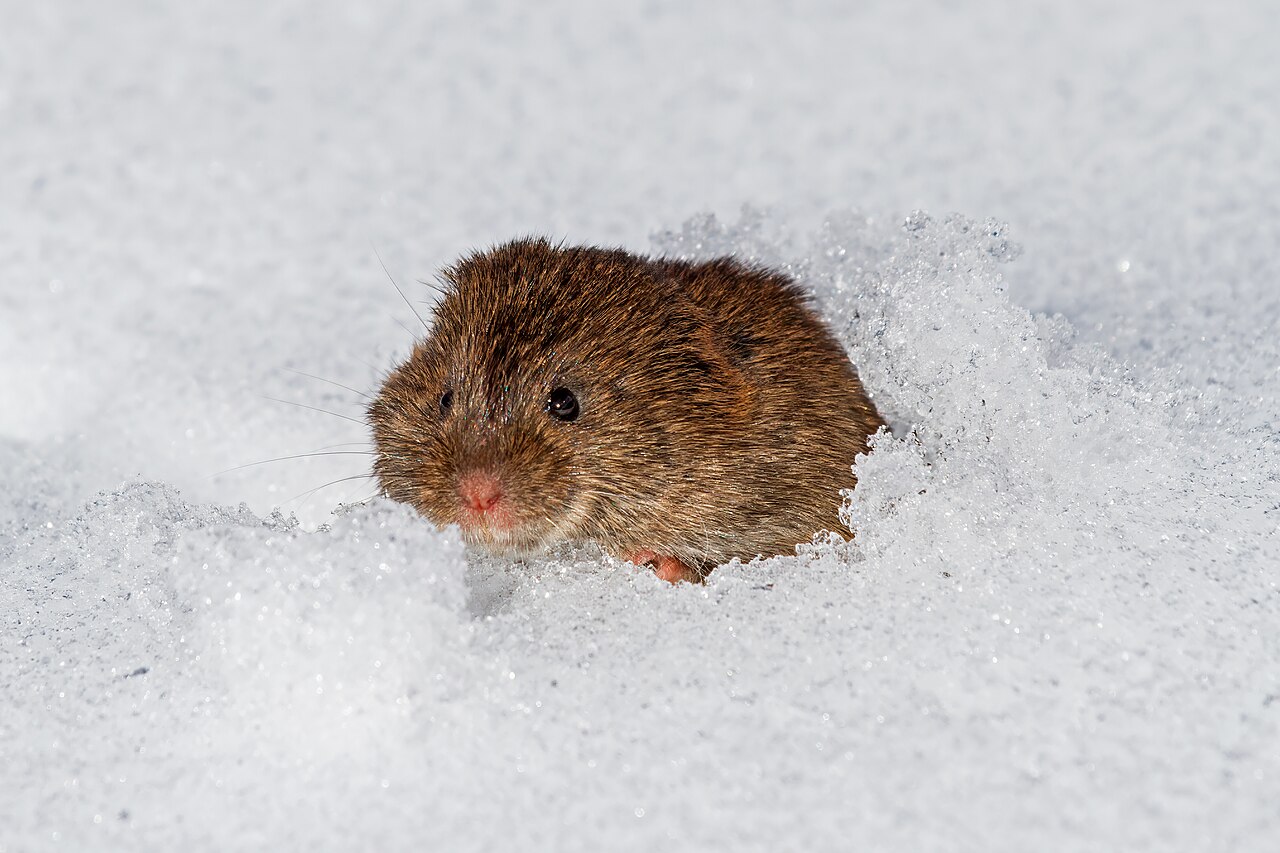
Voles are the opposite animal in almost every way. Penn State describes them as small, chunky, ground-dwelling rodents 5 to 7 inches long, with stocky bodies, short legs and short tails, chestnut-brown mixed with black on top and dark grey underneath. They eat grasses and forbs, and in late summer and fall they store seeds, tubers, bulbs and rhizomes. Bark features mainly in fall and winter, when live grass and herbaceous plants are gone — and that is when the expensive damage happens. New Hampshire Extension calls meadow voles "one of the most significant winter rodent pests in the garden", because feeding at the base of a trunk or root girdles the plant, cutting off the flow of water and nutrients, and can kill a shrub or young tree outright.
Why the damage always looks worst after the snow melts
Both animals work through the winter, and the snow cover is what hides it. UNH Extension notes that winter lawn and landscape damage is usually due to moles and meadow voles, both of which are active year-round. UC IPM is more specific about the voles: in areas with winter snow, they burrow in and through the snow to the surface, and where snow cover is present, trunk damage can extend a foot or more up the trunk. That damage "often escapes notice until it is too late" — the bark is gone by the time the snow pulls back.
If the damage is a mole, the timing runs the other way: UC IPM reports that surface activity slows or stops during extreme cold, heat or drought, and that the greatest mole activity comes after rainfall or watering, when digging new tunnels is easiest. A lawn that suddenly sprouts a new line of mounds after a wet week is behaving exactly as the literature predicts.
One reassurance from UNH before you spend anything: live vole runways may look severe but the turf usually recovers. The tunnels "will often become less noticeable once the grass begins to grow again". The plants to worry about are not the lawn — they are the woody ones.
Identifying the animal itself
Trapping is what most people end up doing, so it is worth confirming the animal before you spend money on gear. The characters below come from Penn State's vole article and UC IPM's two Pest Notes.
| Feature | Mole | Vole |
|---|---|---|
| Front feet | Greatly enlarged, with prominent digging claws (Penn State), spadelike (UC IPM) | Ordinary small rodent feet |
| Eyes and ears | Very small eyes, no external ears; ears are not visible at all | Small black eyes; ears present but furred and not projecting above the hair |
| Snout and teeth | Slender, pointed snout | Rounded, blunt snout; chisel-shaped front teeth |
| Tail | Short, bare or sparsely haired | Short and thinly furred — the feature that separates a vole from a mouse, whose tail runs nearly half its body length |
| Size | Roughly 5 to 7 inches including a very short tail | Penn State: 5 to 7 inches. UC IPM: 5 to 8 inches including the tail |
If you have the animal in hand and want a structured path to an answer rather than a table, run it through the mole vs vole identifier — it asks the same field characters in order and takes about twenty seconds.
What does not work
This is the part of mole and vole control where money disappears. UC IPM evaluated the popular home remedies for moles and did not find support for any of them: irritating materials in the burrow — broken glass, razor blades, thorny rose branches, bleach, mothballs, lye, human hair — along with "frightening" devices such as mole wheels, vibrating windmills and whistling bottles, and the gopher-plant, Euphorbia lathyris. The assessment is unambiguous: none of these approaches has proved successful in stopping mole damage or driving moles off.
| Method | Extension verdict | Why |
|---|---|---|
| Ultrasonic / vibrating / sound devices | Not supported (moles and voles) | UC IPM: research does not support their effectiveness, for either animal |
| Flooding the tunnels | Not recommended / ineffective | Burrow systems are extensive and shallow with many open holes; the water simply does not fill them |
| Grain-based mole baits | Rarely effective | A mole's diet is earthworms and insects, so a grain bait does not read as food |
| Burrow fumigants | Not effective for voles; not often used for moles | Gas escapes from the shallow, many-holed burrow systems |
| Letting predators handle it | Not a plan | Cats, dogs, hawks and owls take some, but UC IPM notes they rarely hunt where the damage is and a residual population always remains |
| Killing the grubs to starve moles out | Unconfirmed | UC IPM: reducing soil insects may make turf less attractive, but this strategy has not been confirmed by research — and earthworms, not grubs, are the main diet |
What actually works
For moles, everything narrows to one method. UC IPM calls trapping "the most universally applicable and dependable method of mole control", and Penn State's guidance agrees. The detail that decides success is not the brand of trap but where you set it: tamp down short sections of the surface runs and mounds, watch for a day or two to see which ones are pushed up again, and set your trap in a tunnel the mole is genuinely using — at least 18 inches from a mound. Traps must straddle, encircle or sit suspended over the tunnel, because a mole that meets an obstruction in a burrow will plug it off and dig around it. Expect it to take several days.
For voles, trapping works but only alongside habitat work, and the habitat work is what actually prevents next winter's damage. UC IPM's sequence: remove or reduce the vegetative cover that voles need — weeds, heavy mulch, dense ground cover — keep a 4-foot-diameter circle around young trees free of vegetation, and expect that voles prefer not to feed in the open. For trapping, a small garden needs a dozen traps as a minimum (50 or more for larger areas); set them at right angles to the runways with the trigger in the lane, usually unbaited, and cover them with something like a length of gutter so birds are not caught instead. After you stop catching voles in one spot, move 15 to 20 feet along.
Physical exclusion is the durable fix for the expensive damage. UNH recommends tree guards made from ¼-inch hardware cloth around the base of the trunk; UC IPM specifies a cylinder of hardware cloth, sheet metal or heavy plastic, buried 4 to 6 inches below the soil and tall enough to stand above normal snow depth, braced so it cannot be pressed against the trunk. Check the guards periodically — voles will sometimes gnaw through and shelter inside them.
Two honest caveats. Castor-oil repellents have shown some effect against eastern moles but have no published western research behind them, and repellents only push animals into the neighbouring yard — where they keep doing damage. And if voles are already at high numbers, extension guidance is that consumer options thin out quickly: the only toxicant registered for voles in residential settings (zinc phosphide) is restricted-use and limited to non-residential lawns, parks and golf courses, which puts it in the hands of a licensed applicator rather than yours.
When it is worth paying someone
The decision is not really "mole or vole" — it is how much of your landscape is at stake. A single mole working a lawn is a trapping job most homeowners can finish with one or two traps and some patience; UNH's own advice is that a lawn with modest damage may simply be left alone, since both animals have an ecological role. Voles around young fruit trees, newly planted shrubs or a vegetable garden are a different risk profile, because girdling kills woody plants outright and the work has usually already happened by the time you see it.
Before hiring anyone, get a written scope: the species being targeted, the method, the number of visits, and what happens if the animals return. For a one-time visit versus a recurring contract — and what a fair price looks like for each — the DIY versus pro calculator prices both paths, and the pest control contract review walks through the clauses and cancellation rights worth knowing before you sign.
Your fall and winter damage calendar
| Season | What the animals are doing | What to do about it |
|---|---|---|
| Late summer – fall | Voles cache seeds, tubers and bulbs, and move onto bark as live plants disappear; moles work the wetter soil | Mow close to plantings, cut back dense ground cover, and fit trunk guards on young trees before the damage window opens |
| Winter, under snow | Voles burrow through and under snow, feeding on bark — damage can run a foot or more up the trunk | Nothing to see. This is why the guards and the mowing are a fall job, not a spring one |
| Late winter – early spring | Mole breeding season: territory rules loosen and more than one mole can share a tunnel system | Still trappable — moles are active and can be trapped at any time of year |
| Snowmelt | The evidence appears at once: runways, mounds, and the real damage at the base of woody plants | Walk the base of every shrub and young tree. Tamp mole runs flat and re-check in a few days to locate active tunnels |
| Spring – summer | Vole breeding peaks; populations can build fast, and in some areas they cycle every 3 to 6 years | Keep the vegetation down and the runways exposed — voles spend less time in mowed areas and are more exposed to predators there |
Next steps
Confirm the animal before you buy anything: the mole vs vole identifier settles it from the field characters, and if the damage is a chewed plant rather than disturbed soil, the garden damage detective sorts feeding signatures for vegetables and fruit. If rats, mice or voles are using the same routes into a building, the fall rodent-exclusion guide covers the sealing work in the same pass.
Two related guides are worth a look while the ground is still soft. Moles are eating earthworms — which is also the reason a lawn with a healthy worm population attracts them, and the same soil biology that cluster flies depend on. And the seasonal garden defence planner builds the whole year's outdoor schedule around triggers rather than dates, which is the right frame for vole-proofing: the guard goes on in October, not the week after you find the damage.
Sources — all five pages fetched and read in full for this article: Penn State Extension, Damage from Moles (moles as insectivores feeding on grubs and earthworms; raised tunnels as the sign; trapping as the best control; the clipped-grass pathway test that separates voles from moles); Penn State Extension, Voles (size, build, blunt snout, chisel teeth, furred ears and short tail; the mole-versus-vole and vole-versus-mouse characters; grass-and-forb diet with fall caches of seeds, tubers, bulbs and rhizomes; bark taken mainly in fall and winter; year-round day-and-night activity); UC Statewide IPM Program, Pest Notes: Moles (moles are not rodents; circular mound margins versus crescent-shaped gopher mounds; permanent tunnels 8–12 inches deep; one mole per turf; rodents are almost always the cause of root and bulb chewing; greatest surface activity after rain or watering; trapping as the most dependable control, set at least 18 inches from a mound and only in tunnels shown to be in use; the home remedies and frightening devices that have not been shown to work; the limits of castor-oil repellents, grain baits, flooding, predators, and grub reduction to starve moles out); UC Statewide IPM Program, Pest Notes: Voles (Meadow Mice) (runway openings 1½–2 inches across with fresh green clippings and 3/16-inch droppings; gnaw marks about 1/8 inch by 3/8 inch; girdling that kills trunks and roots, up a foot above the snow line; habitat modification with a 4-foot vegetation-free circle; ¼-inch exclusion mesh buried 6–10 inches; trunk cylinders buried 4–6 inches and taller than snow; a dozen traps as the minimum for a small garden, set at right angles to runways and covered to protect non-target birds; zinc phosphide as the only residential toxicant and it is restricted-use; fumigants, ultrasonics and flooding ineffective); University of New Hampshire Cooperative Extension, Mole or Vole? (both animals active year-round; vole tunnels in turf fading as grass regrows while woody plants take the lasting damage; winter bark feeding that girdles and kills shrubs and trees; ¼-inch hardware cloth guards and mowing close to plantings; mousetraps baited with peanut butter and apple inside an active tunnel, covered; moles as insect eaters that do not feed on plants, with tamping or raking the easiest fix; and leaving modest damage alone).