Why the species decides the bait
Ant baits are not poisons sitting in a trap — they are food with a slow-acting toxicant mixed in. Workers have to want the food, survive long enough to carry it back, and pass it through the colony mouth-to-mouth until it reaches the queens and brood. That chain only works when the attractant matches what the species is hunting for: carbohydrates (sugars) for some ants, proteins and oils for others. University extension guidance is blunt about the stakes — the attractant in the bait must be preferred by the type of ant you have identified, or the station just sits there.
The twist most people miss: preference is not fixed. A colony that took protein bait last week may be on sugar this week, and some species (Argentine ants especially) shift with the season — protein in spring, sugar the rest of the year. The practical answer is to run the match with two or three bait types available and let the ants vote.
| Species | Try first | Actives commonly used | The one thing to watch |
|---|---|---|---|
| Odorous house ant | Sugar bait | Borax / boric acid (sugar baits) | Give it up to 2 weeks; replace used stations |
| Argentine ant | Liquid sugar (borate) bait | Borate (borax) liquids in refillable stations | No perimeter spray near the stations |
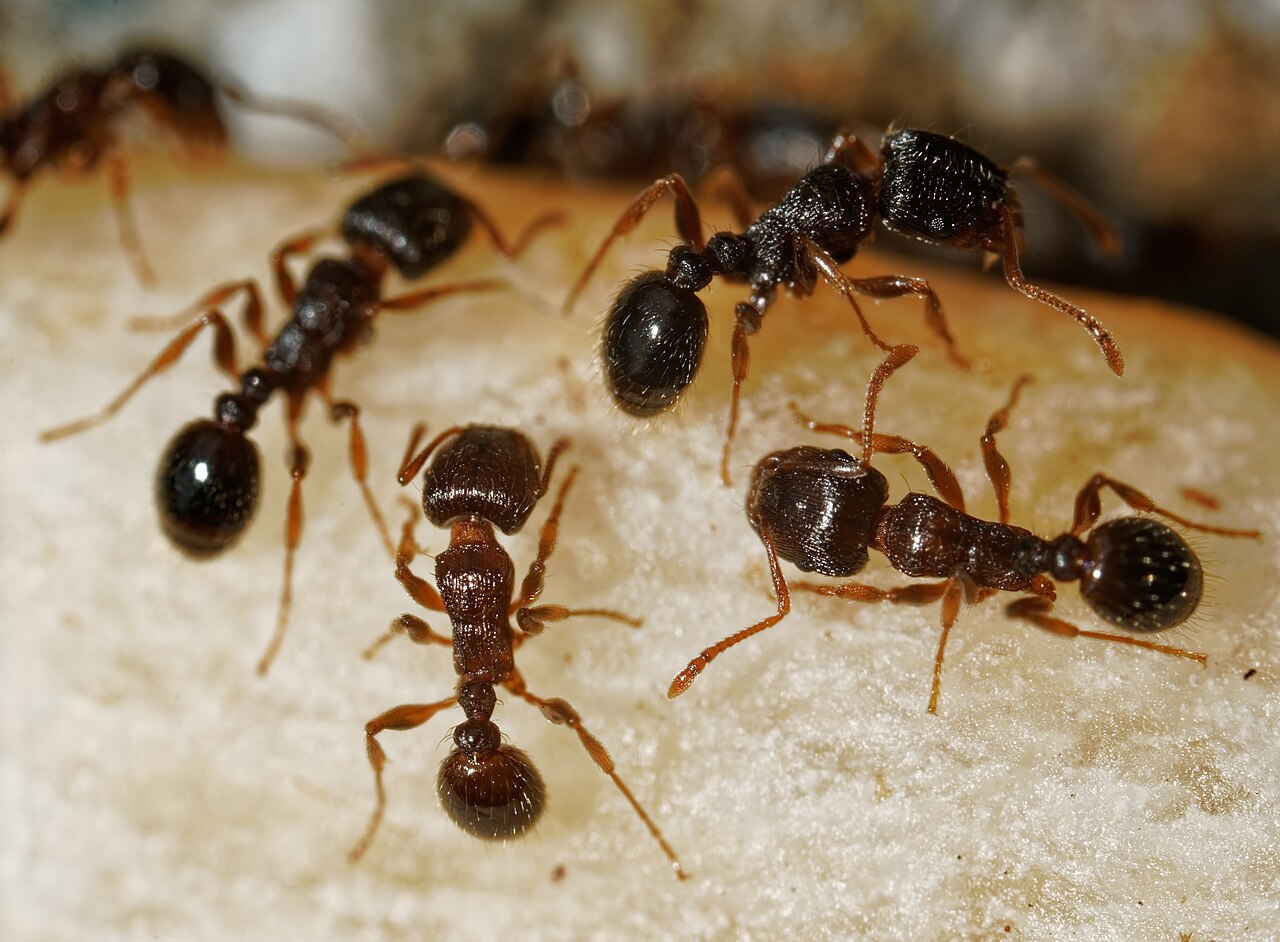
| Pharaoh ant | Protein / oil bait | Fipronil, abamectin, hydramethylnon, borax | Never spray — colonies bud and spread |
| Pavement ant | Protein, grease or sugar trials | Fipronil, abamectin, hydramethylnon | The nest is outdoors — treat the source |
| Carpenter ant | Protein bait (to track the nest) | Fipronil, abamectin gels | Baiting alone rarely fixes wood nesting |
| Fire ants | Oil/protein granular bait | Hydramethylnon-based granules | Never disturb the mound before baiting |
How to bait correctly (the part most people skip)
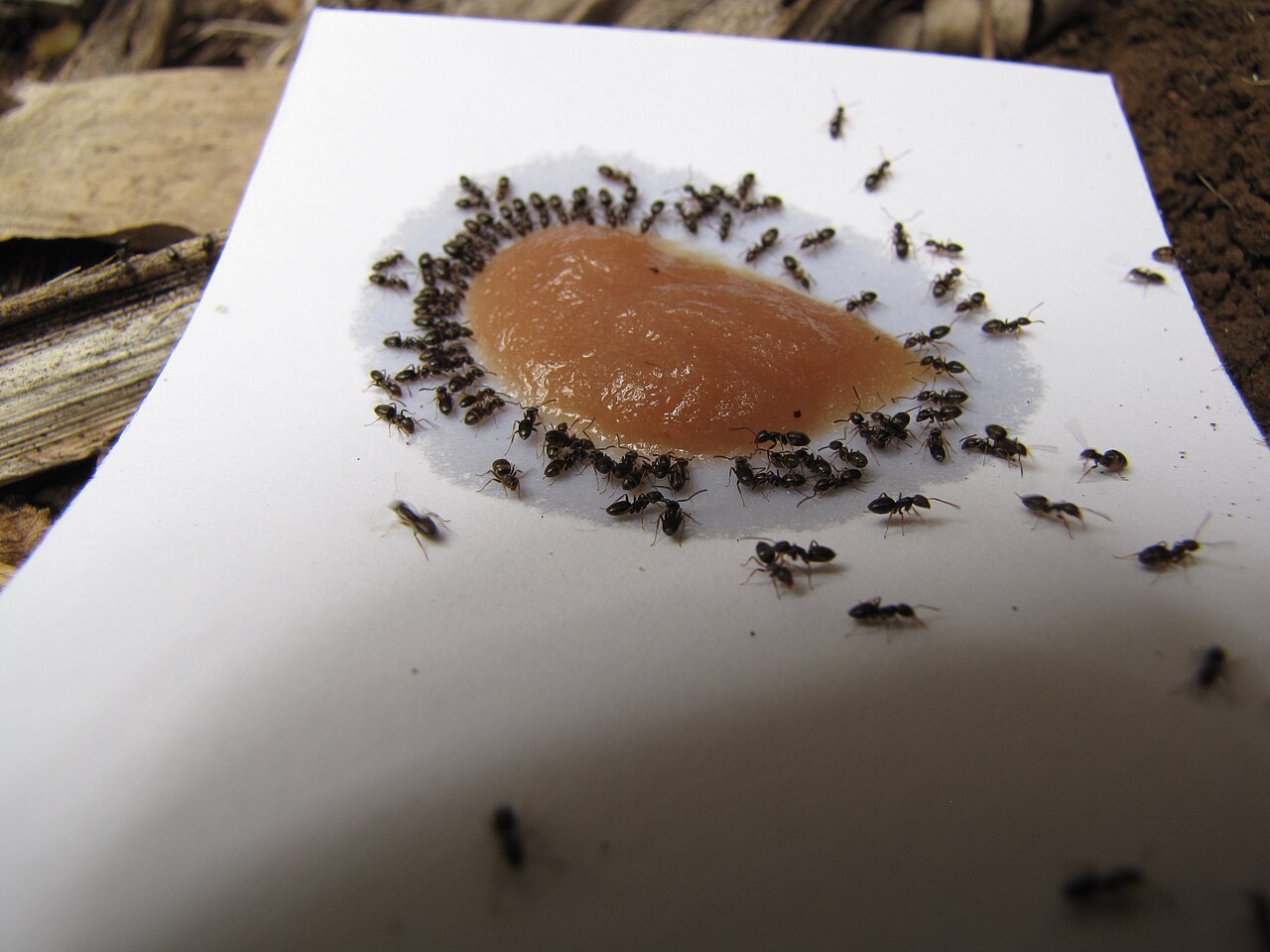
- Bait only when you have ants. Stations left out routinely can attract ants into the building instead of killing the ones you have.
- Place stations along the trail edges and near nest openings — outdoors first. Outdoor baiting draws ants out of the building; use indoor stations only when you cannot find where they are getting in.
- Do not disturb the trail. No wiping, no squashing, no spraying along the route. Every killed forager is bait that never makes it home.
- Offer more than one formulation — put out a sugar bait and a protein bait in the same area and see which gets traffic. Where you found the trail, position the station within a few inches so ants stumble into it.
- Check takes after a day or two. If ants are not feeding, relocate the station or switch formulation. If a station empties, replace or refill it — running dry stops the chain.
- Outside, space stations every 10 to 20 feet around the foundation where ants travel, and refresh them regularly; liquid baits dry out fast.
- Timing is leverage. Treatments made in late winter and early spring — when colonies are just starting to grow — are the most effective of the year.
What the label should say
Bait products let you check the match before you buy. Common active ingredients in consumer ant baits include boric acid and borates (classic in sugar-based liquids, including the borax-sugar recipes extension services describe for homemade stations), and fipronil, abamectin and hydramethylnon (common in protein-based solids, gels and granules). Two warning signs worth knowing:
- Granules containing cyfluthrin or permethrin may look like baits but are contact sprays — they kill foragers fast and never reach the colony.
- Some bait stations use actives that are simply too fast-acting (extension guidance flags propoxur and some indoxacarb products) — if the foragers die at the station, nothing travels home.
If a product does not say the species or the bait class on the label, ask the manufacturer before buying — the label is the only promise being made.
Timelines: what to expect
- 5-10 days — the first visible dip in ant numbers (liquid borate baits, big infestations).
- About 2 weeks — typical window for odorous house ant stations to turn the tide.
- 6-8 weeks — full population reduction with a proper baiting program. Slow is the point: fast results mean the bait stopped at the foragers.
When baiting is not the whole answer
Three cases need more than a station on the floor. Pharaoh ants: sprays make the problem worse by splitting the colony — baiting is the only reliable approach, and it needs stations on each trail line. Carpenter ants: if big ants are appearing regularly, the colony is probably nesting in wood — the ant vs. termite identifier settles the urgent question, and the lookalikes guide walks the rest. Persistent re-infestation: when ants keep returning from outside, the durable fix is exclusion and sanitation — caulk the entry points, manage the honeydew-producing insects on plants near the house, and keep mulch and vegetation back from the foundation.
If the colony is large, the nesting site is inside a wall void, or you would rather not manage pesticide placements yourself, the DIY vs. pro calculator and the pet safety checker are the next two stops. And if you are not sure you have the species right, the photo-based ID wizard narrows it by body and location before you buy anything.
Baiting guidance on this page follows university extension publications: UC IPM's Pest Notes on ants, Texas A&M AgriLife's IPM action plan for sweet-feeding ants, and Colorado State's ants in the home fact sheet.