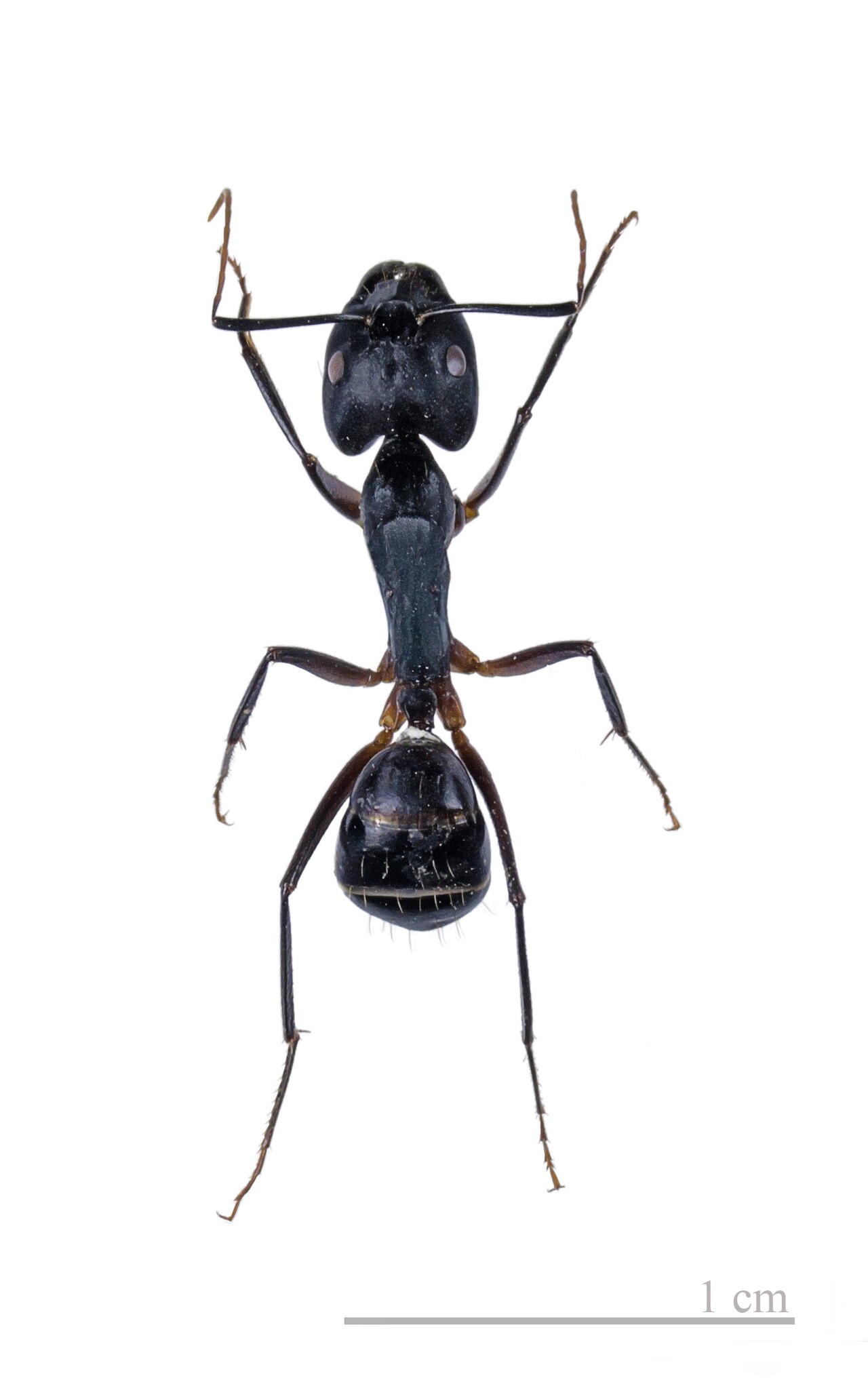
The 3-second check: termite vs winged ant
The most common confusion is between termite swarmers and winged ants — both fly in large numbers in spring, both are attracted to light, and both show up around windows. But they are easy to separate with three features:
| Feature | Termite swarmer | Winged ant |
|---|---|---|
| Antennae | Straight, bead-like | Elbowed (bent at the middle) |
| Waist | Thick, uniform — no pinched waist | Narrow, pinched waist |
| Wings | Two pairs of equal size | Front pair longer than back pair |
The University of Kentucky's extension entomology program uses exactly these three checks in its homeowner guide, and UC IPM's termite pest note repeats them — straight antennae, uniformly thickened waist, and equal-size wings mean termite; elbowed antennae, pinched waist, and unequal wings mean ant.
One more clue: shed wings. Termite swarmers drop both pairs of wings at once, so you will find loose wings in pairs on windowsills. Ants chew their wings off one at a time and the wings look different in size.
1. Carpenter ants
Carpenter ants are the #1 termite lookalike — and the most expensive misdiagnosis, because the two require completely different treatments. Both are large, dark insects that live in wood, and both leave sawdust-like debris. But carpenter ants are ants: elbowed antennae, pinched waist, and front wings longer than back wings. They also do not eat wood — they excavate it to build nests, usually in wood that is already damp or damaged.
The debris is a giveaway. Termite frass is six-sided, sand-like pellets. Carpenter ant "frass" is shredded wood fibers mixed with insect parts — it looks like coarse sawdust. And carpenter ant galleries are smooth and clean, while termite galleries follow the wood grain and are lined with mud or soil. If you have the insect in front of you right now, the four-question carpenter ant vs. termite identifier scores your sighting against these same checks — waist, antennae, wings, and debris.
2. Flying ants (winged ants)
Every ant colony produces winged reproductives that swarm to mate — usually the same warm, humid spring days when termites swarm. If you see a swarm near a window, catch one and check the antennae and waist before assuming the worst. Winged ants are harmless to wood; they are just looking for a mate.
A useful rule of thumb from extension entomologists: swarms emerging from a tree stump or woodpile in the yard are usually not a reason to panic — but swarmers emerging next to the foundation, from porches, or indoors near walls are a strong signal of an established termite colony nearby.
3. Powderpost beetles
Powderpost beetles leave exit holes in wood that homeowners often blame on termites. The holes are small (1/16 to 1/8 inch), round, and surrounded by fine, flour-like powder — distinctly different from termite damage, which hollows wood along the grain and leaves mud or soil behind. The beetles themselves are small, brown, and rarely seen; the damage is the clue.
Powderpost beetles usually attack unfinished or unseasoned wood — hardwood floors, furniture, and structural lumber with high moisture content. Fixing the moisture problem stops the cycle; the wood decay vs termite checker walks through the damage patterns side by side.
4. Carpenter bees
Carpenter bees are large, black-and-yellow bees that bore perfectly round, half-inch holes into eaves, decks, and fascia boards. The holes look alarming, but carpenter bees are not termites and do not eat wood — they tunnel into it to lay eggs. The classic sign is a pile of coarse sawdust below a round hole, often with the bee hovering nearby. Treatment is a dust applied into the tunnel, not a termite treatment.
5. Wood-boring beetles and other insects
Old house borers, deathwatch beetles, and even some wasps leave damage that gets blamed on termites. The common thread: if you see round exit holes, fine powder, or smooth tunnels, it is a beetle or bee, not a termite. Termite damage is characterized by mud tubes, soil-lined galleries, and hollowed wood that follows the grain — and termites themselves are pale, soft-bodied workers you will rarely see unless you break open an infested board.
What real termite damage looks like
For comparison, here is what actual termite activity looks like — the things lookalikes do not produce:
- Mud tubes — pencil-thick earthen tunnels on foundation walls, piers, and floor joists, built by subterranean termites to travel from soil to wood.
- Frass — tiny six-sided, sand-colored pellets (drywood termites push these out of kick-out holes).
- Hollow-sounding wood — tapping along a stud or floor joist that sounds papery, with soil or galleries visible when broken open.
- Swarmers indoors — winged termites emerging inside the home, which almost always indicates an established colony.
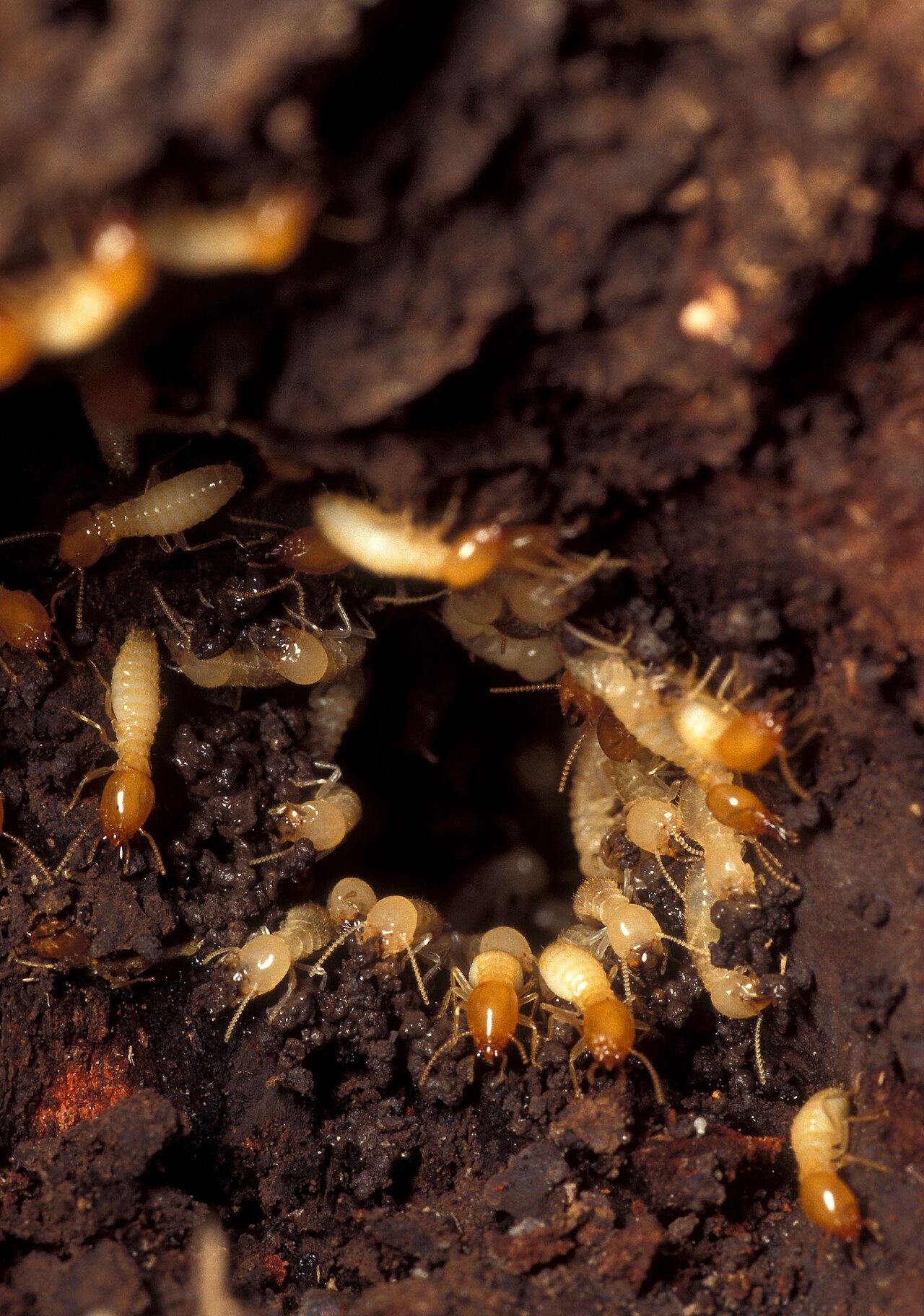
The full list of warning signs — including photos of mud tubes, frass, and swarmers — is in the 9 signs of termites guide.
When to call a professional
If you confirm mud tubes, indoor swarmers, or hollow-sounding structural wood, that is the point to get a professional inspection — termite control is genuinely a licensed-pest-control job, and DIY termite pesticides are generally not effective, per UC IPM. If you only found winged ants, a carpenter bee hole, or beetle dust, you can handle it yourself and save the inspection fee.
Not sure what you are looking at? Run the Pest ID Wizard with what you found, or check the damage with the wood decay vs termite checker. If it is termites, the termite treatment estimator gives you a realistic cost range before you get quotes.
Next steps
Start with the Pest ID Wizard for the insect itself, and the wood decay vs termite checker for the damage. If you confirm termites, read the signs of termites guide and price out treatment with the termite treatment estimator.