How to Read Your Estimate
Termite treatment costs vary significantly based on three main factors:
- Home Size (Linear Footage): Most exterminators charge by the linear foot of the perimeter for liquid treatments.
- Foundation Type: Slab foundations are generally cheaper to treat than crawlspaces or basements, which require more drilling and trenching.
- Method: Bait stations often have a lower upfront cost but higher long-term maintenance fees compared to liquid barriers.
Liquid Termiticide vs. Bait Stations
Liquid barriers (like Termidor) involve trenching around your home and applying chemical into the soil. They provide an immediate "kill zone" and typically last 5-8 years.
Bait stations (like Sentricon) are placed around the perimeter. Termites eat the bait and share it with the colony, eliminating it over time. This approach is less invasive but requires annual monitoring contracts.
First, Confirm It's Actually Termites
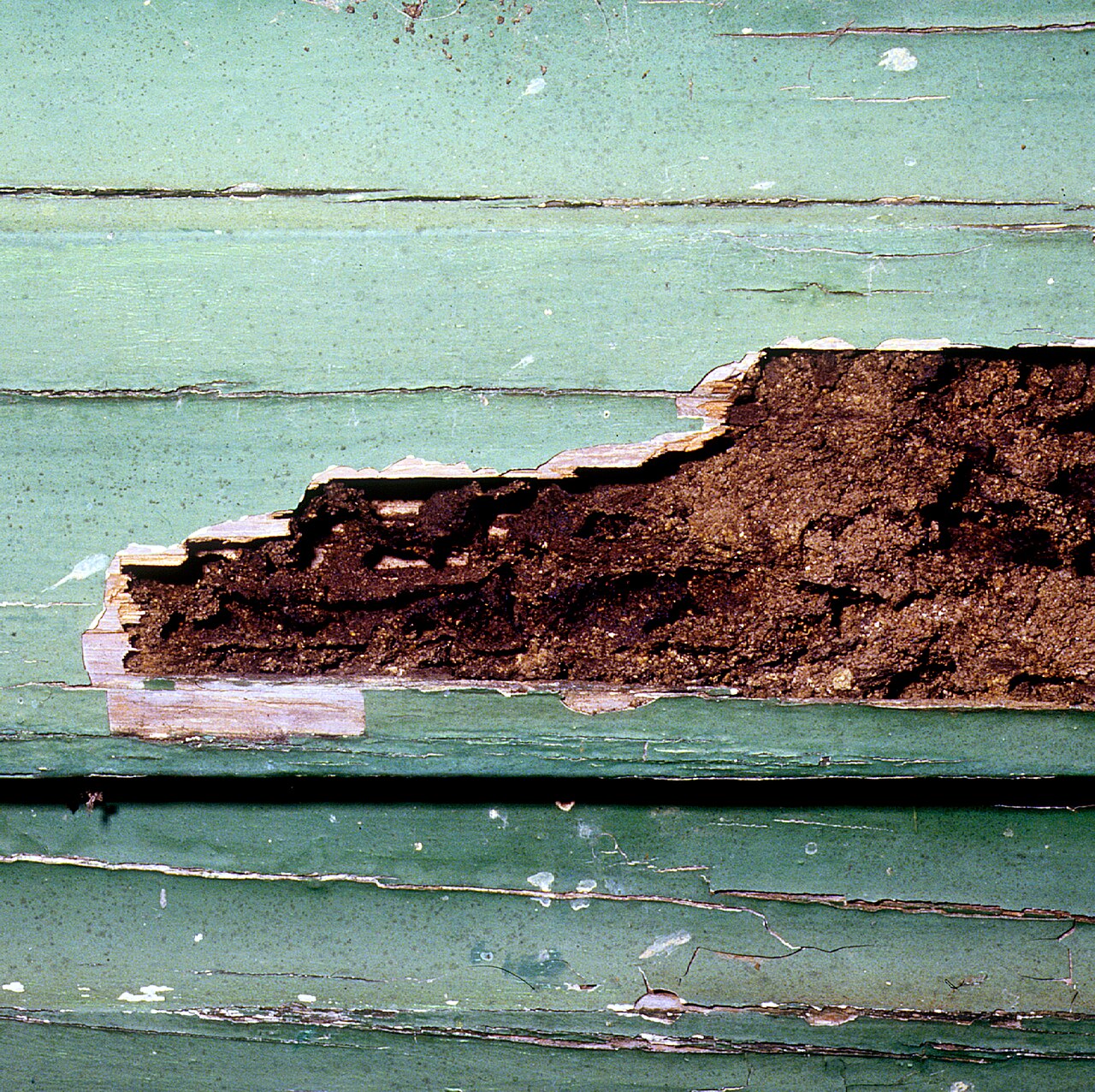
Before you budget for treatment, make sure the evidence really points to termites. Mud tubes, frass piles, and
discarded wings each mean something different — our guide to the
9 signs of termites in your home
walks through what to check, and the
wood decay vs termite checker
helps separate termite galleries from moisture rot. Spotting winged swarmers indoors is one of the strongest
signs of an active colony; see
bugs that look like termites
if you're not sure what you saw. 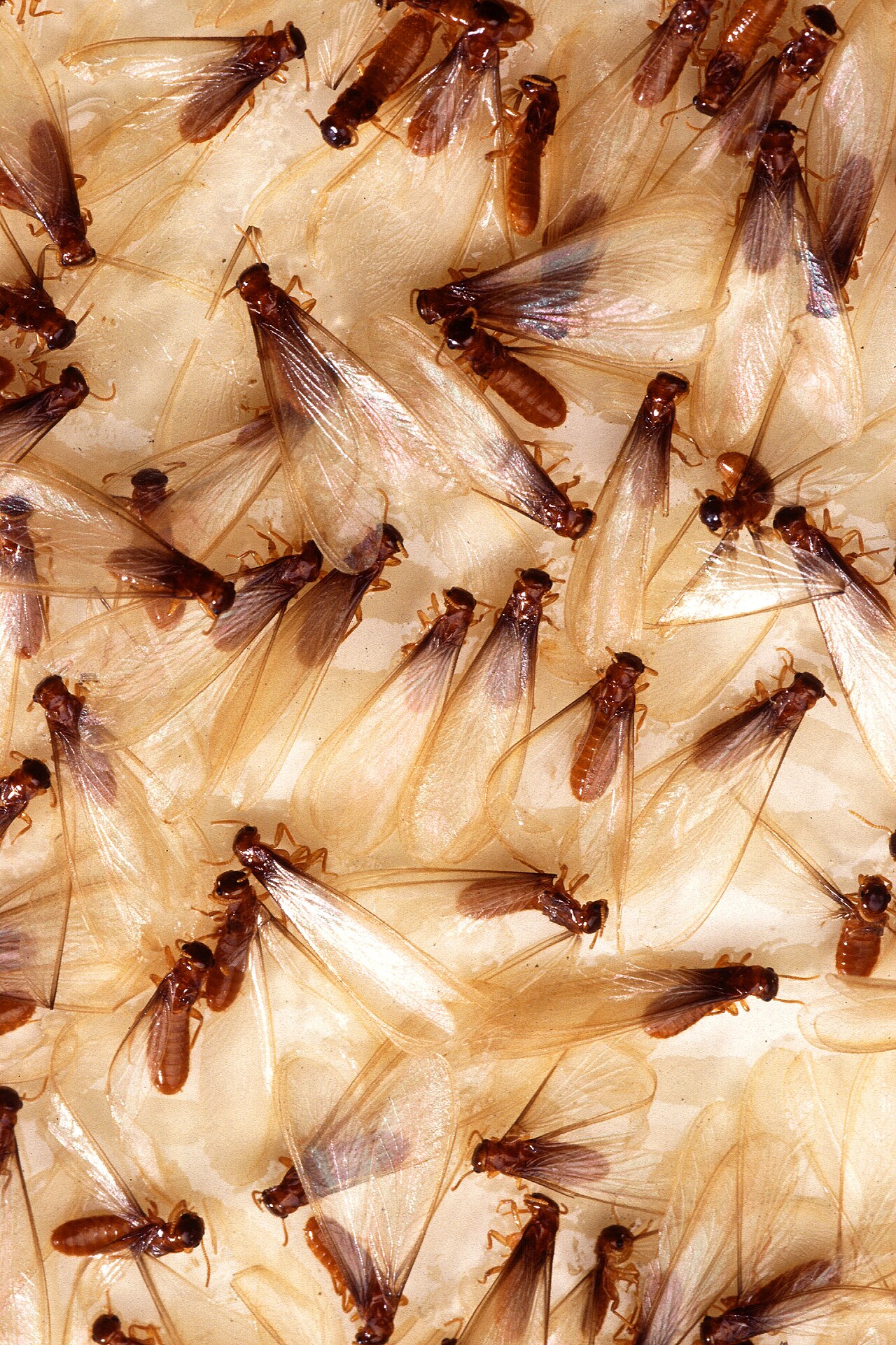 Photo: USDA Agricultural Research Service · File:Formosan termite alates.jpg · Public domain · via Wikimedia Commons
💡 Pro Tip: Get Multiple Quotes
National chains (Terminix, Orkin) and local independent pros often have price differences of up to 50%. Always get at least 3 inspections before signing a contract.
What the estimate is built from
Termite work is not priced by the hour. It is priced by how much material and labour the product label requires, and there are only four inputs that matter:
| Input | Why the price moves |
|---|---|
| Perimeter linear footage | Liquid barriers are built by walking the foundation. Our model adds 10% on top of the measured perimeter for jogs, porches and garage returns, because the trench has to follow every one of them |
| Foundation type | A crawlspace adds $2–$4 per linear foot and a basement $1–$3 in our model — more access, more drilling, more labour to reach soil the termites are using |
| Treatment method | Liquid barrier, bait system and whole-structure fumigation are three different products with three different price shapes |
| Activity and severity | An active infestation with visible galleries costs more than a preventive treatment on a clean structure — mostly because the scope and the follow-up schedule both grow |
Those four inputs are what the calculator multiplies. It uses national working ranges — roughly $4–$12 per linear foot for a standard liquid barrier, bait systems as a $1,200–$2,500 base plus $2–$4 per foot of stations and monitoring, and whole-house fumigation at about $1.20–$3.50 per square foot of structure. They are industry ranges, not a quoted price: regional labour rates move them by a third in either direction, which is why the tool returns a band rather than a number.
Method choice changes the price and the lifespan
This is the part most quotes leave out. UF/IFAS publishes the longevity of each control method alongside what it actually works against, and the spread is the single biggest reason two quotes for the same house can sit thousands of dollars apart:
| Method | Subterranean termites | Drywood termites | How long it lasts |
|---|---|---|---|
| Soil termiticide (liquid barrier) | Yes | No | 2–15+ years |
| Bait stations | Yes | No | 4–7+ years to indefinitely, as long as the system is maintained |
| Wood preventative treatment | Treated areas only | Treated areas only | 10+ years (inorganic salt treatments) |
| Physical barriers | Yes | No | 10+ years |
| Wood replacement | No | Yes, when damage is localized | Not applicable — it removes the damaged material |
Table adapted from UF/IFAS publication ENY-2044/IN1277, Termite Prevention and Control.
What the crew is actually doing for that money
Knowing the sequence is the fastest way to spot a lowball quote. A subterranean termite job is a small construction project, not a spraying visit. UF/IFAS walks through the steps a licensed applicator follows:
- Trench the perimeter of the structure so termiticide can be applied to the soil the termites are using to reach it.
- Drill the slab — down-drilling or angle-drilling — to reach soil under floors that have no trench access at all.
- Apply at the label rate into the trench and the drill holes, which means knowing roughly how many gallons per minute the wand is putting out rather than wetting the soil and moving on.
- For baits, come back. Stations have to be installed, monitored and refilled until the colony takes the material — months of service visits instead of one afternoon.
Two costs sit outside every termite quote, and both surprise people. The first is damage repair: treatment kills the colony, it does not rebuild a door frame or a floor joist, and that is a separate carpentry bill. The second is retreatment after a warranty claim is denied. UF/IFAS notes that moisture against the foundation — mulch piled against the siding, sprinklers, planters — can void some termite warranties, and that spray-foam insulation can make a structure impossible to inspect properly, to the point that some companies will not warranty those homes at all. Read the exclusions page before you read the price.
Why we still tell you not to DIY this one
Almost everything else on this site has a real DIY path. Subterranean termites do not, and it is not a product-availability problem. The extension guidance is direct: controlling an existing infestation is generally not a do-it-yourself project. The colony lives in the soil under and around the house, a mature colony can forage across an area the size of an acre, and the treatment has to be continuous around the entire perimeter or the termites simply find the gap. Termites are also responsible for roughly 80% of the $40 billion in annual global termite damage costs, which is a strange thing to hand to a hose-end sprayer.
What you can do for free is get the identification right, because drywood and subterranean termites need completely different treatments and most states identify samples at no charge. Our guide to the signs of termites lists the state identification clinics, and the wood decay vs termite checker separates rot from galleries before you pay anyone to look.
Reading the quote like a professional
- Ask which method the number is for. A liquid-barrier price and a bait price are not comparable, and a combined price should say so.
- Ask for the re-treatment warranty in writing, in years, and what triggers a claim.
- Ask what voids it — grading, mulch depth, sprinkler placement, foam insulation, renovations.
- Ask whether an annual renewal inspection is included. Some states require extra training and identification cards for the technicians who perform these, so it is a real line item rather than a courtesy.
- Keep a 6-inch inspection space between the soil or mulch line and the wall covering. Building codes in many states require it at construction, and it is the only way anyone will ever spot a new mud tube on your foundation.
- Price the alternatives yourself with the DIY vs pro calculator, then check the paperwork with the contract review tool before signing.
If the treatment being quoted is whole-house fumigation rather than a soil barrier, size it first: the fumigation volume calculator converts the structure into the cubic footage the work is actually priced on, and the tenting cost guide covers what tenting does and does not fix.
Sources: University of Florida IFAS, ENY-2044/IN1277 Termite Prevention and Control (control-method longevity, treatment sequence, warranty and inspection-space guidance; $40 billion global impact figure via Rust & Su 2012); Clemson University HGIC 2447, Subterranean Termite Control (colony structure, native vs Formosan behaviour); UF/IFAS News, liquid insecticides show limited impact on termite colonies.