White worms in the house: the 60-second read
Before you look anything up, answer three questions. Each one removes half the list.
- Where did you find it? Fabric, stored food, a damp bath or basement, or coming out of a wall, ceiling or light fitting. That last one is its own emergency; the rest are not.
- Is the animal covered in hair, or is it smooth and shiny? Hairy and banded points to a beetle larva. Smooth, soft and caterpillar-like points to a moth larva. Shiny, silver-grey and fish-shaped, with three bristles at the tail, is a silverfish.
- Does it move fast, or barely at all? Carpet beetle larvae crawl slowly and deliberately. Silverfish bolt for cover at night. Maggots in a wall are usually still and densely packed.
If a moth drifted out of the kitchen and the worms are in a bag of flour or a box of cereal, you have your answer already. If there is no food or fabric anywhere near the worm, treat it as the wall case and read that section first.
The eight things a "white worm" usually is
Every row below rests on a university extension fact sheet rather than a pest-control advert. Where the sources give a number, the number is reproduced exactly.
| What you found | Usually | Where it lives | Does it bite? |
|---|---|---|---|
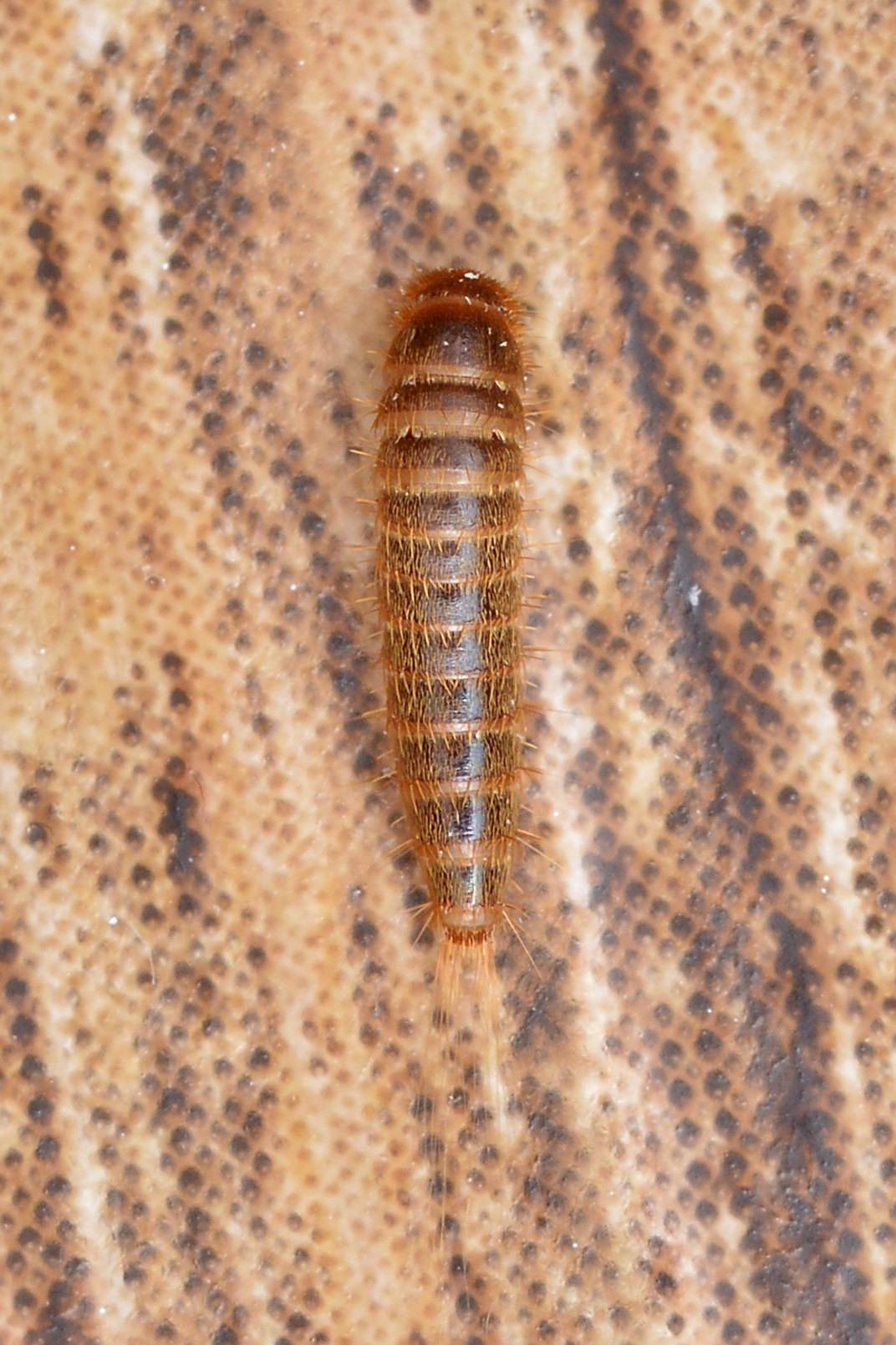
| Hairy, banded grub, slow-moving, with a brush of bristles at the tail | Carpet beetle larva | Closets, carpet edges, under baseboards, air ducts | No |
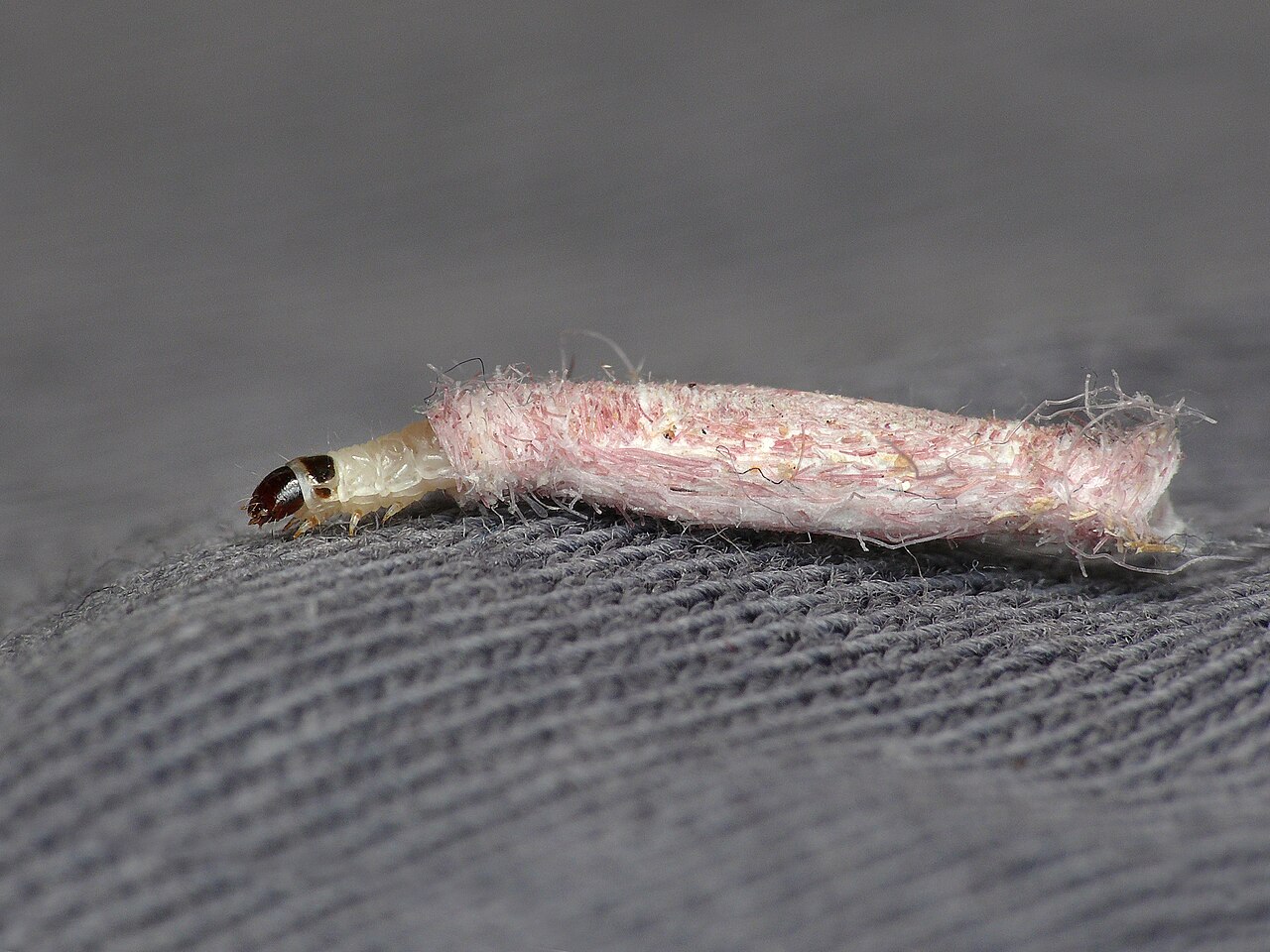
| Small cream caterpillar, often inside a silk tube or a little fibre case | Clothes moth larva | Wool, fur, silk, feathers, felt, leather — dark undisturbed storage | No |
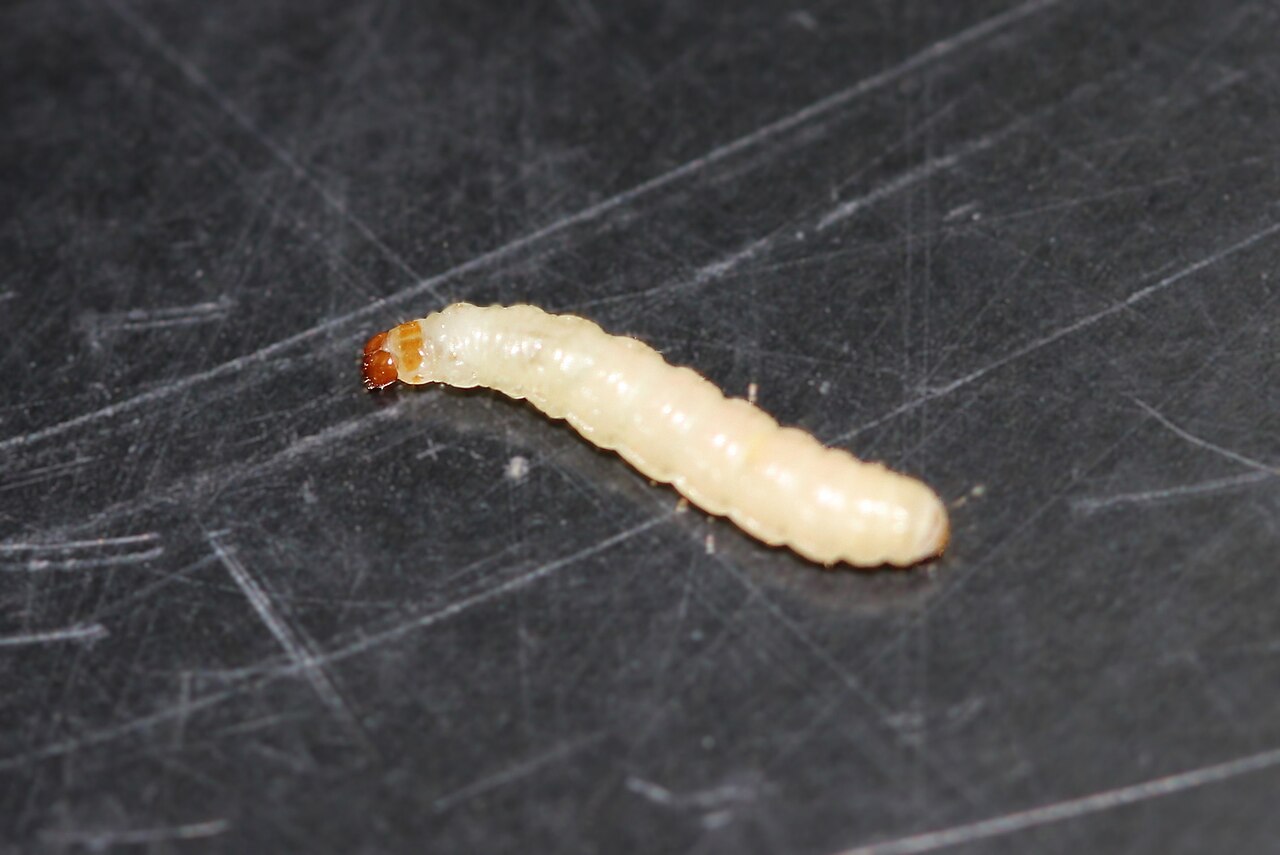
| Pale caterpillar with a reddish-brown head, in flour, grains or nuts, with webbing | Pantry moth larva (Indian meal moth) | Pantry shelves, cereal, pet food, bird seed, spices, dried fruit | No |
| Legless, soft, cream maggots, often in a dense cluster | Fly larvae (blow fly or flesh fly) | A dead rodent or bird inside a wall void, ceiling, chimney or vent | No, but the cause matters |
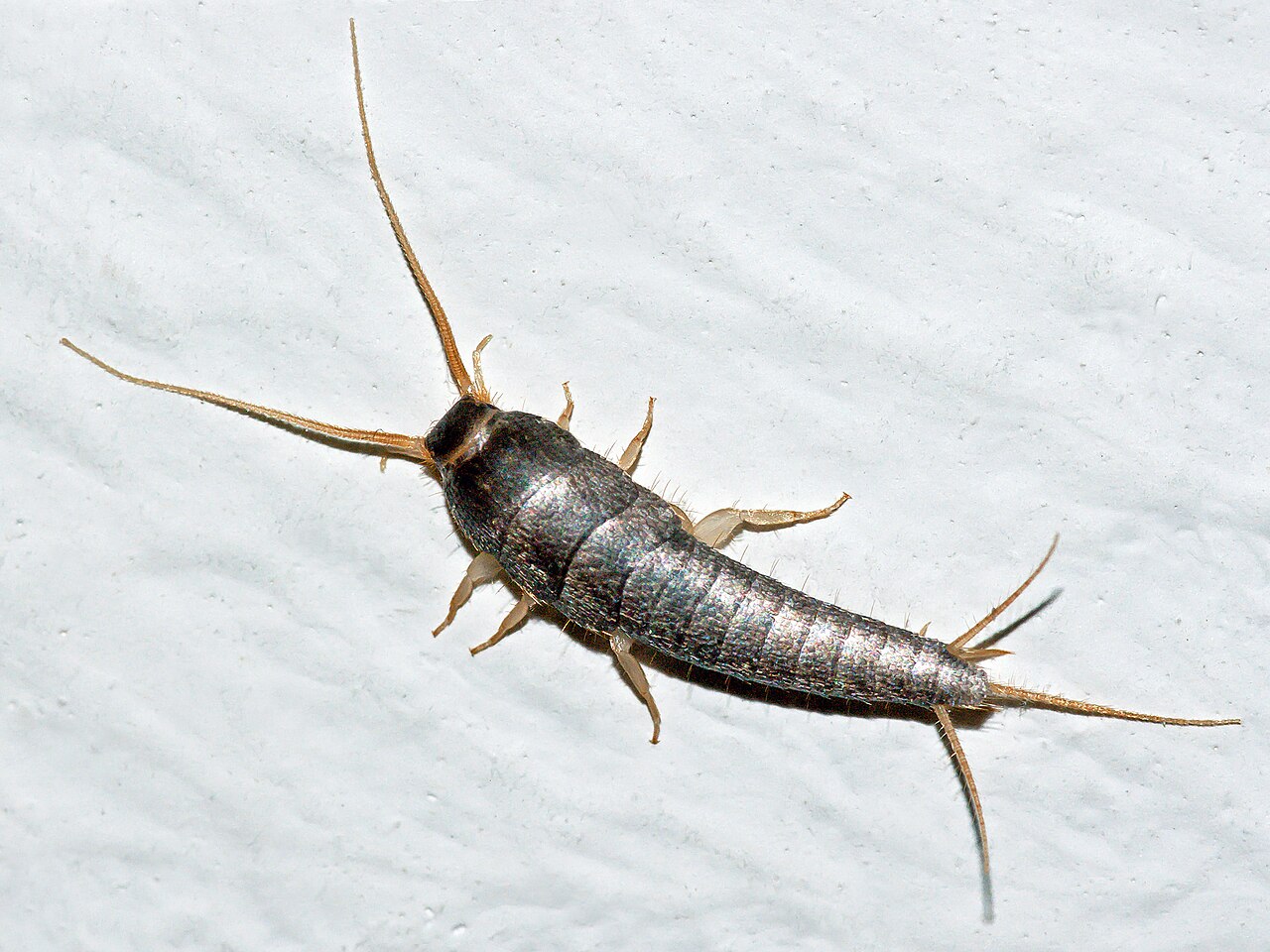
| Silver-grey, fish-shaped, three bristle "tails", runs fast | Silverfish (or firebrat, in hot spots) | Damp baths, basements, bookcases, wall voids, insulation | No |
| Tiny, pale, almost translucent specks that jump or scurry | Booklice or springtails | Damp paper, mould, houseplant soil, new plaster | No |
| Clear or white worm with a shiny black head, in houseplant compost | Fungus gnat larva | Overwatered pots, wet drainage trays | No |
| Many-legged, segmented, curls into a coil when touched | Millipede (or centipede) | Damp basements, garage slabs, mulch against the foundation | Centipedes can, millipedes do not |
Two rows carry more weight than the rest. Maggots are the only entry on this list that points to something dead inside the building, and carpet beetle larvae are the ones most often misread because people expect a worm and find a hairy grub. The pest ID wizard walks the same questions if you would rather answer them than read them.
If the worms are coming out of a wall, ceiling or light fitting
This is the one case worth acting on today. A steady trickle of maggots emerging from a gap in a wall, around a ceiling rose, or beside a vent almost always means a rodent or a bird has died in the void behind it — and Ohio State's carpet beetle fact sheet lists exactly that situation ("dead birds or rodents in wall voids") among the places a fabric pest will also breed. The University of Kentucky's carpet beetle fact sheet makes the same point from the other direction: the pests can proliferate on "bird nests, animal carcasses, and dead insects", and those are the things found in attics, chimneys and basements.
The practical sequence is short:
- Do not seal the gap yet. Sealing traps the source inside and the larvae simply find another route or die in a place you cannot reach.
- Remove the dead animal. In a wall void this normally means cutting an access hole at the right height, removing the carcass and the soiled insulation, disinfecting, and patching. If the smell has already faded, the flies are finished and the larvae are the tail end of the event — vacuum and clean the surfaces below where they appeared, and check for a stain on the ceiling beneath the void.
- Then exclude. Once the void is clean, seal the entry route so the next rodent cannot get in. The fall rodent-exclusion guide is the same checklist, and it is the step that stops this recurring.
If the worms are instead concentrated in a food area, treat it as a contamination event: bag and bin the food, and use the emergency pest triage checklist, which flags the situations that genuinely need a same-day response.
Fabric "worms": carpet beetle larvae vs clothes moth larvae
These two are the default answer for a white worm on a carpet, in a wardrobe, or under a bed, and they are genuinely easy to separate once you know what to look at. Kentucky's extension describes carpet beetle larvae as roughly 1/8 to 1/4 inch long, tan to brownish, slow moving, and densely covered with hairs or bristles, while clothes moth larvae are creamy-white caterpillars up to about 1/2 inch long that spin silken tubes or patches of webbing as they move.
| Check | Carpet beetle larva | Clothes moth larva |
|---|---|---|
| Surface | Densely hairy or bristly, often banded | Smooth, soft, cream-coloured |
| Tail end | A brush or tuft of long bristles | No bristle brush; often a silk case or tube |
| Movement | Slow and deliberate | Wriggles, and retreats into its case |
| What it eats | Animal fibres, plus lint, hair, dead insects, and some dried plant foods | Animal fibres only — wool, fur, silk, feathers, felt, leather |
| What you also see | Shed skins, often more numerous than the larvae | Webbing, threadbare patches, small faecal pellets |
The overlap worth knowing about: both pests feed on keratin, the protein in wool, fur, felt, silk, feathers, skins and leather, and both leave cotton and synthetics alone unless the fabric is blended with wool or heavily soiled with food or body oils. That means the two are controlled the same way, even though they are different insects.
Carpet beetles have a second habit that catches people out. Unlike clothes moths, some species will also feed on seeds, cereals and pet food, and their larvae thrive on the lint and pet hair that collects under baseboards, inside floor vents and in ducts. A single forgotten accumulation of dog hair behind a skirting board is a complete breeding site. Ohio State notes that the cast skins are often more abundant than the larvae themselves, which is why an infestation can run for months before anyone sees the animal that causes it.
If the worm you found was on a mattress seam instead of a jumper, the question is a different one — the carpet beetle larvae vs bed bugs guide covers that comparison, and the tiny black bugs guide handles the small dark specimens that turn up on the same surfaces.
Pantry "worms": the Indian meal moth larva
A pale caterpillar with a reddish-brown head, found in flour, cereal, nuts, dried fruit, spices, bird seed or pet food, is almost always the larva of the Indian meal moth — the moth that most often turns up as a small fluttering insect near a kitchen window or a ceiling light. Clemson's pantry fact sheet notes that several pantry pests, "especially moths, will crawl up walls to pupate on ceilings", which is why people see the larvae far from the food.
Two details from the extension guidance change how thoroughly people clean. First, the larvae are the stage that damages stored products, and the silken webbing they spin to build pupal cocoons is the reliable sign that moths, not beetles, did the damage. Second, an infestation often does not start in the kitchen at all: Clemson warns that it can originate in a bag of dog food in the garage and migrate indoors once numbers build. Discarding the visible bag and stopping there is the single most common reason a pantry infestation comes back.
The pantry moth checklist works through the cupboards room by room, including the sources people forget (spices, dried flowers, potpourri, bird seed, and the pet food bin), and the IPM pest log is a simple way to record what you found and when, so a repeat sighting is obvious rather than a guess.
Silverfish: not a worm, and not the fabric eater you expect
Silverfish are the ones people most often describe as "white worms" and then mis-handle, because they look like nothing else on this list once you see one properly: a flat, wingless body 1/2 to 3/4 inch long that tapers from head to tail, with two long antennae at the front and three long antenna-like bristles at the rear, covered in silver-to-grey scales. The tail count is the giveaway — a silverfish has three, an insect larva has none.
What they eat is wider than most people assume: Clemson lists glue, wallpaper paste, starch in clothing, book bindings, linen, rayon, paper and dried meats, with feeding showing up as irregularly chewed patches. They are active at night and hide by day, and they frequently live between wall partitions and inside insulation, which is why an established infestation is slow and stubborn rather than something a single spray clears. Silverfish prefer damp, cool areas; firebrats, which look almost identical, prefer hot ones such as near ovens, fireplaces, furnaces and hot water pipes. That temperature split alone tells you where to look.
Adults can live two to eight years, and a female lays around 100 eggs over that lifetime, so control is about the environment rather than a knockdown: lower the humidity with dehumidifiers and fans, remove the stacks of paper and old fabric that shelter them, seal cracks and crevices, and expect wall-void treatments to take 10 to 14 days to work, because the insects have to come out and contact the treated surface.
What does not work
Each of these is a documented failure rather than a preference.
| The move | Why it fails |
|---|---|
| Setting off a bug bomb for fabric larvae | Ohio State's guidance is blunt: total-release aerosols are "generally not effective at reaching the tiny cracks and crevices where the beetle larvae may reside" |
| Spraying the visible worms only | The larvae live behind baseboards, in ductwork and inside fabric folds; the ones you can see are a fraction of the population |
| Sealing the wall gap while the smell persists | The source is still inside; sealing only hides it and adds a second problem |
| Throwing out the obvious infested bag and stopping | Clemson's pantry guidance attributes many repeat infestations to a second source elsewhere, typically pet food or seed in a garage |
| Insecticide in a pantry as a first move | Clemson says spraying "should only be used as a last resort"; removal and cleaning are the primary control, and food must not be sprayed |
The fix, by cause
| If it is… | Do this |
|---|---|
| Carpet beetle or clothes moth larvae | Vacuum the lint, hair and dead insects under baseboards, in vents and along carpet edges; dry-clean or launder wool before storage; store in sealed bags or containers; discard infested items beyond saving |
| Pantry moth larvae | Find and bin every infested package into an outdoor lidded bin, wash the containers, vacuum the shelves and cracks, and check the garage, pet food and bird seed |
| Maggots from a wall or ceiling | Locate and remove the dead animal, clean and disinfect the area, repair the void, then exclude rodents so it cannot repeat |
| Silverfish or firebrats | Lower the humidity, remove paper and fabric stacks, seal cracks and crevices; treat wall voids deliberately and allow 10-14 days |
| Booklice, springtails or fungus gnats | Dry the area out. These are moisture indicators, not fabric or food pests — fix the damp and they disappear |
| Millipedes or centipedes | Move mulch back from the foundation, fix the damp slab or basement, and remove the moisture that supports them |
Prevention that actually holds
- Clean the hidden lint. The baseboard line, the floor vents, under the bed and behind the fridge are where carpet beetle larvae live. Vacuuming them out removes the food supply, not just the walkers.
- Store wool clean and sealed. Laundering or dry-cleaning before storage kills eggs and larvae and removes the body-oil and perspiration odours that attract the pests. Airtight bags and containers finish the job.
- Buy pantry food in two-month quantities. Clemson's practical rule: don't buy more than you will use in two months, because pantry pests thrive in large volumes stored for long periods.
- Freeze what you cannot seal. For items not meant for human consumption, a few days in the freezer kills existing insects.
- Fix the damp. Silverfish, booklice, springtails and millipedes all track moisture. A dehumidifier and working extractor fan do more against them than any spray.
- Seal the building in autumn. Rodent exclusion is insect exclusion — the same caulk line that keeps mice out of a wall void also keeps the dead-animal maggot problem from ever starting.
If you would rather have the whole house assessed than guess, the DIY vs professional calculator puts a rough number on repeating service versus doing it yourself, and the pet safety checker is worth a look before any treatment in a home with animals or birds. If the worms turned out to be carpet beetle larvae, the carpet beetle guide covers where the breeding site usually is.
Sources: University of Kentucky Department of Entomology, ENTFACT-601, Carpet Beetles (keratin-based diet of wool, fur, felt, silk, feathers, skins and leather, and the cotton/polyester exception for wool blends and heavily soiled fabrics; adult size and behaviour and the windowsill sightings; 50-100 eggs per female; larvae 1/8 to 1/4 inch, tan to brownish, slow moving and densely covered with hairs or bristles; feeding within fabric folds in closets, chests and boxes; lint, hair and debris under baseboards, floor vents and ducts as breeding sites; bird nests, animal carcasses and dead insects in attics, chimneys, basements and light fittings; and the fact that some carpet beetles also infest seeds, cereals and pet food); The Ohio State University Extension, Ohioline HYG-2103, Carpet Beetles (the black carpet beetle larva at about 1/2 inch with a body resembling an elongated carrot or cigar and a long brush of bristles at the tail; varied, common and furniture carpet beetle larvae at about 1/4 inch and their hair covering; up to 100 eggs hatching in 8 to 15 days; a larval stage of 60 days to a year or more and two-to-three-year life cycles in some species; three to four generations per year except the black and varied species; cast skins outnumbering the larvae; the inspection list including dead birds and rodents in wall voids; and the finding that total-release aerosols are generally ineffective in cracks and crevices); University of Kentucky Department of Entomology, ENTFACT-609, Clothes Moths (the keratin diet and the exclusion of cotton and synthetics unless blended or soiled; 40-50 eggs per female; creamy-white larvae up to about 1/2 inch; webbing clothes moth larvae spinning silken tubes and patches of webbing, with threadbare spots and faecal pellets; and the casemaking clothes moth feeding within a tubular case); Clemson University Cooperative Extension, Home & Garden Information Center, HGIC 2443, Silverfish & Firebrats (the 1/2 to 3/4 inch flat, wingless, tapering body with two antennae and three antenna-like structures at the tail; silver-to-grey scales; the glue, wallpaper paste, starch, book binding, linen, rayon, paper and dried-meat diet with irregularly chewed patches; night activity and daytime hiding; two-to-eight-year adult lifespan and about 100 eggs per female; damp and cool versus hot preferences for silverfish and firebrats; the use of dehumidifiers and fans, sealing of cracks and crevices, and removal of paper and fabric stacks; life between wall partitions and in insulation; treating wall voids including drilling; and the 10 to 14 days control can take); and Clemson University Cooperative Extension, HGIC 2439, Pantry Pests (the range of infested products from grains and dried dairy to pet food, bird seed, spices, dried flowers, potpourri and tobacco; the four-stage life cycle and larvae shaped like caterpillars or small grubs; larvae as the damaging stage; moths crawling up walls to pupate on ceilings; silken webbing as the sign of moth rather than beetle damage; prevention through airtight containers, cleaning spills, caulking cracks, keeping the pantry dry, freezing non-food items and buying no more than a two-month supply; and control by removing infested material to an outdoor lidded bin, washing containers and vacuuming, with spraying as a last resort and never onto food).