The three checks that settle it
Ants and termites both have six legs, both can be black or brown, and both swarm on warm spring days — which is why the two get misidentified constantly. But no lookalike survives close inspection: three body features separate every ant from every termite.
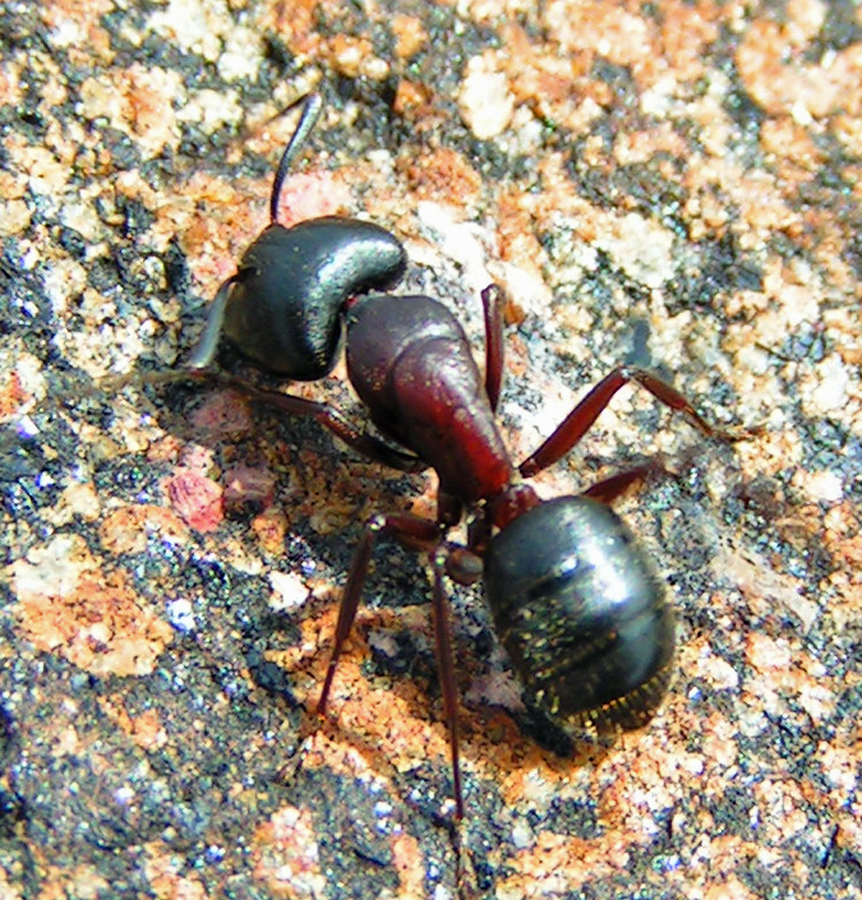
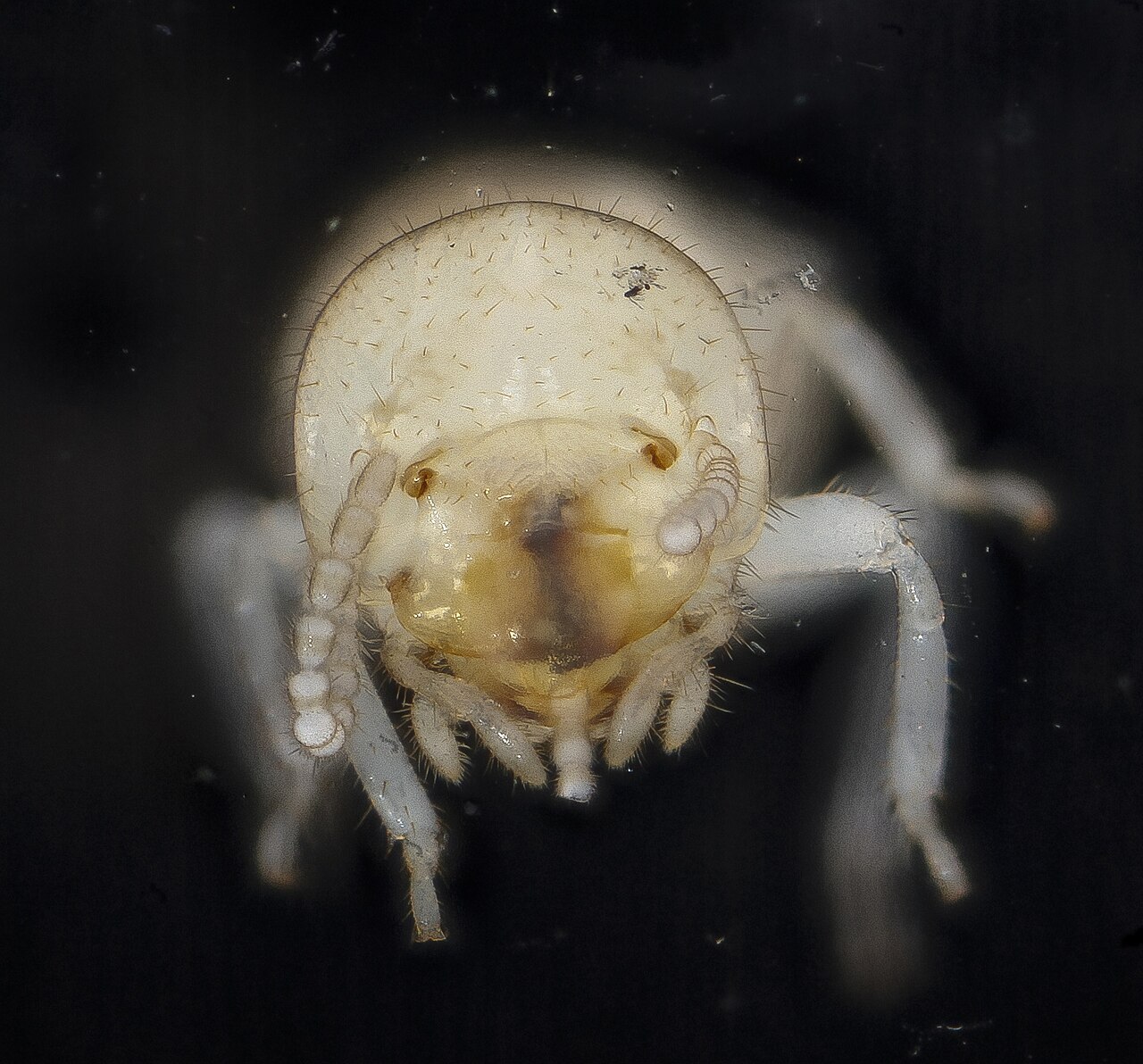
| Feature | Carpenter ant | Termite |
|---|---|---|
| Waist | Pinched — body clearly segmented | Straight and broad — no pinch |
| Antennae | Bent at an elbow (like a knee) | Straight, bead-like — no bend |
| Wings (swarmers) | Front wings much longer than rear pair | Four wings, all equal length |
| What they do to wood | Excavate smooth galleries — they don't eat wood | Eat wood; galleries packed with mud and fecal pellets |
| Debris trail | Coarse sawdust frass with scattered insect parts | Mud tubes on foundations; pellet piles near infested wood |
Why the two get confused
The confusion peaks twice a year. In spring and early summer, both carpenter ants and termites send out winged reproductives — swarmers — that look eerily similar at a glance: dark, winged, and clumsy around windows and lights. And both problems start near moisture: carpenter ants nest in damp, softened wood (and often only travel through dry wood), while subterranean termites need soil contact and moisture to reach a structure.
Size does not help. Worker termites run about a quarter inch; the termite swarmers that alarm homeowners in spring are workers-sized with wings. Carpenter ant workers — the big black ants you see trailing — can reach half an inch or more. People routinely match the biggest insect they saw to the wrong species.
What the wings tell you when the bug is gone
Often you never catch the swarm — you just find wings. That's still evidence, because the two species treat their wings differently:
- Termite swarmers drop all four wings shortly after swarming, leaving piles of identical, equal-sized wings near windowsills, doors, or the foundation.
- Ant swarmers keep their wings longer, and the front pair is visibly longer and larger than the back pair.
- Mud tubes are a non-negotiable termite tell. No ant builds pencil-width mud highways running up a foundation wall; if you find them, the identification argument is over — see the nine-sign termite checklist for what to document before an inspection.
The cost of guessing wrong
This is not a trivia question. Typical ant control lands in the $150–$450 bracket for a professional job, while termite treatments commonly run from $500 to $2,500+ depending on the method — and tenting runs higher. The two failure modes are symmetrical: treating termites with ant bait wastes months while damage spreads, and paying for a termite "inspection" when you have carpenter ants means overpaying for the wrong problem. Confirm which one you have first, then price it: the termite treatment estimator covers liquid, bait, and fumigation routes, and the DIY vs. pro calculator shows where a handyman-grade ant job stops being DIY.
What if you only found the damage?
Many people never catch the insect itself — they find soft wood, a hollow sound when tapping, or debris on the floor. The damage pattern still identifies the culprit, and it's worth checking before you call anyone: probe the wood with a flathead screwdriver. Termite galleries are hollow and packed with mud or soil, and the surrounding surface often still looks intact. Carpenter ant galleries are smooth and clean, and the debris below the site is coarse sawdust mixed with body parts of insects the colony discarded. If the softened wood is spongy or crumbles into cube shapes instead, you're almost certainly looking at moisture rot — run it through the rot vs. termite tool before spending money on either treatment.
What to do in the next 48 hours
- If the evidence points to termites: don't spray. Consumer sprays kill foragers and can scatter the colony, making a technician's job harder. Document (photos of tubes, damage, wings), then book an inspection — the tenting cost guide and the calculator above tell you what a quote should look like.
- If it's carpenter ants: find the frass pile and the moisture source behind it. The lookalikes guide walks the antennae test at photo zoom, and the damage check pairs with the rot vs. termite tool so soft wood doesn't send you down the wrong path.
- If you're still unsure: trap one specimen on clear tape (whole insect, all legs intact) or photograph the waist and antennae with your phone at maximum zoom. A licensed technician or your state extension office can identify from a decent photo.
For the authoritative details behind every check on this page, see Clemson Extension's carpenter ant fact sheet, Penn State Extension's carpenter ant guide, the University of Kentucky's ENTFACT-603, and NPIC's termite page.