The 30-second read
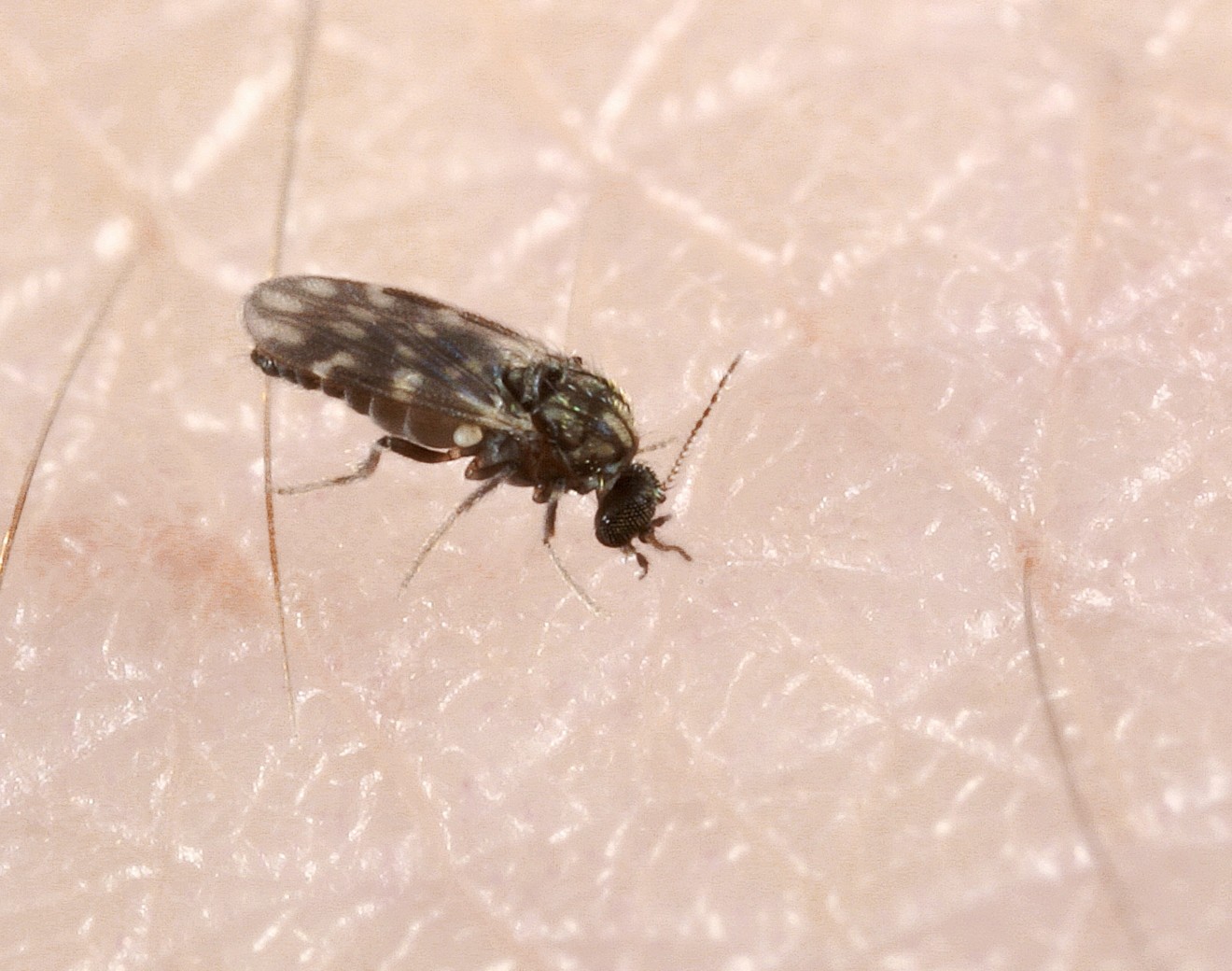
- Nothing visible bit you, and it burned — that is normal. Adult biting midges run 1 to 3 mm long and are hard to see against skin until they are full of blood.
- The bite site is small, the reaction is not — a reddish welt roughly an eighth of an inch across, sometimes a water-filled blister, itching intensely and for days.
- It happens at dusk, at dawn, or around five in the afternoon — different species have different peak hours, and that schedule is the most useful clue you have.
- They come through your window screen — ordinary 16 x 16 and 18 x 16 insect mesh does not stop them. Fine mesh does.
- Spraying the yard is close to useless — draining the wet patch that breeds them, and timing your time outdoors, work far better.
What a no-see-um actually is
Biting midges are true flies in the family Ceratopogonidae. The family is large — Purdue Extension puts it at more than 4,000 species in 78 genera worldwide — but only a handful of genera feed on mammal blood, and only those matter to you. The genus Culicoides alone holds around 1,350 species worldwide, roughly 170 of them in the United States, according to the University of Florida's Featured Creatures profile.
Size is the whole problem. Adults are usually 1 to 2 mm long, and many species are smaller than 1 mm — under a twenty-fourth of an inch. In Florida's 50 or so species the average is about 1.5 mm. At that size a midge can sit on your arm, take a blood meal, and leave before your eyes resolve it as anything other than a speck of dirt.
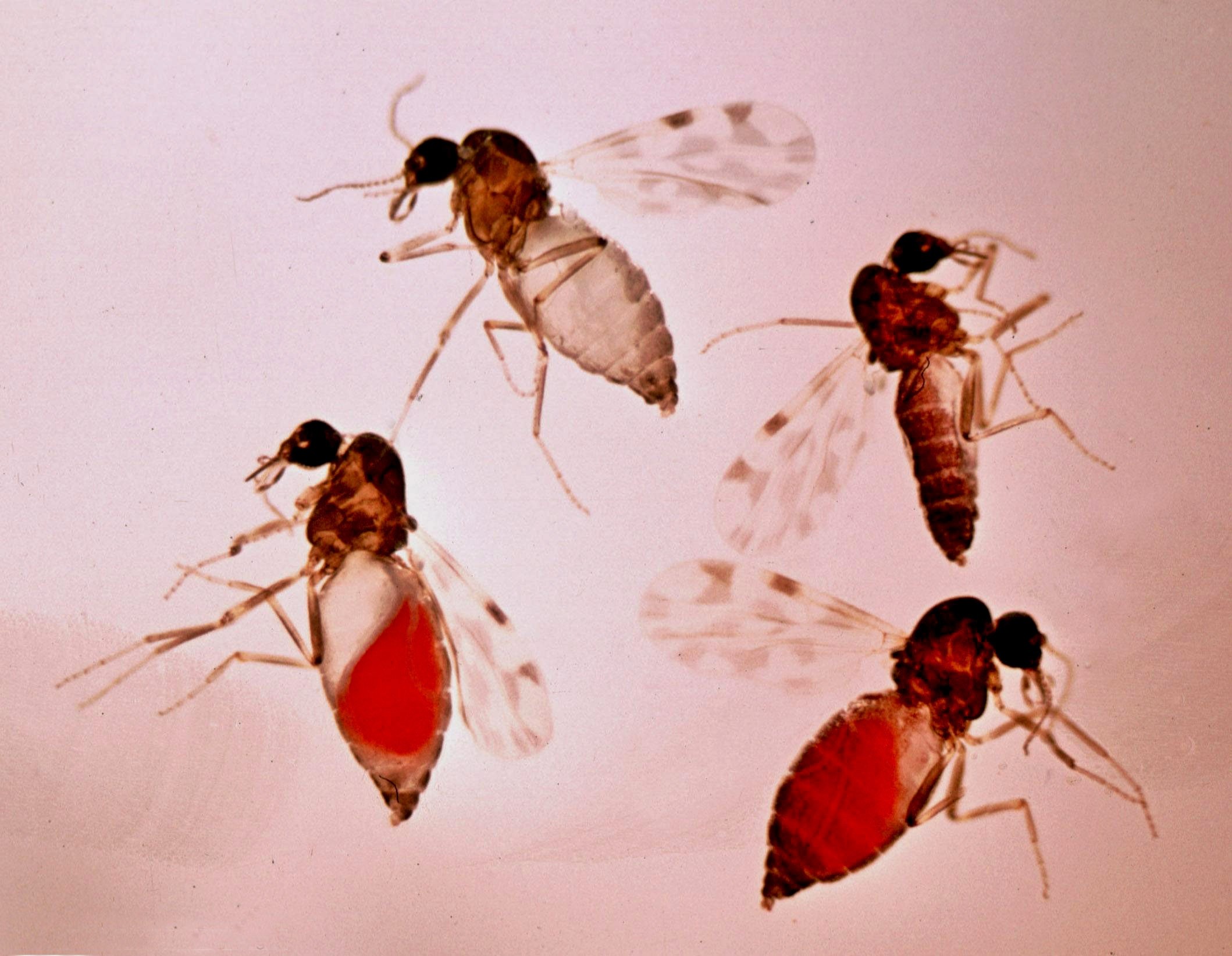
Only the females bite. Both sexes feed on nectar and plant sap for energy, but egg production needs protein, and the female's mouthparts are built for cutting skin and drawing blood. The male's are not — he cannot pierce you at all. That asymmetry matters when you are watching something hover: the ones landing on you are the females.
The names change with the map, which is why searches for the same insect land in different places. Purdue's extension page collects them: no-see-ums across most of North America, punkies in the Northeast, five-O's in Florida and Alabama (named for the hour they start biting), pinyon gnats in the Southwest, and moose flies in Canada. Add "sand gnats" and "sand flies," both used loosely for midges in coastal areas, and the same 2 mm fly is carrying six different common names.
Why the itch outlasts the mark
A mosquito leaves a raised bump that fades in a day. A midge leaves a mark that can still be itching when the mosquito bite is a memory. Two things are happening.
The first is mechanical. Biting midges do not have a long needle like a mosquito. Their mouthparts are a fleshy sheath around four minute cutting blades that lacerate the skin, which is why the bite registers as a sharp burning sensation rather than a quiet prick. If you watch the spot in the first moments, Purdue notes you may see tiny red "spots" — midges filling with blood as they feed.
The second is immunological, and it varies enormously between people. Purdue describes reactions ranging from a small reddish welt to local allergic reactions that produce significant itching. The University of Arizona's IPM brief goes further: bites usually appear as small red welts about an eighth of an inch in diameter, or as water-filled blisters, that itch intensely. Scratch one open and it can bleed — and then keep itching anyway. Sensitive people can develop long-lasting, painful, itchy lesions from a single bite.
That is the practical point behind "why does it itch for days." The wound is a pinprick; the reaction to it is the event. It is also why scratching is the one thing worth actively preventing: broken skin over an itch that lasts a week is an invitation to a secondary infection, and the itch does not stop when the blister opens.
Telling a no-see-um bite from the other four
Most people who get bitten blame mosquitoes, and most people who blame chiggers never saw one either. The table below separates the five bites that get confused, using where the bite is, when it happened, and what it looks like afterwards.
| What bit you | Where | When | What you see | The itch |
|---|---|---|---|---|
| Biting midge | Ankles, wrists, neck, hairline — exposed skin, often near water, damp turf or the coast | Dusk and after dark for Culicoides; daylight for Leptoconops; "five-O's" bite around 5 p.m. | Tiny red welt about 1/8 inch across, or a small water blister; occasionally a cluster | Burning at the moment of the bite, then days of intense itch; can leave a mark for weeks |
| Mosquito | Any exposed skin; through thin clothing | Dusk, dawn, and shade during the day | Raised pale bump with a central puncture, spreading to a soft swelling | Peaks in minutes to hours, usually settles within a day or two |
| Chigger | Where clothing binds: sock line, waistband, behind the knee | After walking tall grass, brush or a lawn edge | Intensely itchy red papules, often several in a row where the fabric pressed | Delayed by hours, then severe for several days |
| Flea | Ankles and lower legs, in groups of three or four | Any time; worse in rooms a pet uses | Small red spots, frequently in a line, sometimes with a dark centre | Starts within hours, very itchy, each spot lasts days |
| Bed bug | Skin exposed in bed — arms, shoulders, face, neck | Overnight, discovered on waking | Rows or clusters of bites ("breakfast, lunch, dinner"), sometimes a rash | Delayed, then days; often the first sign is the pattern, not the itch |
The first hour, and when to stop treating it yourself
Bite care is unglamorous and mostly about not making it worse. The University of Arizona's guidance is short: over-the-counter topical cortisone creams usually relieve the itching, over-the-counter anti-inflammatory medication helps when there is pain or swelling, and a severe reaction should go to a physician or dermatologist rather than waiting it out.
- Wash the bite with soap and water. Do this before anything else, especially if you have been scratching.
- Do not scratch, and cut your nails short if you cannot stop. The blister that forms is the itch's last defence; opening it starts the infection clock.
- Apply a topical cortisone cream to take the edge off, and take an oral anti-inflammatory if the site is painful or swollen.
- Cover it if you keep touching it. A light dressing breaks the scratch reflex better than willpower does.
- Get medical care for spreading redness, pus, fever, or a reaction that keeps growing over days — a bitten blister that turns into a skin infection is the realistic bad outcome here, not venom.
Anti-itch creams treat the symptom. If new bites keep appearing, the useful work is on the other side of the problem: the screen, the wet patch, and the hour you go outside. If the bites are arriving in bed rather than outdoors, run the tiny black bugs in the house checklist first — that pattern points somewhere else entirely.
Why your window screen does not stop them
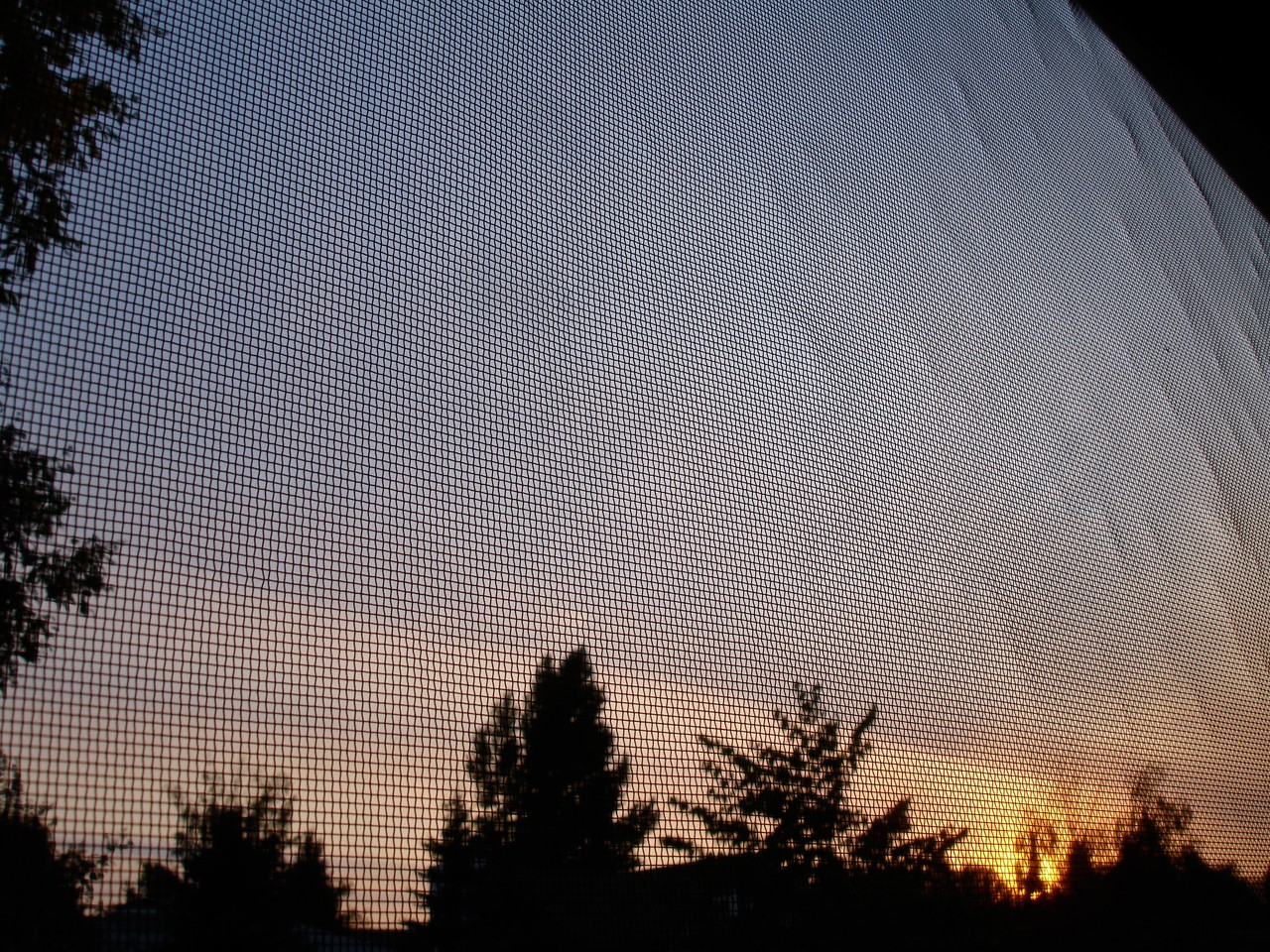
This is the fact that surprises people most. Standard insect screening is woven at 16 x 16 or 18 x 16 mesh — sixteen to eighteen openings per inch. A no-see-um is 1 to 3 mm, and the openings are bigger than the fly. The University of Arizona brief states it plainly: no-see-ums "can easily pass through ordinary insect screens on doors and windows, and will occasionally bite people indoors." The University of Florida profile shows the same thing photographically, with midges beside a section of standard window screen.
The fix is finer mesh, and it is a trade rather than a free win. Arizona recommends replacing standard screen with something closer to 30 x 30 where no-see-ums are a real problem. Purdue notes that screens with a mesh smaller than normal window screen are much more effective at keeping females out of dwellings — and also that so-called biting-midge screening exists for tents in the western states. Florida adds the caveat worth knowing before you order a roll: midge screen is fine enough to exclude them, but it is not typically used as a window or door screen, because finer mesh cuts airflow and light.
If you are not re-screening the house, close the gaps instead. Door sweeps, weatherstripping on the frame, a screen door that actually latches, and keeping the porch light off near an open door all matter, because adult Culicoides are attracted to light and readily enter dwellings to feed.
Find the wet patch before you buy a sprayer
Biting midge larvae need moisture and organic matter, and they need it in a very specific band. Arizona's brief puts the limits precisely: larvae "cannot survive a total lack of moisture or more than 2 inches of water," and will pupate in drier spots. That gives you a target list that has nothing to do with insecticides.
- Over-irrigated turf and landscape beds — the single most common urban source. If the ground squelches a day after watering, you are farming midges.
- Splash pads, poorly drained low spots, and puddles under downspouts.
- Potted plants indoors and out — the saucer under a houseplant is a rearing tray.
- Air-conditioner condensate and any constant drip against the foundation.
- Tree holes, saturated rotting wood, and compost that stays wet.
The action is to let those areas dry out and stay dry through the biting season. Arizona's advice is direct: if high numbers of bites are observed, hold off irrigation in the vicinity and let the moist spots drain — that kills eggs and larvae. It also helps to know the clock: eggs hatch in about 2 to 10 days, and the whole cycle from egg to adult can run 2 to 6 weeks depending on species and temperature, with the last larval stage overwintering. Drying a spot for a few days interrupts a cycle that is measured in weeks, not months.
Distance is on your side here, mostly. Purdue reports that most Culicoides females disperse no more than half a mile to a mile from their larval site, so a wet corner of your own yard is worth more attention than the marsh at the end of the street. One exception is worth knowing: Leptoconops kertszi in the arid Southwest is documented dispersing up to about ten miles, which is why desert residents can be bitten far from any visible water.
Timing beats spraying
If you read only one sentence of the control literature, read Purdue's conclusion: scheduling outdoor activities to avoid the daily peaks of biting midges is the most effective way people can avoid being bitten. Insecticide treatment of adults has had limited success, and even aerial applications along the Atlantic and Gulf coasts produced only temporary relief.
The schedule is species-specific, which is why "when" is such a good diagnostic:
- Culicoides, the genus behind most coastal and suburban bites, typically does not begin feeding until dusk and continues at night. Evening cookouts and after-dark dog walks are peak exposure.
- Leptoconops feeds during daylight hours, so a midday bite in the arid West can still be a midge.
- Wind is your ally. Biting midges are weak fliers, and flight is greatly reduced or curtailed in windy conditions — a fan on a porch does real work.
- Repellents help, but only partly. Purdue describes DEET-containing repellents, and clothing impregnated with DEET or permethrin, as providing limited protection. Arizona's position is that repellents effective against mosquitoes are effective against biting midges, used per the label. Treat repellent as one layer, not a solution — and check what the EPA has registered rather than trusting a marketing claim.
The one disease question worth asking
This is where the internet gets ahead of the evidence. In the United States, biting midges are not known to transmit disease agents to humans — Purdue states that directly, and notes that the most important pathogen they carry in North America, bluetongue virus, affects livestock and does not infect people.
The exception people read about is Oropouche virus, which the CDC describes as spread primarily by the bite of infected biting midges in South America, Central America and the Caribbean. Two calm facts from that page: there is no evidence that Oropouche has spread in the United States, and biting midges themselves are present in multiple US states. If you are travelling to an area with an Oropouche notice, bite prevention is the whole strategy — and the CDC's travel guidance is the page to read before you go, not after.
What to do this week
- Walk the yard after watering and find every spot that stays wet. Fix the irrigation schedule before buying anything.
- Check the screens — mesh size, tears, door sweeps, and whether the porch light shines on an open doorway.
- Move your outdoor time out of the dusk window where you can, and put a fan on the patio for the evenings you cannot.
- Treat bites early with soap, cortisone and no scratching, and get a spreading or pus-filled bite looked at.
- Log what you see — date, hour, weather, location on the body. Two weeks of notes will tell you whether you have a yard problem, a screen problem, or a dusk-schedule problem.
The mosquito breeding inspection walks the same standing-water checklist that catches midge habitat, and the seasonal garden defense planner times the work by month. If you want to know which tiny biter you are actually dealing with, the Pest ID Wizard runs the elimination, the gnat guide separates the three flies people call gnats, and the clover mite guide covers the red specks that get mistaken for bites but never bite at all. For anything that escalates, the emergency pest triage sorts "watch it" from "get care now", and the IPM pest log keeps the record that makes next season's decisions easier.
Sources: University of Florida IFAS Featured Creatures, Biting Midges, No-See-Ums Culicoides spp. (species counts, adult size, female versus male mouthparts, standard screens failing to exclude midges, and the midge-screen caveat); Purdue University Public Health and Medical Entomology, Biting Midges (4,000 species in 78 genera, 1-3 mm adults, cutting blades and burning bite, regional common names, dusk versus daylight feeding, dispersal distances, weak flight in wind, limited success of insecticides and repellents, and the no-known-US-human-disease statement); University of Arizona Cooperative Extension IPM brief, "Something's biting me, but I can't see it!" (welt and blister description, 16 x 16 and 18 x 16 mesh, 30 x 30 replacement, larval moisture limits of 2 inches, 2-10 day egg hatch, and over-the-counter bite care); CDC, Oropouche: Causes and How It Spreads (midge transmission, the regions involved, midges present in multiple US states, and no evidence of US spread); and US EPA, Repellents: Protection against Mosquitoes, Ticks and Other Arthropods (registered repellent ingredients and safe use).