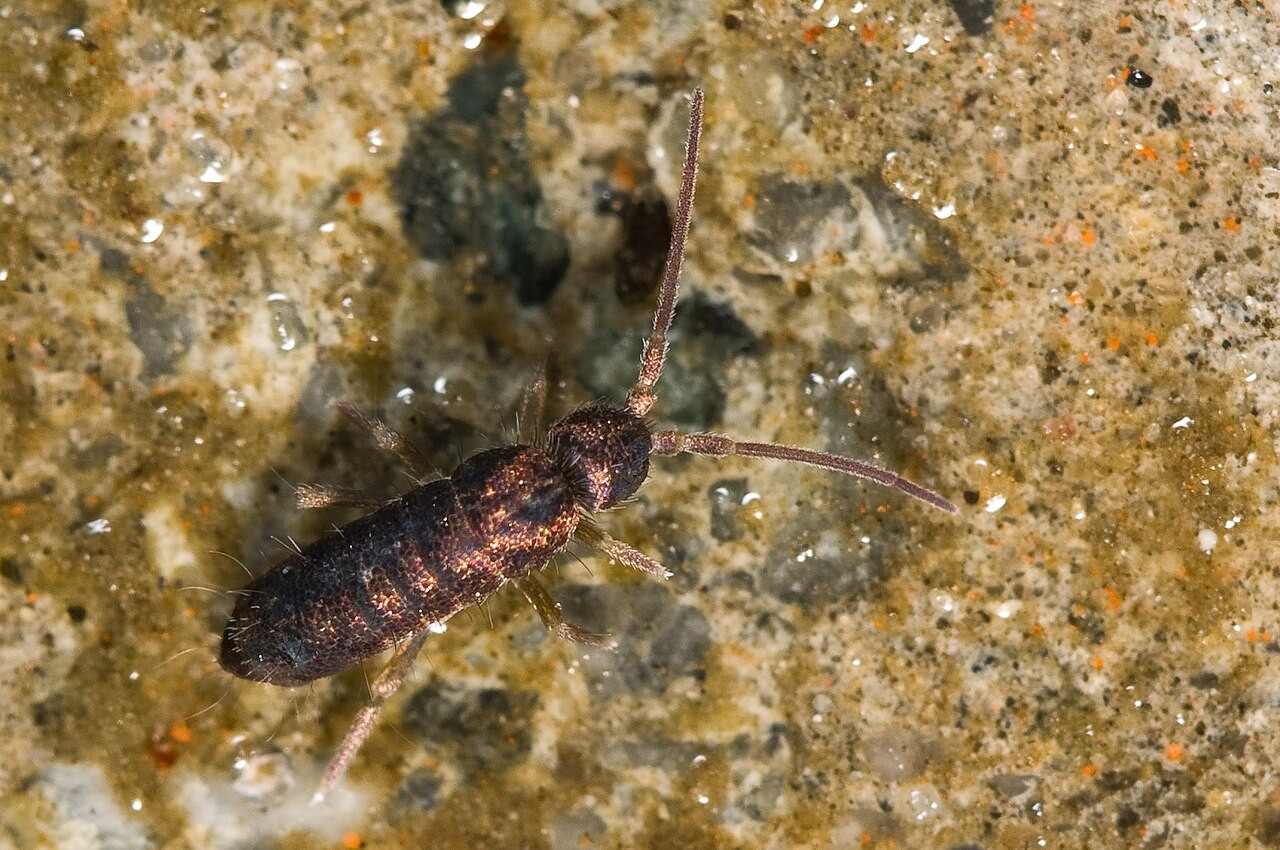
The 30-second read
Put the animal on a piece of white paper and disturb it. That single test separates the two.
- Did it jump or flick away a few centimetres? You have a springtail. The jump comes from a forked appendage called a furcula that is folded under the abdomen and released like a spring.
- Did it walk, or stay put? You have a booklouse — wingless, soft, and slow.
- Where was it? Sinks, tubs, floor drains, wet basements, over-watered houseplants and mulched foundations point to springtails. Books, cardboard, wallpaper, flour and other dry starch that has gone damp point to booklice.
Two adjacent animals are worth ruling out before you accept either answer. A springtail seen for a second or two looks like a flea, and a booklouse flattened against a mattress seam looks like a very small bed bug. Both mixes are common enough that the special-purpose check is later on this page. If the animal is silver-grey, fish-shaped and has three bristles at the tail, stop here — it is a silverfish, and the white worms guide is the correct page.
Springtails vs booklice, side by side
Every row below comes from a university extension fact sheet, not from a pest-control advert. Where the sources give a number, the number is unchanged.
| Feature | Springtail (Collembola) | Booklouse (Psocodea) |
|---|---|---|
| Length | Usually 1–3 mm; most indoor types 1–2 mm | 1–2 mm, soft-bodied and flattened |
| Movement | Jumps several inches using the furcula | Walks; never jumps |
| Shape and colour | Elongate or globular, hump-backed; white, grey, yellow, orange, metallic green, lavender or red | Tan to grey, head nearly as wide as the body, with a large “nose” (clypeus) and long slender antennae |
| Diet | Moulds, fungi, algae, bacteria and decaying plant material | Mould and fungi, including the mould growing on paper, books, wallpaper, flour and stored grain |
| Damage | None to furnishings; minor pitting on seedlings | None to paper or fabric; droppings can contaminate stored food |
| Bites or disease | No bite, sting or disease transmission | No bite, no disease; booklice are not lice |
| What it tells you | There is a damp, organic-rich surface nearby | There is mould, which means humidity over about 50 percent |
What each one actually is
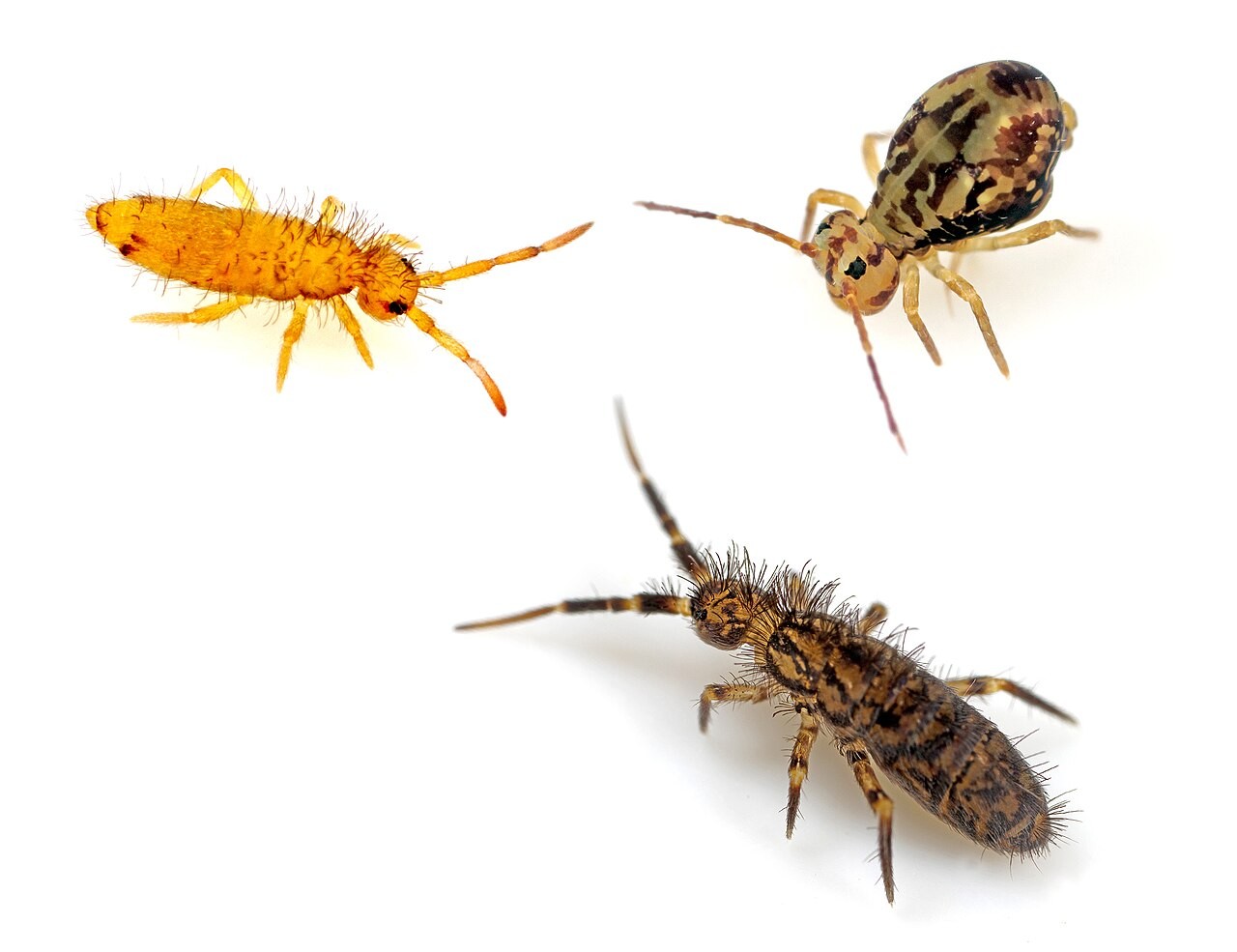
Springtails are hexapods in the order Collembola, and the entomology departments disagree politely about whether they count as true insects. Their mouthparts sit inside the head capsule, which is one of the characteristics used to separate them from the rest of the insects. Their name comes from the furcula: a two-pronged appendage on the underside of the fourth abdominal segment, normally held folded by a clasp, which snaps down and throws the animal into the air when it is disturbed. Penn State Extension puts that leap at up to 100 times the animal's body length. The body plan comes in two shapes — the familiar elongated form and a rounded, globular form — and the colours range from white through grey and black to purple, red, orange, yellow and mottled patterns, so colour is a poor identification clue on its own.
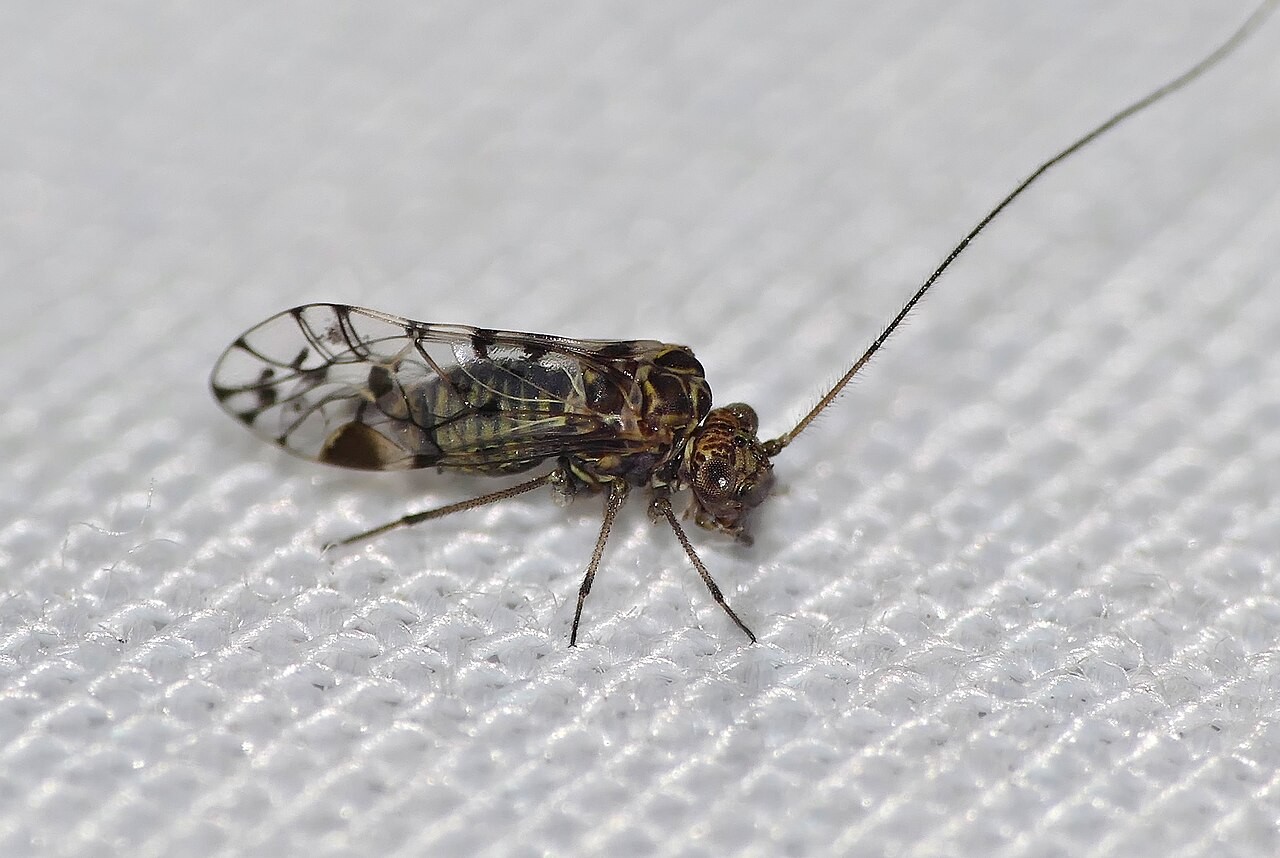
Booklice are psocids, order Psocodea. The wingless ones that live indoors are usually Liposcelis species, and they are the reason the group has a common name that makes people panic: they are not lice, they do not feed on blood, and they cannot bite. What they do is graze on the mould and fungi growing on the surface of whatever has stayed damp: book bindings and glue, wallpaper paste, paper, cardboard, flour, cereals and dried fruit. Most psocids live outdoors and have wings; those are the barklice found on tree bark, leaves and under stones, and they are harmless to plants.
The two confusion pairs worth checking
Both mistakes matter for different reasons: one sends you to buy flea treatment you do not need, and the other sends you into a mattress you do not have to strip.
| Look-alike | What separates them |
|---|---|
| Springtail vs flea | A flea is flattened from side to side with a hard body that is difficult to crush, usually dark reddish-brown, and it bites. A springtail has a rounded, soft body that crushes easily and does not bite. |
| Booklouse vs bed bug | A fresh bed-bug hatchling is about the size of an adult booklouse, but an adult bed bug is roughly three times as long. The booklouse head is wider than its thorax and nearly as wide as its body; the bed bug head is narrower than both. |
| Springtail vs silverfish | Silverfish have three bristle-like appendages at the tail, a flat silver-grey scaled body, and they do damage paper and starch. Springtails have no tail bristles. |
| Booklouse vs winged psocid (barklouse) | Same family, different address. A psocid with roof-like patterned wings is a barklouse and belongs outdoors; the wingless indoor form is the booklouse. |
Both are moisture meters, and the numbers are published
This is the part worth remembering, because it converts a mystery into a measurement. Psocids do not survive when relative humidity stays below 45 to 50 percent, and the same drying that kills them also stops the mould they eat from growing. In practice, lowering humidity is the whole treatment.
| Measurement | Where it comes from |
|---|---|
| Booklice do not survive below 45–50% relative humidity | University of Minnesota Extension, psocids |
| Lowering relative humidity below 50% prevents mould growth and booklouse development | Penn State Extension, booklice |
| Springtails need high-humidity environments and maintain indoor populations only where humidity and mould growth support them | Penn State Extension, springtails |
| A springtail is a nuisance pest, not a biting or disease-carrying one; continued presence indoors is an indicator of moisture | UC IPM, Pest Notes: Springtails (UC ANR Publication 74136) |
The practical target follows directly: keep the room under about 50 percent relative humidity, and give any room that has been damp time with a fan or dehumidifier until the surfaces are genuinely dry, not merely no longer dripping.
Where the water is coming from
Nobody has a booklouse problem; they have a moisture problem that happens to be visible as booklice. Work through the sources in the order you can actually check them.
- Plumbing and fixtures. Sinks, tubs and floor drains collect the springtails that have already wandered in looking for water, and a weeping trap or supply line keeps the room wet enough to keep them alive.
- Over-watered houseplants. The soil of a regularly drenched houseplant is one of the most reliable indoor springtail habitats, and the classic pattern is water standing in the saucer for days after each watering.
- Basements and crawl spaces. Springtails are found in damp basements, crawl spaces and wall voids; the fix is ventilation, drainage and a dry floor, not a sprayer.
- New construction. Both pests turn up in newly built homes, where plaster, drywall and framing were closed up before they dried out. Penn State notes springtails can colonise the walls themselves in that situation; booklice in the same conditions are feeding on the mould growing inside the damp wall cavity.
- Attics, eaves and rooflines. Poor roof ventilation, trees overhanging the roof and leaf litter trapped in the eaves all keep water where it does not belong; this is extension guidance aimed specifically at booklice management.
- Mulch and foundation grade. A deep mulch bed against the wall, irrigation aimed at the house and downspouts that discharge next to the foundation all create the constantly damp border that springtails leave the soil to follow — and that same border is why so many springtails end up indoors after a dry spell. Size the layer properly with the mulch coverage calculator.
- Stored cardboard and paper. A wet cardboard box in a garage or basement is a booklouse nursery; extension guidance is to store boxes, bags, books and papers off the floor.
The fix that works for both
Read the sequence as order of importance, not as options.
- Find and stop the water. Repair the leak, fix the downspout, re-grade the soil, ventilate the crawl space, or cut a hole in the drywall that was closed over a wet cavity. Until this happens nothing else holds.
- Dry the space. A dehumidifier or a fan moving air is the standard recommendation for both pests. Set the target from the table above; a room held below roughly 50 percent relative humidity cannot support booklice.
- Change how you water plants. Water thoroughly, then let the soil dry before watering again, and never leave drain water standing in the saucer. An air space under potted plants on a windowsill further reduces humidity at the pot.
- Remove what is already mouldy. Moldy stored food, damp cardboard and wet wood are both food and habitat; bin them rather than trying to rescue them.
- Vacuum or sweep the animals you can see. This is legitimate control for small numbers, and it doubles as monitoring — if the count comes back, the moisture is back too.
- Skip the spray. Extension guidance is consistent here: insecticides are not normally necessary for either pest, are not effective while moisture remains a problem, and many household products are simply not effective against psocids. Never pour insecticide down a drain.
Where a foundation perimeter treatment is genuinely warranted outdoor-facing and repeat infestations are entering from outside, Ohio State's guidance is to treat a band that starts at the building foundation and extends a foot or more into the surrounding landscape with a product labelled for that use, and to leave it to a professional. Total-release foggers are not recommended for springtails because they rarely reach the cracks and crevices where the animals are. If you are weighing a service contract against doing this yourself, put both routes against the DIY versus professional calculator first.
Seasons, snow fleas and one honest exception
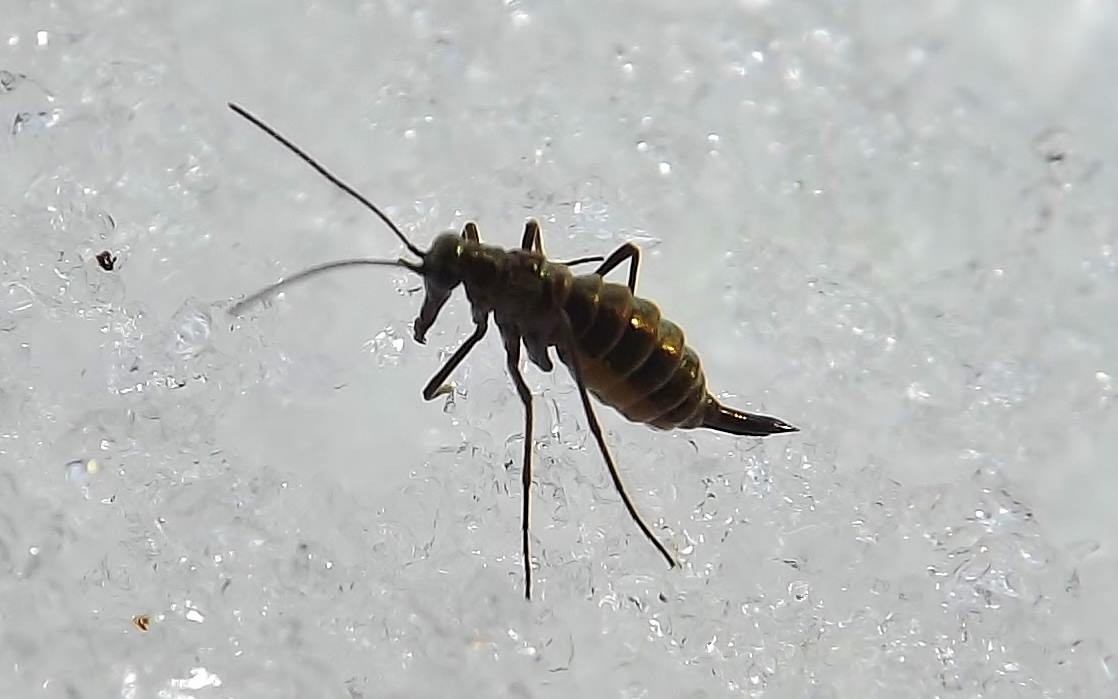
Springtails are usually most obvious in the moist periods of spring and early summer, but they are present year-round in wet places. One species, Hypogastrura nivicola, is the snow flea: black springtails that appear in groups on snow on mild winter days, active as soon as the ground begins to thaw. Seeing them on snow is not an infestation signal for the house; it is the same animal doing its normal job in the leaf litter. Booklice, by contrast, are most often noticed in summer, when indoor humidity peaks in bathrooms, basements and unventilated storage rooms.
The honest exception: a few cases of skin irritation have been reported after directly handling springtails. UK entomology guidance treats this as uncommon and notes no reported cases of irritation from passive contact with springtail hairs or scales in a home. That is not a reason to treat them as a biting pest, and it does not change the management.
Where each one fits in a real inspection
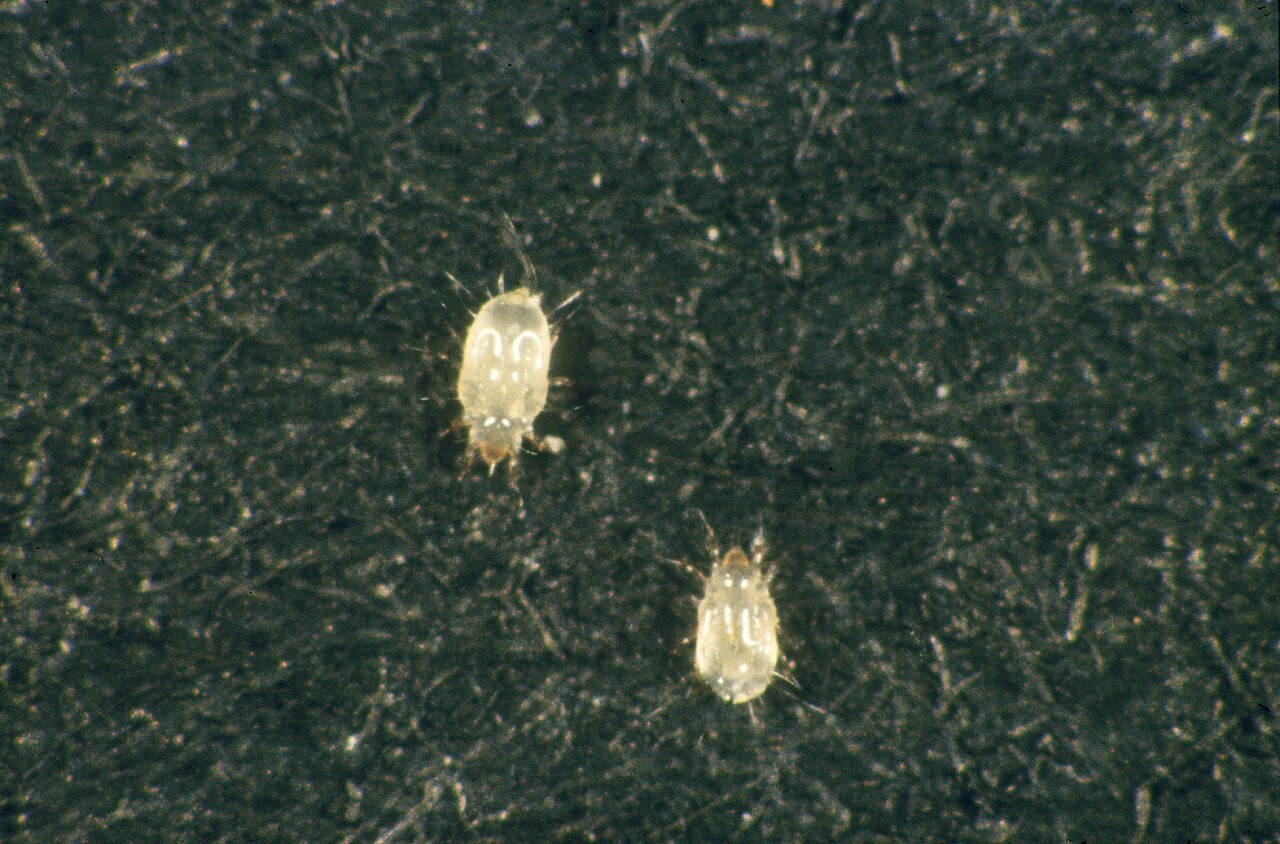
The inspection does not start with the animal, it starts with the room. A kitchen or bathroom found wet, with the pests in the sink, tub or drain area, is a springtail job. A pantry, bookcase or storage room found damp, with the pests on the packaging and the walls behind it, is a booklouse job. A garage or basement with both wet cardboard and a leaking utility line can be both at once.
Because both pests are harmless and both respond to drying, the practical value of the identification is knowing where to look next and whether to worry. Neither one warrants an emergency call, and neither one is a sign that the building is structurally failing. They are a sign that somewhere in the building water is sitting where it should not — which is worth knowing regardless of which animal found it first.
If you would rather narrow the animal down before doing anything else, the pest ID wizard walks the same key questions, and the tiny black bugs guide handles the wider list these two are often confused with. If the small flies are around the sink or the houseplants rather than in the walls, the do gnats bite guide separates fungus gnats and drain flies from biting midges. Log the moisture fixes you make in the IPM pest log so you can see whether the counts actually fall, and put the seasonal work — mulch depth, drainage, crawl-space checks — on the seasonal garden defense calendar.
Sources: University of California Statewide IPM Program, Pest Notes: Springtails, UC ANR Publication 74136, Springtails (the 1/16 inch body length, the furcula and the jump, the whitish-yellowish to bluish-grey adult and immature colouring, the habitat list from compost-amended soil and leaf litter to organic mulches and decaying wood, the entry routes through screens, doors, vent pipes and potted plants, the trapping of arrivals in sinks and tubs, the finding that continued indoor presence is an indicator of moisture, and the management sequence of reducing moisture and organic matter, caulking entry points, sweeping or vacuuming, and treating a foundation perimeter only if required); Penn State Extension, Springtails (the 0.2–10 mm size range with most indoor species at 1–2 mm, the furcula held by the tenaculum and the leap of up to 100 times body length, the colour range including mottled and metallic forms, the estimate of up to 100,000 springtails per cubic metre of habitat, the finding that indoor populations hold on where humidity and mould growth support them and that this is commoner in bathrooms and basements and can occur inside the walls of newly built homes, the snow flea Hypogastrura nivicola, the drought-and-saturation trigger that sends springtails toward buildings, and the management of lowering humidity, removing mould and mildew, reducing mulch around the home and watering houseplants thoroughly but letting the soil dry); Penn State Extension, Booklice (the 1–2 mm soft flattened body with a head wider than the thorax and a large clypeus, the tan-to-grey colouring that can be nearly clear in young individuals, the booklouse-versus-bed-bug size and head-width comparison, the habit of feeding on mould on paper, book bindings, wallpaper, flour and stored grain, the roughly 60 eggs per female in warm months and a life cycle under a month in the warmth against over three months when cool, four nymphal stages, the finding that booklice do not damage paper, fabric or non-food items but their droppings contaminate stored food, and the control of lowering relative humidity below 50 percent, drying wall voids, raising pots on air spaces, discarding infested food and treating pesticides as unnecessary); University of Minnesota Extension, Springtails (the 1/16 to 1/8 inch length, the flea comparison of side-to-side flattened hard bodies against a rounded crushable body, the abundance of springtails in mulch, the preference of indoor populations for soil that is excessively damp or high in peat, the snow flea becoming active as the ground thaws, and the management guidance of drying wet areas, removing wet wood, correcting structural moisture problems and reducing mulch around the foundation, with pesticides described as not effective for indoor springtails); and University of Minnesota Extension, Psocids (barklice, booklice) (the published rule that psocids do not survive when humidity falls below 45–50 percent, the description of psocids as soft-bodied insects under 3/16 inch with long slender antennae and a large clypeus, the division between winged outdoor barklice and the wingless indoor Liposcelis booklice, the July indoor-sighting pattern and the wet-cardboard problem, and the management of dehumidifying, checking rooflines, eaves and crawl-space ventilation, storing boxes and papers off the floor, and treating insecticides as ineffective while moisture persists).