Identify it before you do anything
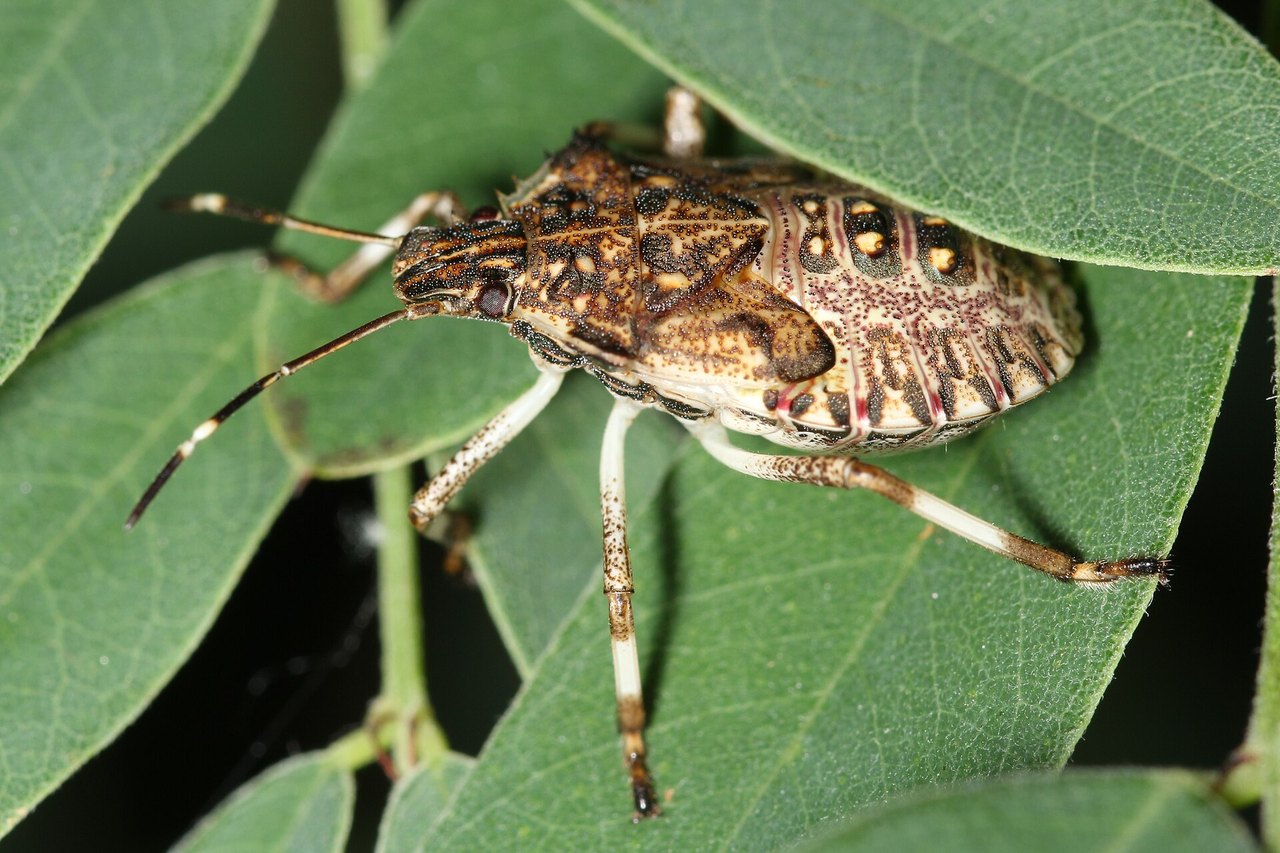
At least a dozen stink bug species live in an average U.S. yard, and only one of them turns into a household problem. The brown marmorated stink bug (Halyomorpha halys) is the invader, and it has two markings that separate it from the native green and brown stink bugs in a few seconds of looking.
| Feature | Brown marmorated stink bug | Native stink bugs |
|---|---|---|
| Body shape and size | Shield-shaped, about 17 mm (0.66 in) long — almost as wide as it is long | Similar shield shape; green stink bugs are usually a solid green, brown stink bugs a flat brown |
| Antennae | Distinct pale/white bands alternating with dark segments | Unbanded or only faintly banded |
| Wing tips | Dark bands across the membranous, overlapping rear section of the front wings | Uniformly dark or uniformly pale wing membrane |
| Head and shoulders | Patches of coppery or bluish-metallic punctures on the head and pronotum | Punctures present but not metallic |
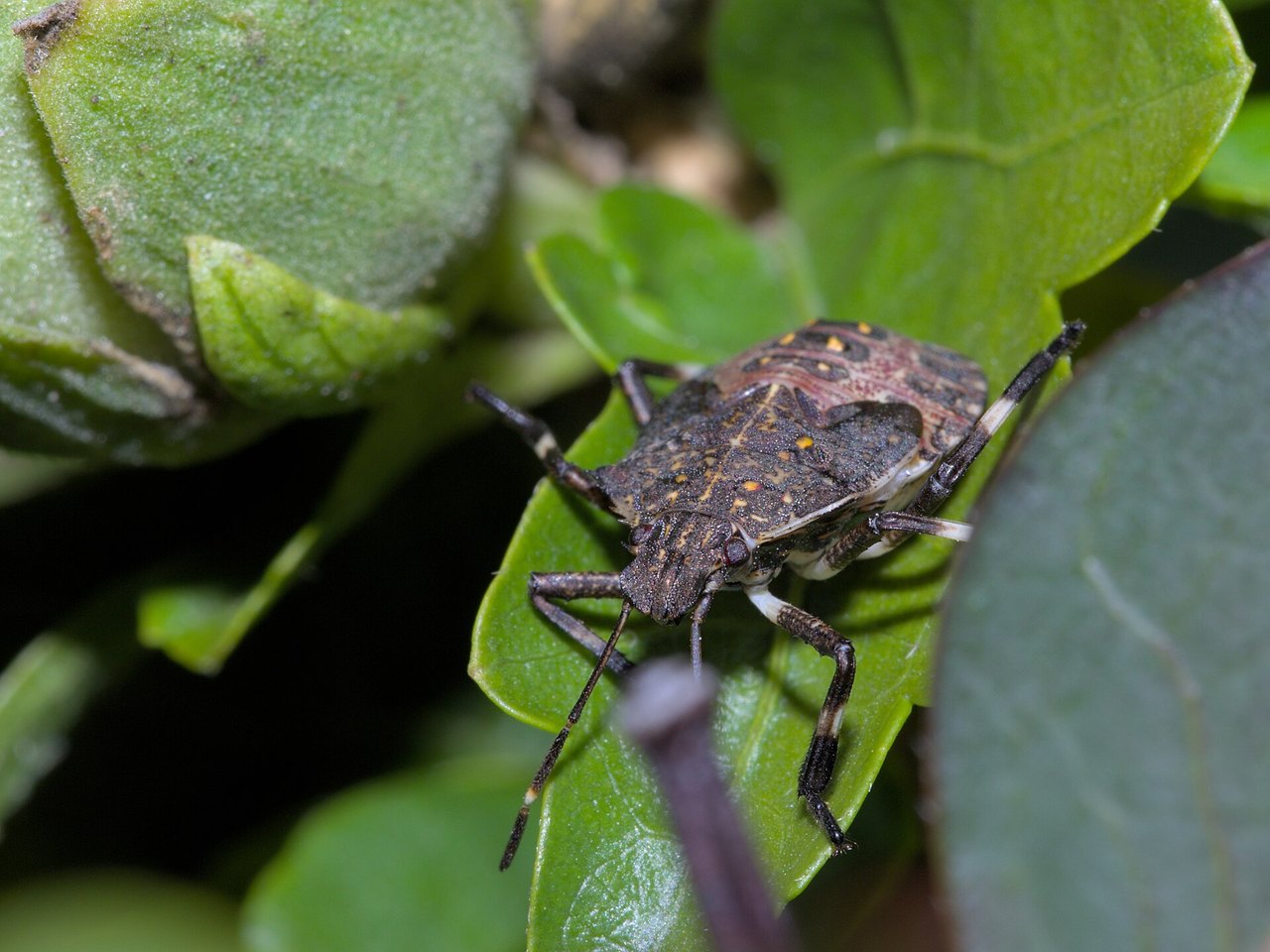
| Nymphs | Black head, legs and thorax with deep red eyes; abdomen yellowish-red in the first instar, off-white with red spots by the fifth | Similar overall, but the colour progression differs by species |
| Where you find it in autumn | Sun-warmed siding, window screens, door frames, porch ceilings — in groups | Mostly on the plants they feed on; rarely massing on buildings |
That last row is the practical one. A shield bug on a tomato plant is a garden insect. A dozen shield bugs on your siding on a warm October afternoon are the front edge of an overwintering aggregation, and the time to act is that week — not after they are inside.
Why they come indoors every autumn
Penn State Extension, which has been documenting this invader since it was first collected in Allentown, Pennsylvania in 1998, describes the pattern plainly: the brown marmorated stink bug is attracted to the outside of houses on warm fall days while searching for protected overwintering sites, and it can enter houses in large numbers.
The calendar behind that behaviour is regular enough to plan around. The species produces one generation a year in most of its U.S. range — warm springs and summers can allow a second. Adults emerge from their overwintering sites in late April to mid-May, mate, and lay eggs from May through August. By September and October the new adults have stopped reproducing and started walking and flying toward shelter: house walls, gaps under siding, attics, garages, woodpiles. They overwinter as adults, which is exactly why the invasion happens once, in bulk, and then stops.
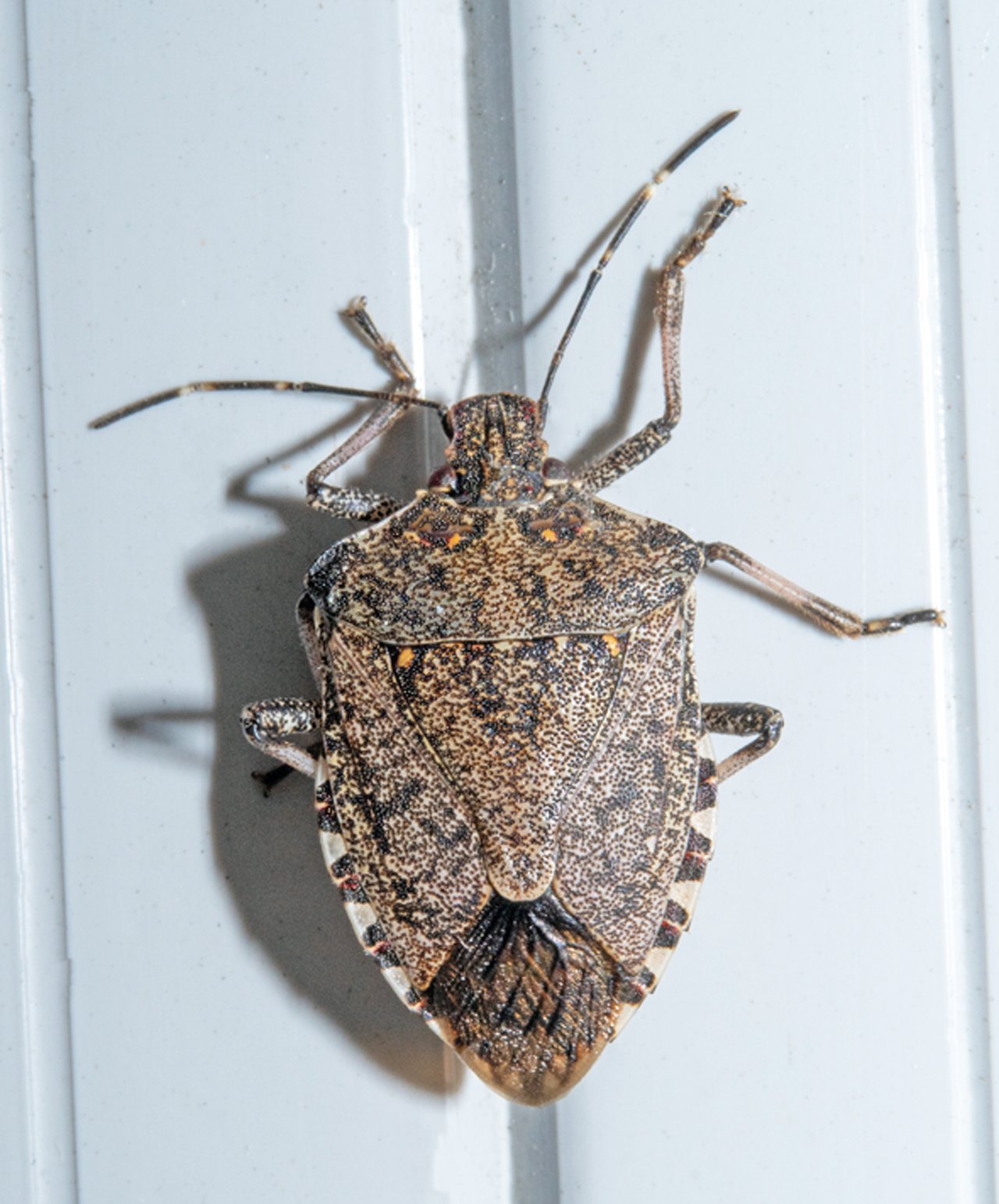
A warm spell in the middle of that window is what produces the memorable days. Cool nights push them into cracks; the next sunny 70°F afternoon brings them back out onto south- and west-facing walls, which is why your front porch and your neighbour's back deck can have completely different populations on the same day.
What they will and will not do inside
Here is the part that saves people money. According to Penn State Extension, stink bugs do not reproduce inside structures and do not damage them. They are not feeding on your food, your fabric or your wood. What they do is exist, in visible places, until spring — and leak a defensive chemical when disturbed or crushed.
| Concern | Reality |
|---|---|
| Do they breed in the house? | No — they overwinter as adults and need host plants to complete a generation |
| Do they damage the structure or belongings? | No. This is a nuisance pest indoors, not a wood or fabric pest |
| Do they bite or sting? | No bite and no sting; they have scent glands, not venom |
| Health effects | The defensive chemicals can act as an airborne allergen: sensitive people can develop rhinitis or conjunctivitis, and people who react to cockroach or lady beetle odours may be more likely to react. Crushing one against exposed skin can cause a local dermatitis in a small percentage of people |
| The smell | Real, and worse when many are crushed or pulled into a vacuum cleaner — the vacuum can hold the odour for a while afterward |
| The knock-on problem | Insecticidal dusts in wall voids can kill hundreds and leave them where carpet beetles feed — and carpet beetles then move on to woolens and stored goods |
The four-step fall playbook
- Seal the building, not the bugs. Penn State's guidance is blunt that mechanical exclusion is the best method: caulk cracks around windows, doors, siding, utility pipes, behind chimneys, and under the wood fascia with good-quality silicone or silicone-latex caulk, and repair or replace torn screens. The bugs that are already inside will die out over winter; the ones you keep out never arrive.
- If hundreds are already in the walls, find their exit. Indoors they emerge from cracks under and behind baseboards, around window and door trim, and around ceiling exhaust fans and light fixtures. Every opening you seal is one fewer emergence point next spring.
- Remove the visible ones with a vacuum, not a shoe. Both live and dead stink bugs come up cleanly with a vacuum cleaner; crushing them is what releases the odour and what puts defensive chemicals on your skin and walls. Empty the canister or bag outdoors afterwards.
- Treat outside, early, and only if you must. Exterior insecticide applications offer only minor relief, must be timed for the fall period just before the bugs congregate, and are a licensed applicator's job. The catch is in the chemistry: sunlight breaks the residue down, so protection may not last much beyond a few days or a week. That is why exclusion comes first.
What not to do, and why each backfires
| The tempting move | What actually happens |
|---|---|
| Swatting or crushing them on the wall | Stains and odour, plus a dermatitis risk if the chemical contacts skin — and it draws no fewer bugs in |
| Setting off foggers in living areas | Penn State notes this kills the ones already gathered but does nothing to stop the next wave from emerging once the room is aired out |
| Spraying crack-and-crevice insecticide indoors | Not recommended: it does not prevent the bugs from emerging, and the ones that die in the voids become carpet beetle food |
| Dusting wall voids and attics | Kills in quantity and creates the carpet beetle problem above — which is a worse pest than the one you were chasing |
| Treating the whole house because "there must be a nest" | There is no nest indoors to treat. They breed outside on host plants and only shelter in the structure |
If you do hire someone for the exterior timing, use the same checklist you would for any other pest contract: the DIY vs pro calculator puts the two paths side by side, and the pest control contract review tool covers the re-treatment and exclusion clauses worth insisting on.
The agricultural side: why this bug matters more than the smell
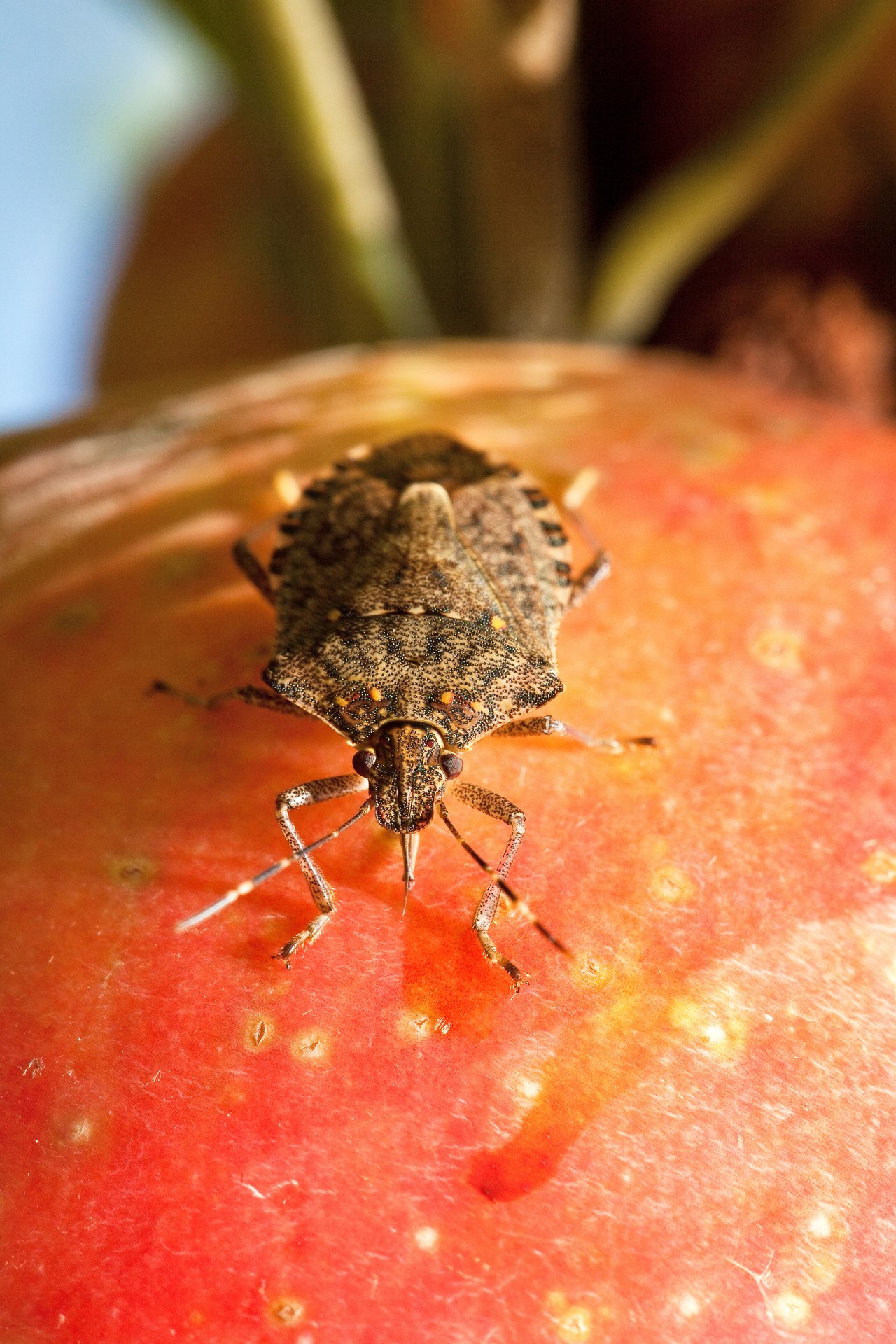
For growers, the brown marmorated stink bug is not a nuisance — it is an economic pest with a signature. It feeds on a wide range of fruit, vegetable and field crops, and its feeding on tree fruit produces the characteristic distortion known as "cat facing," which makes the fruit unmarketable as fresh produce. In beans and okra it leaves scarred, sunken areas and deformed pods; in tomatoes and peppers it creates spongy areas and internal tissue damage that you often cannot see until you cut the fruit open.
That pressure is why so much research money has gone into this one insect. USDA's Agricultural Research Service is studying Trissolcus japonicus — the samurai wasp, the stink bug's natural enemy in its native East Asia — as a biological control agent, alongside trap development and genome sequencing. The bugs you are vacuuming off the ceiling in October are the same population that costs growers a percentage of their crop each season; they are just sheltering at your house instead of in a woodlot.
Next steps
Stink bugs are rarely alone in an autumn invasion. If your siding is also dotted with tiny red specks, that is a different animal entirely — the clover mite guide covers the harmless-but-staining one, and the boxelder bug guide covers the black-and-red seed bugs that cluster on the same walls a few weeks later, and the Asian lady beetle guide covers the orange-and-black beetles that mass on the warmest wall in the same window, and the cluster fly guide covers the dull-grey flies that turn up at the windows once the invasion has already moved inside. If you are not sure what you are looking at, the pest ID wizard narrows it down by size, shape and location, and the seasonal garden defence planner puts the perimeter work in calendar order for every season.
Whatever you find, write it down. The IPM pest log is built for exactly this: one line per sighting, with the date, and after two autumns you have a real record of when the invasion starts on your street and whether last year's caulking actually cut the numbers.
And if the season brings the other kind of late-autumn visitor — scratching in the wall and droppings behind the dishwasher rather than bugs on the ceiling — the fall mouse-exclusion guide is the companion piece: the same caulking work, plus the 1/4-inch gap rule and the EPA bait rules.
Sources: Penn State Extension, Brown Marmorated Stink Bug (identification, life history, exclusion and indoor-management guidance, allergy and dust-treatment cautions); USDA National Invasive Species Information Center, Brown Marmorated Stink Bug (U.S. introduction history, 1996 specimen records); University of California IPM, Brown Marmorated Stink Bug; Ohio State University Extension, Fall Home Invaders.